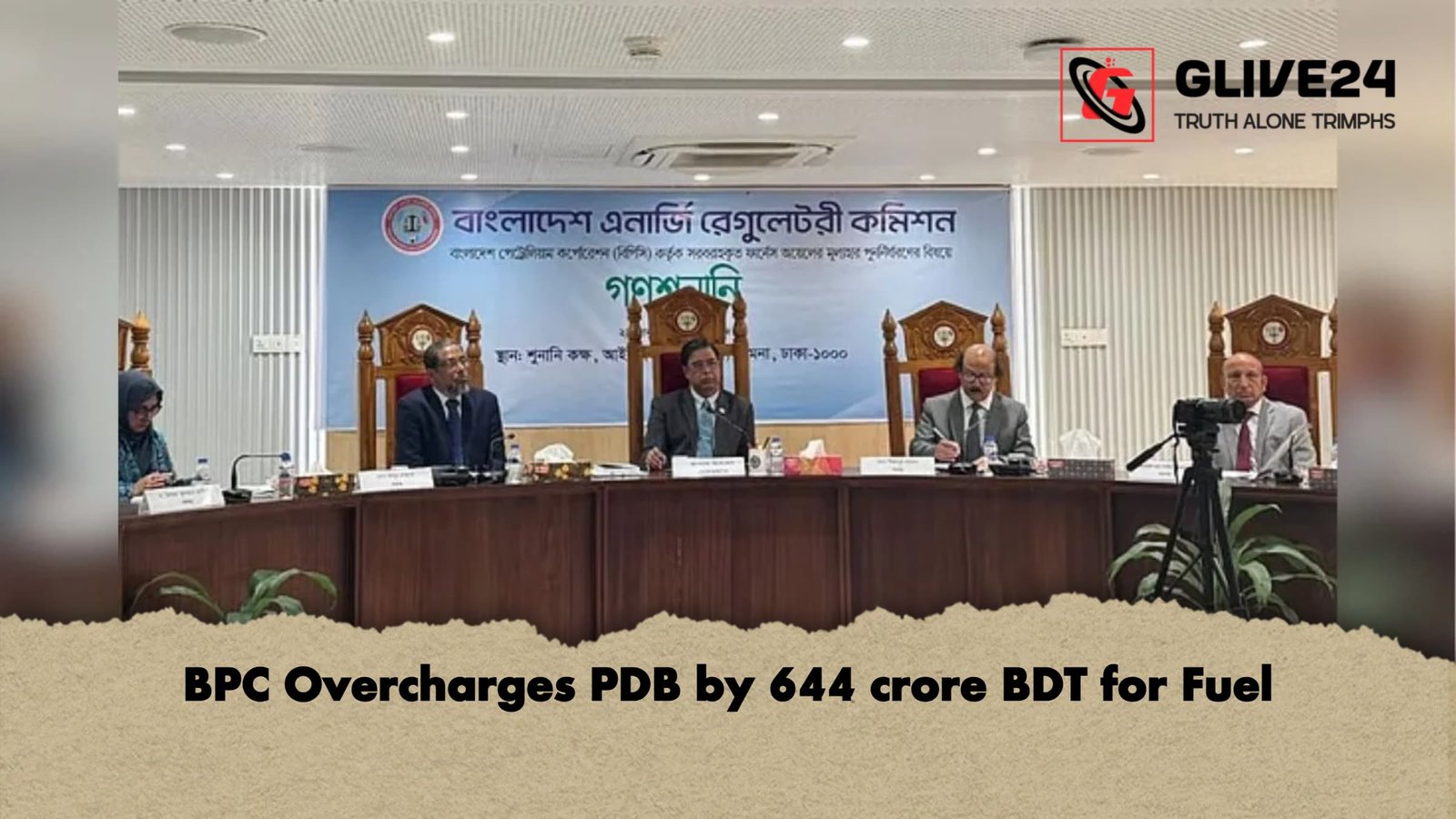
The Bangladesh Petroleum Corporation (BPC) is facing intense scrutiny following revelations that it overcharged the Power Development Board (PDB) by approximately 644 crore BDT for furnace oil over the past eighteen months. Despite a sustained decline in global oil prices, the state-run fuel titan failed to adjust its domestic rates, leading to a significant financial strain on the country’s power sector.
Table of Contents
The Pricing Dispute
During a public hearing organised by the Bangladesh Energy Regulatory Commission (BERC) on Thursday, the PDB presented a scathing critique of the current pricing structure. Currently, the BPC sells furnace oil at 86 BDT per litre, a price point that has remained stagnant since August 2022. In contrast, private power plants—which are permitted to import their own fuel—have been sourcing furnace oil at significantly lower rates from the international market.
The PDB argued that if prices had been adjusted in line with global trends, the cost of electricity production would have plummeted. Instead, the BPC’s refusal to recalibrate has forced the PDB to absorb massive losses while the BPC reported a profit of 4,316 crore BDT in the last fiscal year.
Conflicting Proposals
The hearing highlighted a vast disparity in what stakeholders believe constitutes a “fair” price. While the BPC and its marketing subsidiaries (Padma, Meghna, Jamuna, and Standard Asiatic Oil) proposed a slight reduction to 81 BDT per litre, the PDB contended that the price should be as low as 50.83 BDT.
| Stakeholder | Proposed Price (per Litre) | Justification |
| BPC / Marketing Cos | 81.00 BDT | Marginal reduction to cover operational costs. |
| BERC Technical Committee | 74.04 BDT | Independent assessment of import and overheads. |
| PDB (Power Board) | 50.83 BDT | Reflects true international market rates. |
| Current Market Rate | 86.00 BDT | Unchanged for over 18 months. |
Operational Impact and Subsidies
PDB Chairman Md. Rezaul Karim emphasised that the inflated cost of furnace oil is the primary driver behind rising electricity generation expenses. “When we import directly, costs are manageable. When we buy from the BPC, they are exorbitant,” he noted.
The financial health of the PDB remains precarious. In the 2024-25 fiscal year, the board required a government subsidy of 38,637 crore BDT just to bridge the gap, yet still ended the year with a loss of 17,021 crore BDT. With 54 furnace-oil-based power plants operating across the country, any failure to reduce fuel costs could trigger a severe power crisis during the upcoming summer months when demand peaks.
Industry Resistance
Adding a layer of complexity, fuel marketing companies like Padma Oil have requested an increase in their distribution margins from 55 paisa to 1.20 BDT per litre, claiming they are incurring losses on furnace oil sales. However, this claim was met with skepticism during the hearing when it was revealed that Padma Oil’s overall net profits actually increased over the last year.
BERC Chairman Jalal Ahmed concluded the session by assuring stakeholders that all data would be rigorously analysed. A final decision is expected after the February 3rd deadline for written submissions.