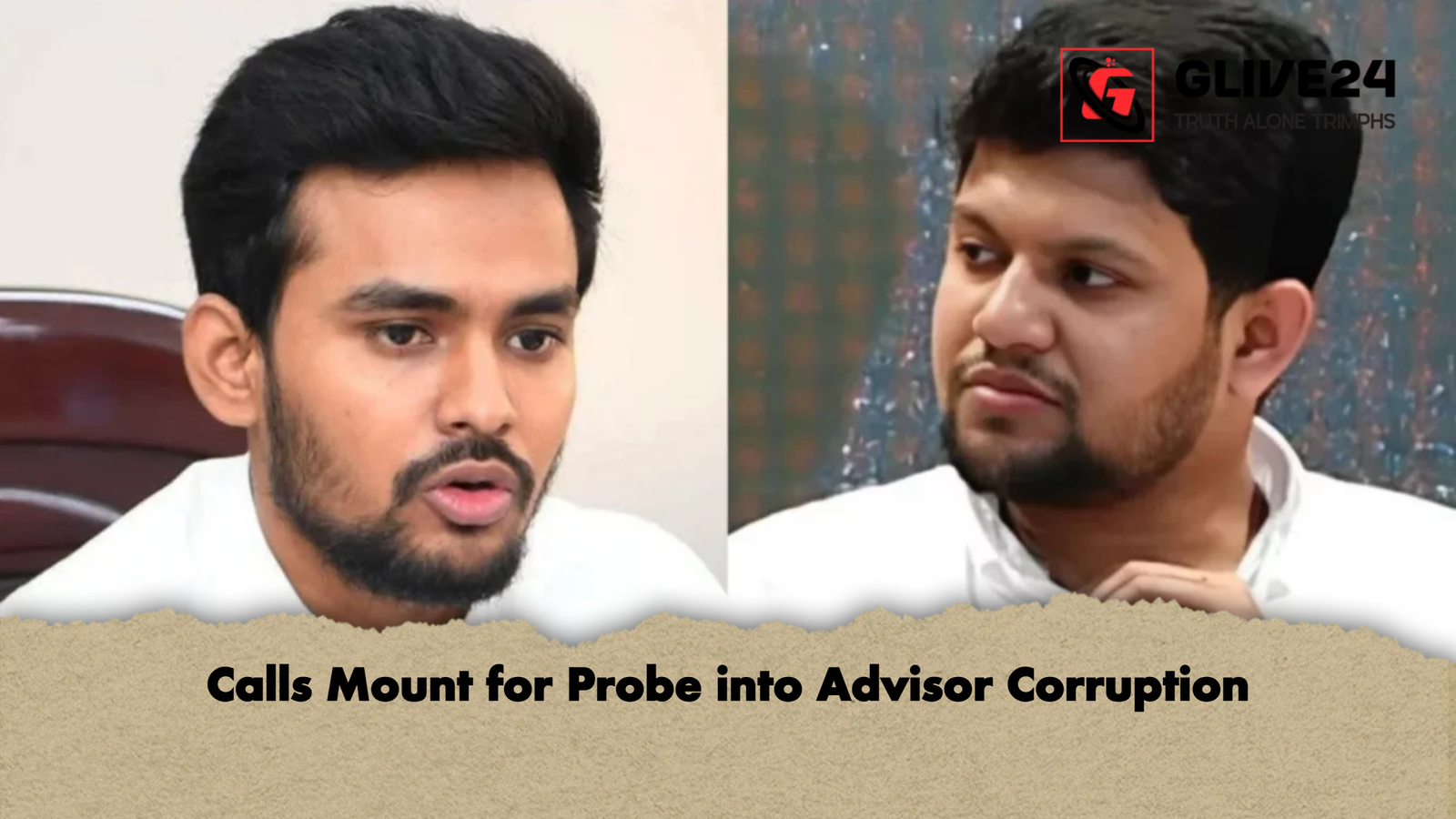
Two recently resigned advisors, Asif Mahmud Sajib Bhuiyan and Mahfuz Alam, are now at the centre of mounting allegations of corruption, prompting the Youth Rights Council to demand a full, transparent, and impartial investigation. Speaking at a press briefing on Thursday (11 December) at a community centre in Dhaka’s Paltan area, the organisation stated that the serious questions raised against the former advisors remain unanswered. Instead of diminishing, the allegations have only intensified over time, fuelling public anxiety and frustration.
Addressing the media, Youth Rights Council President Manzur Morshed Mamun criticised the Anti-Corruption Commission (ACC) for what he described as an alarming lack of initiative. “The ACC has yet to take any concrete step regarding the corruption claims,” he remarked. “If these individuals are allowed to contest the upcoming election without a thorough investigation, it would effectively be an endorsement of corruption. Should the situation demand it, we will not hesitate to lay siege to the ACC headquarters.” He added that ignoring such allegations would further erode public confidence in both the electoral process and state institutions.
Mamun further alleged that for an extended period, the personal staff of Mahfuz Alam—namely his PS and APS—had abused their positions and engaged in various irregularities, enabling them to accumulate significant wealth. He also claimed that certain members of the advisors’ families had used their influence to unlawfully expand their personal fortunes. Without a transparent inquiry, he noted, the truth behind these accusations would remain obscured.
Meanwhile, a separate protest was held the same day in front of the ACC headquarters under the banner of “Students and Citizens”. Speakers at the demonstration demanded that the ACC disclose a detailed account of alleged corruption committed within the ministries overseen by the two former advisors during the past 17 months. They claimed that procedural irregularities, favouritism, and unethical practices had tainted project approvals, tender processes, and major administrative decisions.
Protesters also criticised the ACC’s prolonged silence despite repeated complaints against the advisors’ personal aides. Such inaction, they argued, reflects either an inability or an unwillingness to fulfil its legal duties—an omission that severely undermines public interest. The speakers declared that the two former advisors had already lost their moral authority and eligibility to participate in national elections. They urged the Election Commission and the interim government to prevent them from entering the electoral race.
Calling for institutional reform, the protesters alleged that the ACC has been compromised by political influence, resulting in its failure to independently investigate wrongdoing. Without addressing these systemic shortcomings, they warned, good governance and transparency will remain unattainable.
The collective demand from the participating organisations was unequivocal: the government must immediately launch a rigorous, impartial investigation and ensure that all those responsible for corruption are held to account with uncompromising severity.