
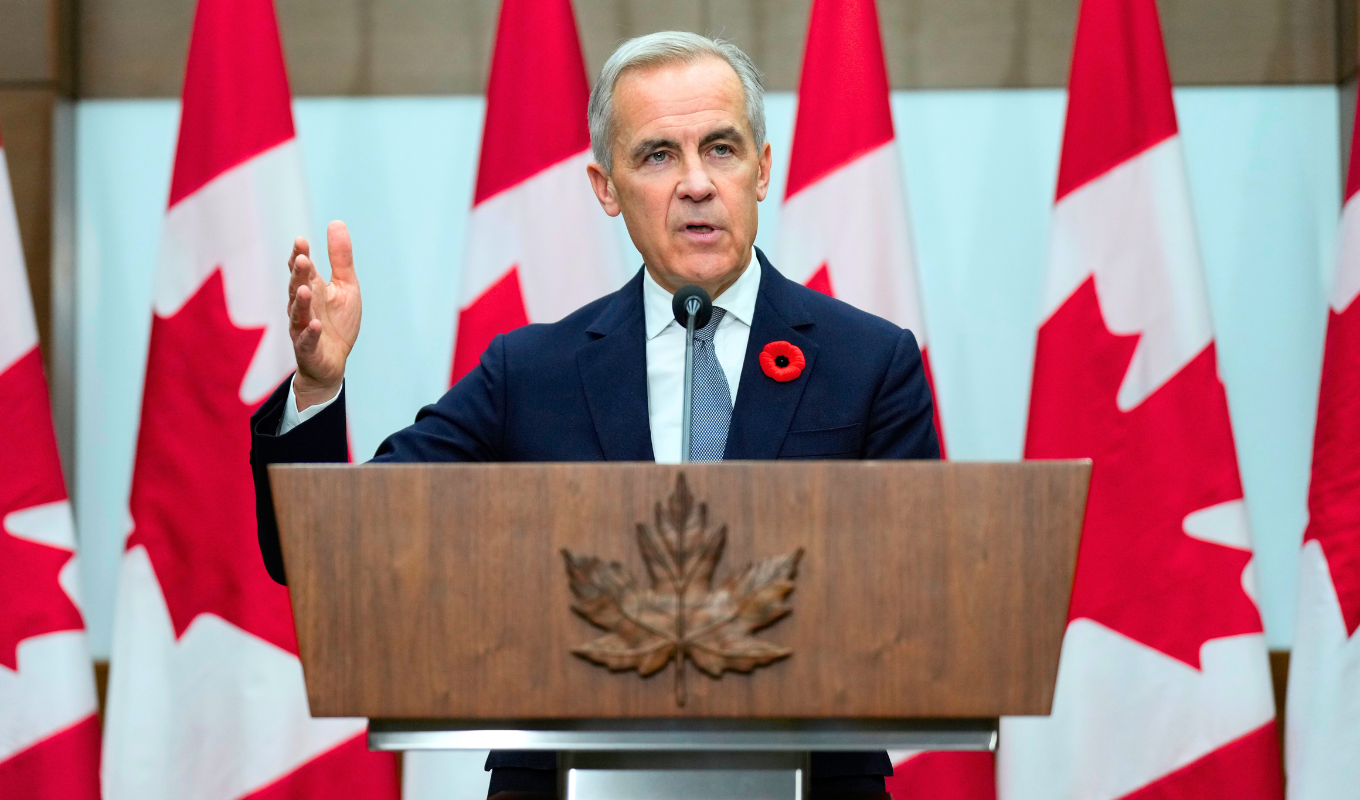
Canadian Prime Minister Mark Carney’s government will unveil its first budget on Tuesday—a spending plan he insists will provide “the answer” for an economy buckling under the strain of new United States tariffs.
Carney, who previously served as governor of both the Bank of Canada and the Bank of England before entering politics earlier this year, has positioned himself as the ideal leader to guide Canada through the turbulence in its relationship with Washington under President Donald Trump.
The tariffs imposed by the Trump administration have dealt a severe blow to Canada, pushing up unemployment and pressuring industries central to the national economy, such as automobiles, aluminium, and steel.
“Where are we going to find the growth given the headwinds from the new US trade policy?” Carney asked reporters during a visit to South Korea over the weekend, following an Asia summit. “What this budget will do is provide the answer to that question.”
According to Carney, his Liberal government’s first financial blueprint will directly confront the new geopolitical realities facing Canada. Although details remain closely guarded until Finance Minister François-Philippe Champagne presents the plan in parliament, several key priorities are expected.
Among the most notable measures will be a substantial increase in defence spending aimed at bringing Canada in line with NATO’s funding targets. In addition, significant investments are anticipated in national infrastructure projects designed to strengthen Canada’s economic independence amid the “rupture” in trade relations with the United States.
These projects are expected to encompass port expansions, enhanced energy production, and the development of facilities to support the extraction of critical minerals from Canada’s remote regions—resources deemed essential to future industrial and technological competitiveness.
Champagne described the upcoming plan as “an investment budget”, declaring, “The idea is to build the Canada of tomorrow.”
Carney, who succeeded Justin Trudeau as prime minister in January and secured a full mandate through April’s election, has repeatedly cautioned Canadians that the Trump-era upheavals in bilateral relations are no temporary episode.
He stated over the weekend that the forthcoming budget aims to “reduce our reliance on the United States,” though he conceded that such a transformation “can’t happen overnight.”
Following April’s general election, Carney’s Liberals fell three seats short of securing a parliamentary majority, leaving them reliant on opposition cooperation—or abstentions—to pass their first budget. As the budget constitutes a confidence motion, its rejection would automatically trigger a new general election.
The main opposition Conservatives, led by Pierre Poilievre, are considered unlikely allies. Poilievre has demanded several concessions in return for his party’s support, including a commitment to deficit reduction.
However, Geneviève Tellier, a public policy expert at the University of Ottawa, told AFP she expects the deficit to be “very large,” suggesting the Conservatives may withhold support.
The left-leaning New Democratic Party (NDP), which lost its official party status after a poor performance in April’s election, may choose to abstain rather than risk another vote, improving the Liberals’ prospects of survival.
Tellier noted that she saw “little chance” of the Carney government being brought down over the budget.
Asked over the weekend whether he was confident of securing parliamentary approval, Carney replied, “I am 100 percent confident that this budget is the right budget for this country, at this moment.”
“This is not a game,” he added, signalling his willingness to defend the budget’s principles at the polls if necessary.