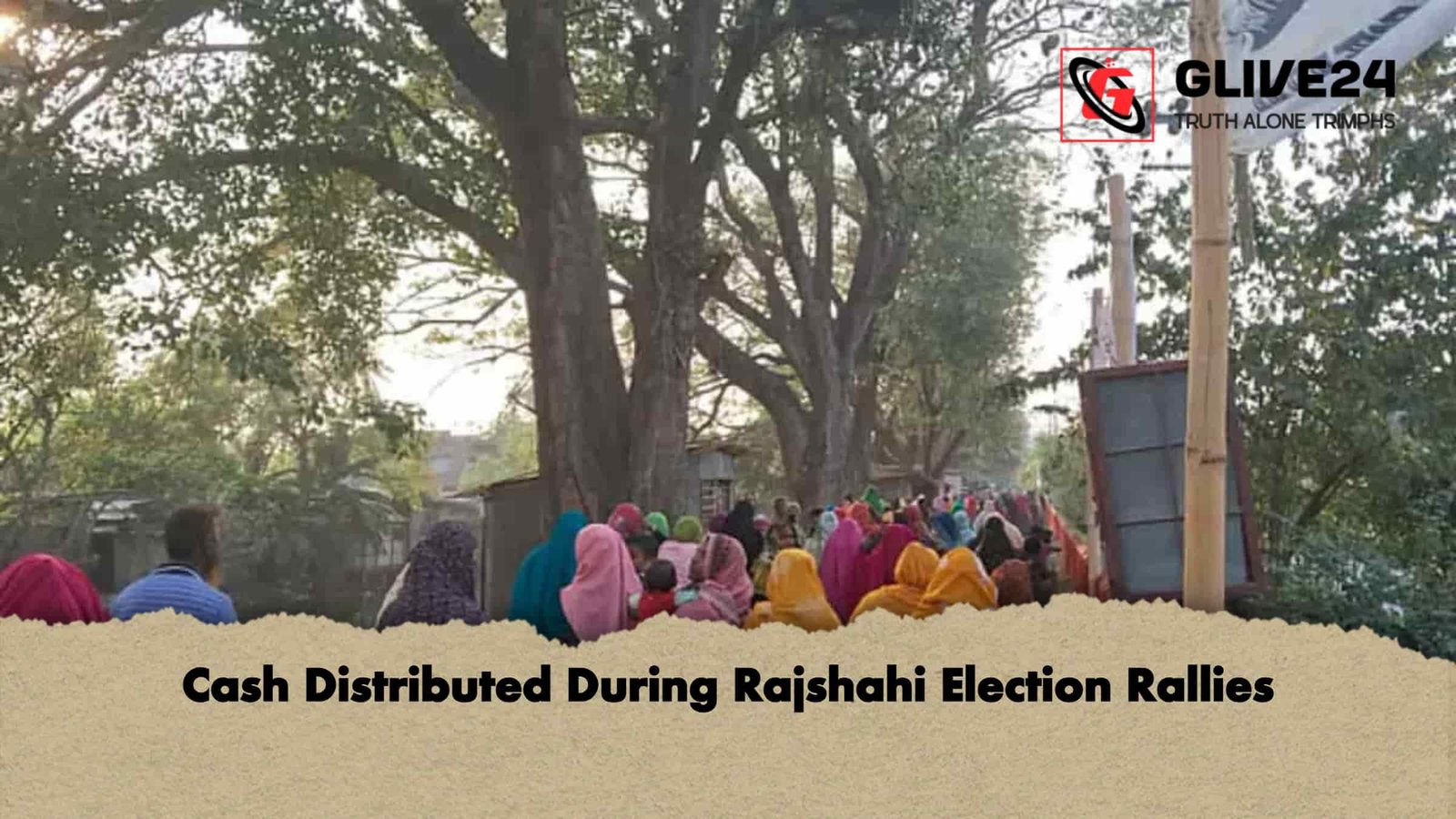
On a damp Saturday afternoon, the riverside slum of Ramchandrapur in Rajshahi offered a stark portrait of daily survival. Clothes, stiffened by the sun, swayed gently on lines, while a mother carefully braided her young daughter’s hair. The child asked, “How much will we get for tomorrow’s rally?” The mother replied, “Not all at once; it comes in stages.”
Here, election rallies are more than political gatherings—they are a crucial source of income. This year, participants receive 50 taka for attending a rally. However, when crowds swell, the per-person payment is reduced to 40 taka. For the past week, both men and women from the area have been attending rallies regularly, largely driven by the need for daily earnings rather than political commitment.
An 80-year-old widow shared, “Since my husband passed away, my children manage the household, but we cannot travel far. So, when called, I go to the rally.” Similarly, a 65-year-old man with a disabled hand attends alongside his two sons and wife. “One day earns 50 taka, two of us together make 100 taka, but it is rarely paid all at once,” he explained.
Residents note that participation in city corporation or councillor-related rallies may slightly increase the rally allowance. While political influence remains limited, many join simply to meet daily needs. A local BNP leader confirmed, “For many, attending a rally ensures at least one meal. The allowance is modest—50 taka per day. Previously, payments were even more irregular.”
The following table summarises typical daily payments for participants in Ramchandrapur rallies:
| Participant Type | Days Attended | Daily Allowance | Payment Method | Notes |
|---|---|---|---|---|
| Women (primary earners) | 7 | 50 Taka | Paid daily | Covers household expenses |
| Men (elderly/disabled) | 2–3 | 50–100 Taka | Shared among group | Supports daily family needs |
| Couples (attending together) | 2 | 100 Taka | Paid in one sum | Helps sustain the household |
For Ramchandrapur residents, election rallies are not merely political events—they are lifelines. Participation is driven primarily by the need to feed families, meet basic medical expenses, and cover daily necessities. Even brief involvement in a rally temporarily alleviates the pressures of poverty, which continue to shape almost every decision in their lives.