
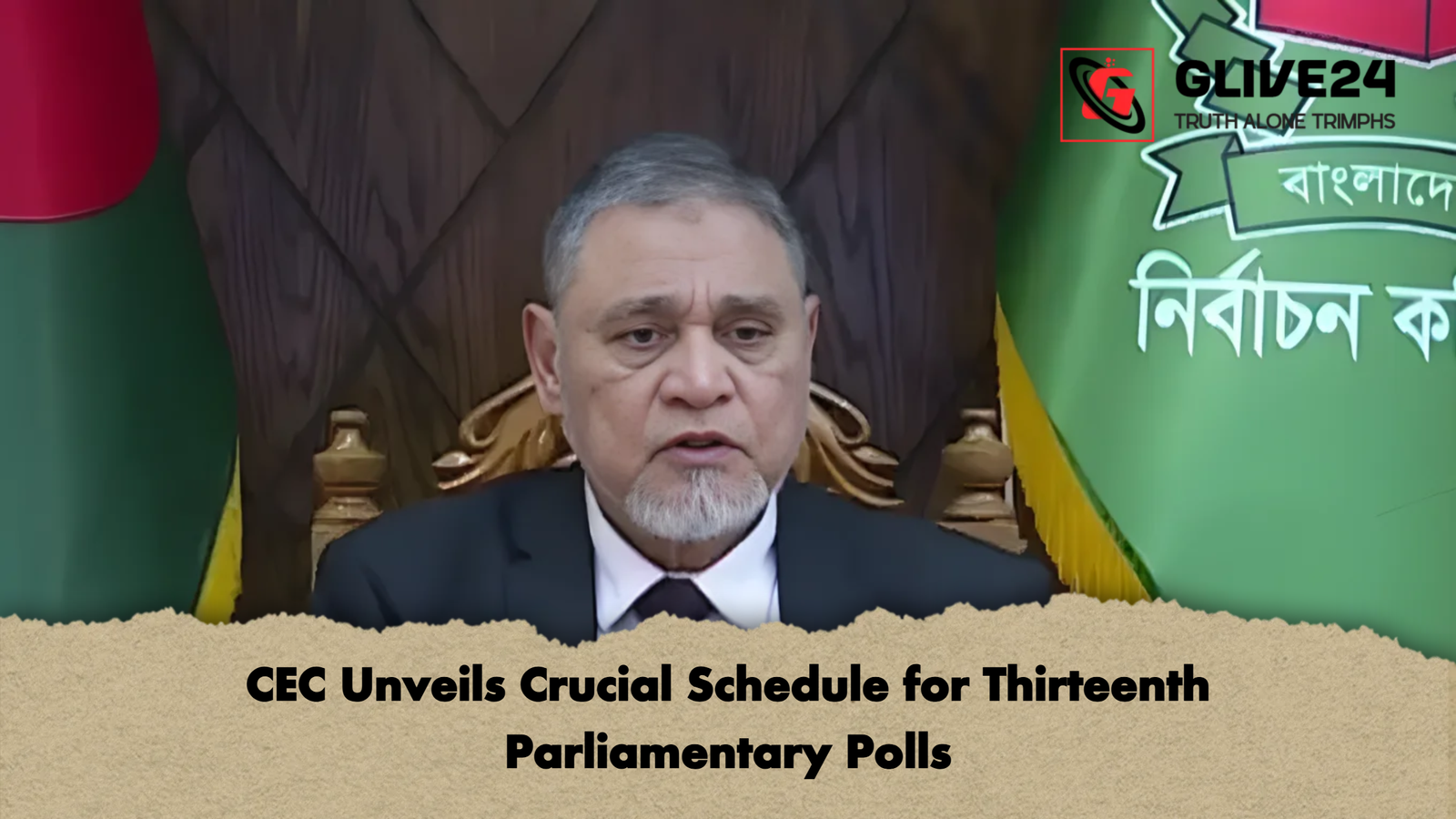
The nation’s political landscape was afforded formal clarity following a protracted period of intense political speculation and public deliberation, as the Chief Election Commissioner (CEC) officially inaugurated the announcement of the schedule for the Thirteenth National Parliamentary Election. This declaration marks a pivotal moment in the country’s political landscape, signifying the formal commencement of the constitutionally mandated electoral process for the general election.
The keenly awaited address by the Chief Election Commissioner was disseminated live across the nation via both Bangladesh Television and Bangladesh Betar (Radio), commencing precisely at 6:00 PM on Thursday, 11 December. This synchronous broadcast allowed citizens nationwide to simultaneously receive the critical information. Officials affiliated with the Election Commission (EC) confirmed that the CEC’s speech was comprehensive, detailing all crucial dates and associated timings. These key dates include the designated polling day itself, the final permissible deadline for the submission of nomination papers by prospective candidates, the subsequent rigorous schedule for verification and scrutiny of those nominations, and the predetermined day and time for the official allocation of distinct electoral symbols.
By issuing this formal declaration of the schedule, the Election Commission unequivocally assures the electorate that all necessary administrative and logistical preparations across the entire country will be executed within the stipulated timeframe. As a result, political parties, aspiring candidates, and the general voting population have now been officially apprised of the precise electoral timeline. This clarity is indispensable, enabling candidates to refine and finalise their campaigning strategies, and empowering voters to adequately prepare to exercise their fundamental democratic rights and fulfil their electoral responsibilities.
Political commentators and analysts widely regard the Chief Election Commissioner’s declaration as a profoundly vital step toward ensuring the entire electoral process is conducted in a transparent, accountable, and highly effective manner. It transcends the nature of a mere procedural formality; rather, it represents a decisive measure explicitly designed to heighten public awareness and actively encourage broad civic participation in the forthcoming election. Consequently, immediately following the conclusion of the broadcast, citizens across the country are expected to scrutinise the announced phases and timeframes of the election with considerable intensity.
The Election Commission took the opportunity during the address to firmly reiterate its unwavering commitment to maintaining absolute transparency and guaranteeing a fair, impartial process at every stage of the election cycle. The CEC’s address serves as a national notification, assuring the citizenry that every single stage of the electoral process will adhere strictly to the stipulated schedule and that all candidates and voters are expected to prepare to fulfil their constitutional duties without delay. This pivotal step formally orientates the nation’s political environment toward the comprehensive preparations required for the impending election. The execution of the schedule is a complex administrative exercise, necessitating intricate coordination and collaboration with numerous state agencies to finalise security arrangements, logistical support, and administrative infrastructure before the official campaigning period is permitted to commence. This detailed, procedural framework is absolutely fundamental to the constitutional mandate vested in the Election Commission to host free and fair general elections. Furthermore, the announcement is under close surveillance by international observers and diplomatic missions, who view it as a key indicator of the health and trajectory of the nation’s democratic institutions. The Election Commission is now fully engaged in the operational phases of preparation, which include finalising comprehensive voter lists, the procurement of ballot materials, and the critical deployment of requisite personnel across all constituencies to manage the monumental task that a national election represents. The public address effectively signals the start of a period of elevated political activity, where internal party nominations and the formation of strategic alliances will become the primary focus of the political discourse.