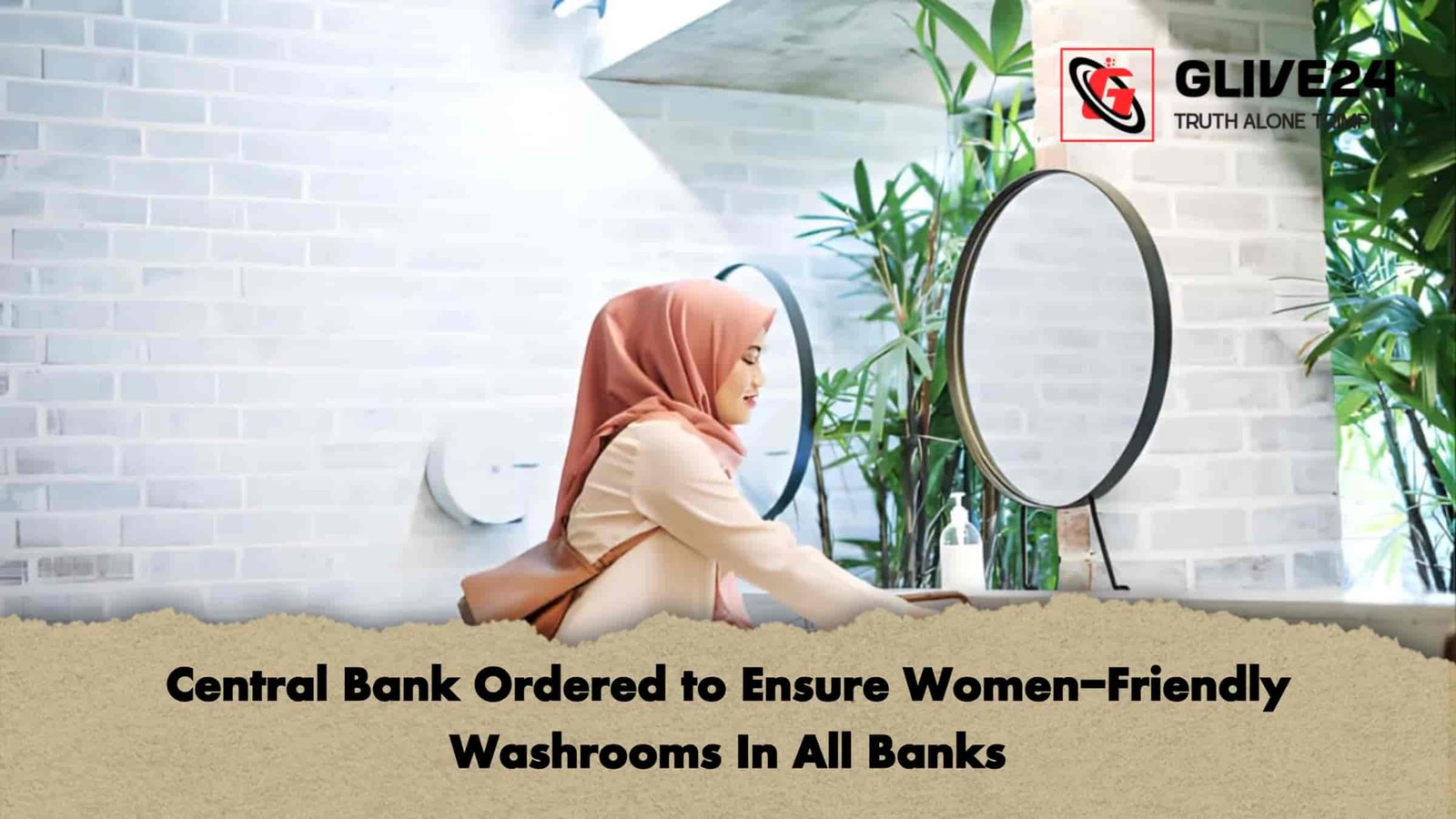
Bangladesh’s banking sector has taken a significant step towards promoting gender equality, workplace dignity and inclusive customer service, following the issuance of a new directive by Bangladesh Bank. Under the order, all scheduled banks—both state-owned and private—are now required to establish, upgrade and maintain hygienic, secure and women-friendly washroom facilities across their entire operational network.
The directive applies comprehensively to head offices, regional offices, branches and sub-branches, and came into force immediately upon issuance. According to the central bank, the instruction responds to long-standing infrastructural gaps that have persisted despite the steady rise in the number of women employed in the banking industry over the past decade.
While female participation in banking has grown markedly, many bank premises still lack separate and adequately maintained washrooms for women. This shortfall has often caused daily inconvenience for female officers and staff, and at times discomfort or embarrassment for women customers. Regulators have acknowledged that such inadequacies undermine efforts to create a genuinely women-friendly and inclusive working environment.
In its directive, the central bank emphasised that access to safe and hygienic sanitation facilities is not merely a logistical concern, but a fundamental right directly linked to dignity, health, psychological comfort and overall productivity. Banks are therefore obliged to ensure separate, clean and secure washrooms for female employees, alongside appropriate sanitation facilities for women customers. Where existing infrastructure is insufficient, banks have been instructed to carry out prompt renovations or construct new facilities without delay.
Particular attention has been given to operational standards. These include uninterrupted water supply, effective waste disposal systems, scheduled cleaning routines and the consistent availability of essential sanitary supplies. Measures to ensure user privacy and safety have also been highlighted as mandatory requirements. Importantly, the directive calls for washroom designs that are accessible to women with disabilities, reinforcing the broader commitment to inclusivity.
The instruction has been issued under the authority of the Bank Companies Act, 1991. Bangladesh Bank has made it clear that any negligence or delay in implementation will not be tolerated. Compliance may be assessed through regular supervision and inspections as part of the regulator’s ongoing oversight of the sector.
Labour rights advocates and sector experts have welcomed the move, describing it as both timely and progressive. They argue that improved workplace conditions will encourage greater female participation in banking, strengthen institutional culture and enhance the quality of customer service. More broadly, the directive aligns with national commitments to gender equality and the creation of respectful, humane working environments.
Key Features of the Directive
| Aspect | Details |
|---|---|
| Covered institutions | All scheduled state-owned and private banks |
| Scope of application | Head offices, regional offices, branches and sub-branches |
| Beneficiaries | Female officers, employees and women customers |
| Required actions | Construction of new washrooms, renovation of existing ones, regular maintenance |
| Additional provisions | Water supply, cleanliness, sanitary products, safety measures |
| Special consideration | Accessibility for women with disabilities |
| Effective date | Immediately |
Overall, the directive is widely viewed as a forward-looking measure that will help make Bangladesh’s banking sector more humane, inclusive and supportive of women, both as professionals and as customers.