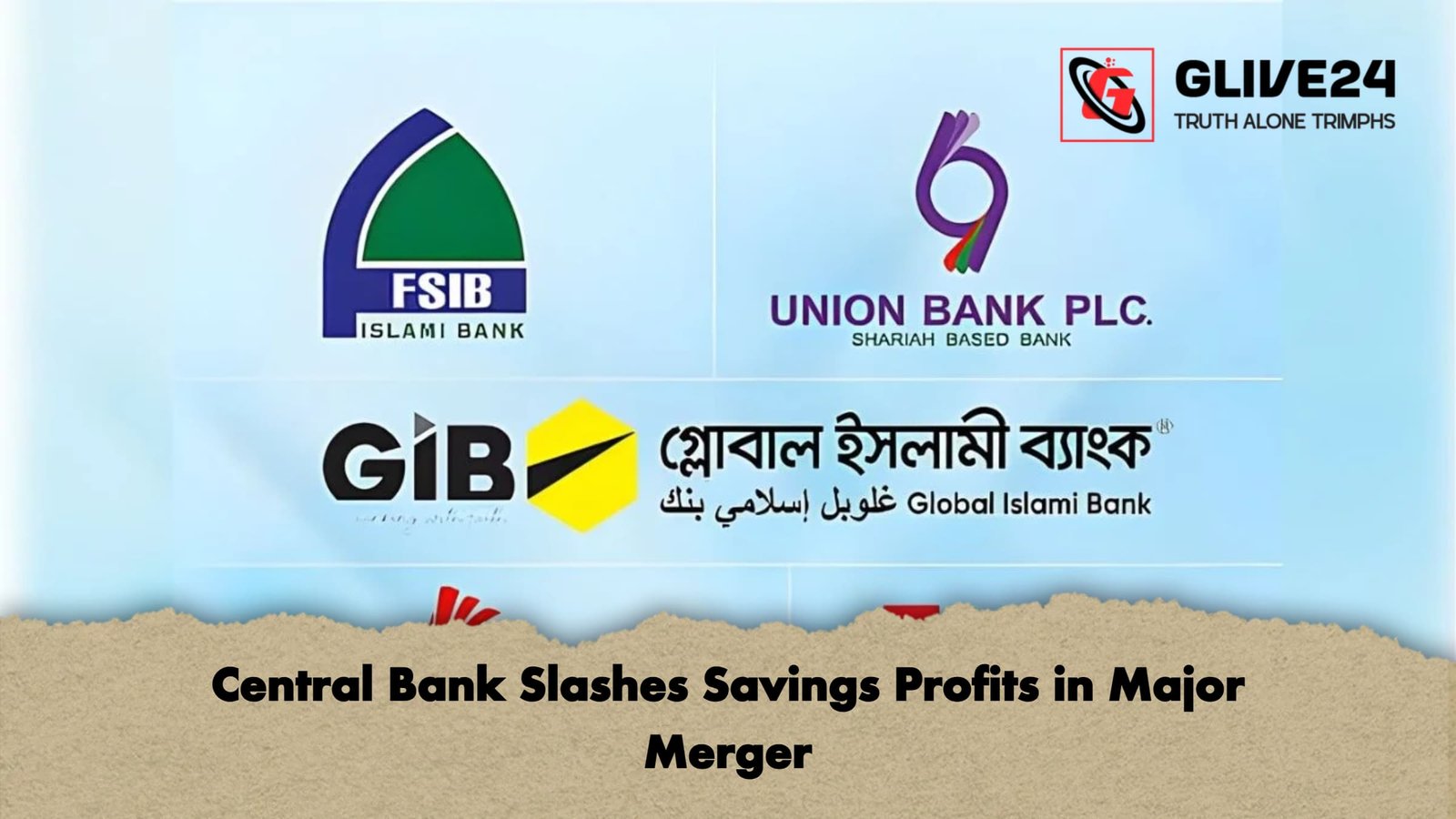
In a sweeping move intended to stabilise the nation’s fragile Sharia-based banking sector, Bangladesh Bank has announced a two-year profit “haircut” for millions of depositors. Customers of five prominent Islamic lenders currently undergoing a mandatory merger will receive no returns on their savings for the years 2024 and 2025. This drastic measure, while aligned with international bank resolution standards, effectively slashes the account balances of millions of citizens to cover the massive losses incurred by these institutions.
Table of Contents
The Scope of the Forfeiture
The central bank’s directive, issued on Wednesday, instructs administrators to recalibrate every deposit account based on its standing as of 28 December 2025. Under this mandate, all profit distributions typically ranging between 7% and 9% that were credited to accounts since 1 January 2024 must be revoked.
The five banks being absorbed into the newly formed United Islamic Bank are:
First Security Islami Bank
Global Islami Bank
Union Bank
Exim Bank
Social Islami Bank
A Toxic Financial Legacy
The “haircut” is a direct response to the catastrophic financial health of the merging entities. Data from the central bank reveals a staggering disparity between the savings held and the loans disbursed—many of which have turned “sour” or were siphoned off through irregular means.
| Key Metric | Figures (Estimated) |
| Affected Depositors | 7.5 Million |
| Total Deposits Held | 1.42 Trillion BDT |
| Outstanding Loan Portfolio | 1.93 Trillion BDT |
| Profit Forfeiture Window | 2024 to 2025 |
| Shareholder Equity | Declared Zero |
Political Ties and Institutional Collapse
The collapse of these five banks is inextricably linked to the previous political regime. Four of the lenders were under the absolute control of the S. Alam Group, led by tycoon Saiful Alam, while Exim Bank was led by Nazrul Islam Mazumder, the former chairman of the Bangladesh Association of Banks. Both figures were reportedly close associates of the ousted Prime Minister Sheikh Hasina.
Authorities have already wiped out the shares of these banks, meaning the original sponsors and investors have lost their entire equity. The central bank argues that because these lenders suffered monumental losses during the 2024–2025 period, there is no surplus to distribute to depositors.
The Resolution Strategy
The implementation of the Resolution Scheme is viewed as a “bitter pill” necessary to prevent a total systemic collapse. By recalculating the final deposit balances, the regulator intends to launch the United Islamic Bank with a cleaner, albeit smaller, balance sheet. For the 7.5 million affected savers, however, this policy represents a forced contribution to the recovery of a sector hollowed out by years of unchecked mismanagement.