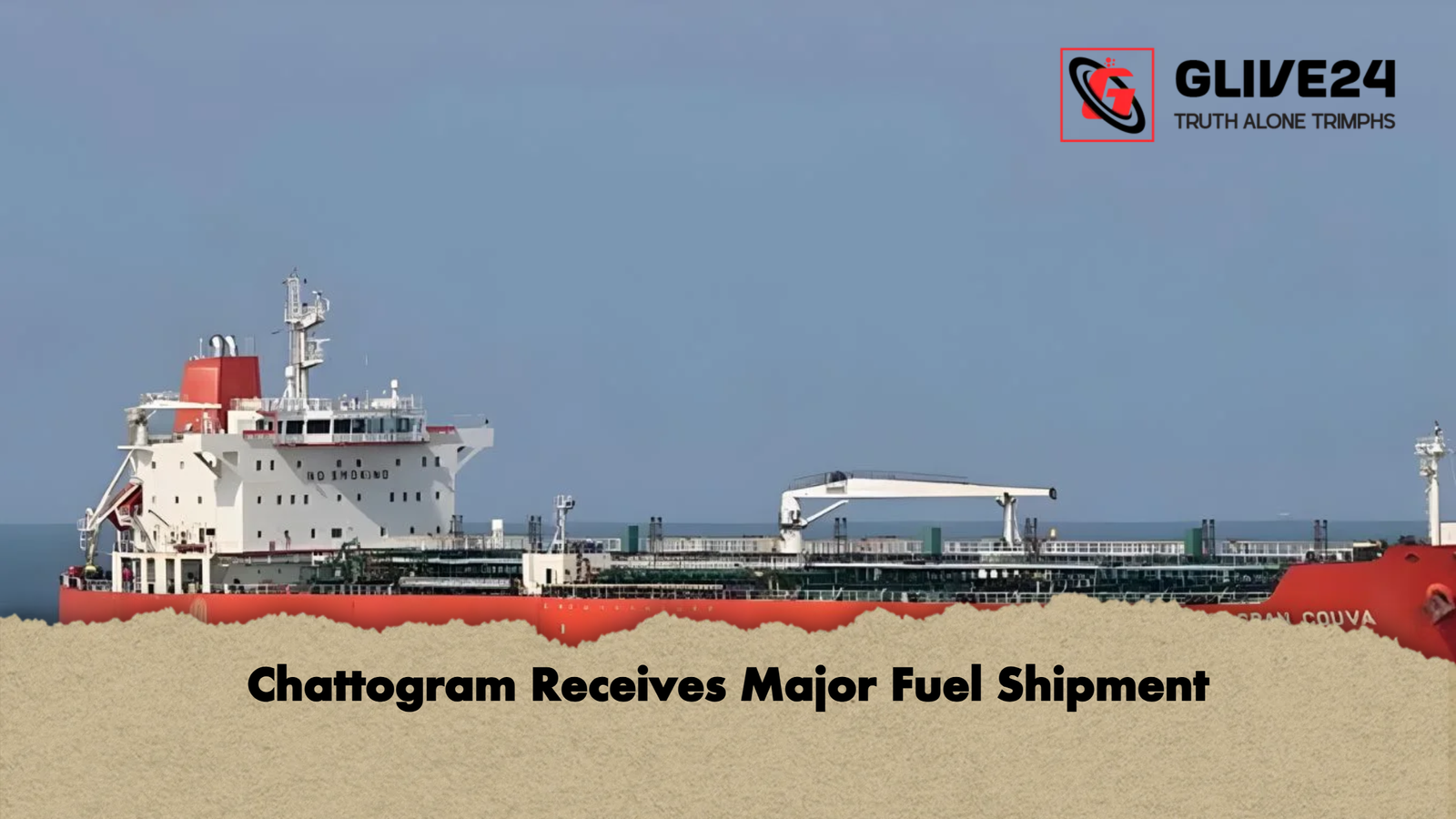
Chattogram Port has once again reinforced its role as the country’s principal gateway for energy imports with the arrival of a large petroleum cargo aimed at strengthening national fuel security and ensuring stable supply across key sectors.
A substantial shipment of refined petroleum products, carried by the vessel MT Gran Cuva, docked at the port on Thursday. The consignment, imported from a Chinese supplier under a government contract, comprises a total of 30,000 tonnes of fuel, including diesel and jet fuel. Officials involved in the operation have described the shipment as strategically significant for meeting rising domestic energy demand and maintaining adequate national reserves.
According to sources at the Bangladesh Petroleum Corporation (BPC), the vessel carries 10,000 tonnes of diesel and 20,000 tonnes of jet fuel. The unloading process is scheduled to commence on Friday and will be carried out in phases at designated terminal facilities before being transferred to storage depots for nationwide distribution.
A senior official from the corporation noted that current national reserves stand at approximately 200,000 tonnes of diesel. With the addition of this shipment, the country’s stock position is expected to improve further, providing greater buffer capacity to manage seasonal demand fluctuations and supply pressures.
Diesel from the consignment will primarily support the transport sector, agricultural irrigation systems, and industrial operations, all of which are heavily dependent on continuous fuel availability. Meanwhile, the jet fuel component will be distributed to various airports across the country to support both domestic and international aviation activities.
At present, Bangladesh imports and distributes five major categories of refined petroleum products, including diesel, petrol, octane, and jet fuel. These products are stored in strategically located depots and pipeline networks, allowing for flexible distribution based on regional demand requirements.
Authorities estimate that, with the current inventory levels and ongoing import schedule, national fuel demand can be adequately met until at least April, assuming stable consumption patterns.
However, despite the overall stability in the supply chain, operational challenges persist at the field level. In the Chattogram region, for instance, reports indicate rationing measures for diesel distribution among lighter vessels and fishing trawlers. Additionally, some fuel stations have reportedly experienced intermittent shortages, leading to concerns among transport operators and small business owners.
Energy analysts emphasise that while import-based supply systems have so far ensured stability, global oil price volatility and dependency on foreign suppliers underline the importance of strengthening domestic distribution efficiency and strategic reserve management.
Overview of the Shipment
| Fuel Type | Quantity | Primary Use Area |
|---|---|---|
| Diesel | 10,000 tonnes | Transport, industry, agriculture |
| Jet Fuel | 20,000 tonnes | Aviation (domestic and international) |
| Total | 30,000 tonnes | Integrated national fuel supply |
The latest shipment is expected to play a crucial role in maintaining energy security at a time when demand continues to rise alongside industrial expansion and growing transportation needs across the country.