
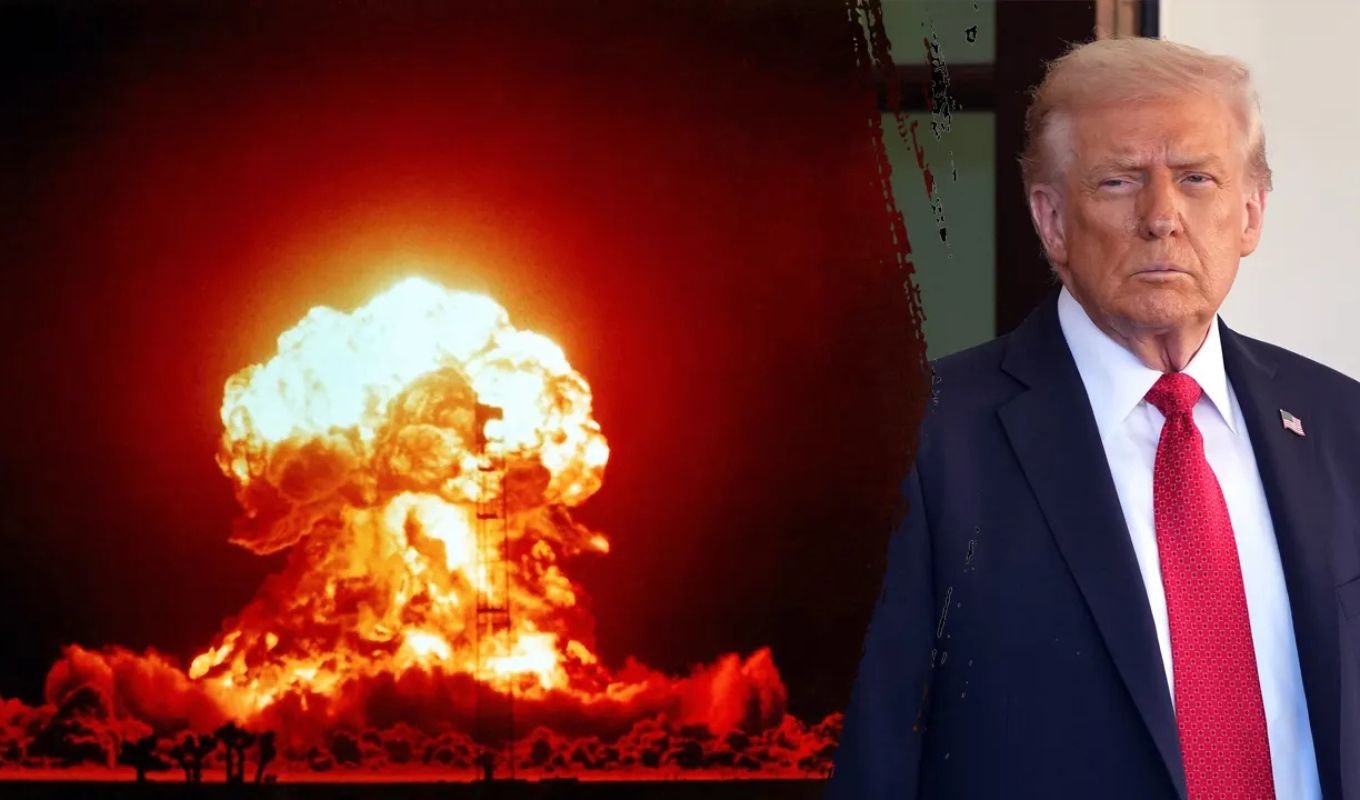
In a robust diplomatic rebuttal, the Chinese government has dismissed claims made by President Donald Trump suggesting that Beijing has conducted clandestine nuclear weapons tests.1 The allegations, which surfaced during a period of intensifying geopolitical rivalry, were met with a firm categorical denial from the Chinese Foreign Ministry.2
Addressing the international press on Monday, Foreign Ministry spokeswoman Mao Ning emphasised that China remains steadfastly committed to established global nuclear disarmament norms.3 She asserted that the nation continues to champion a trajectory of peaceful development, distancing Beijing from the provocative rhetoric emerging from the American political sphere.
Table of Contents
A Policy of Strategic Restraint
Mao Ning reiterated that China’s nuclear doctrine is rooted in transparency and restraint. Central to this stance is the long-standing “No First Use” (NFU) policy, a commitment that distinguishes China from several other nuclear-armed states.4
“China has always adhered to the path of peaceful development, pursued a policy of no first use of nuclear weapons, upheld a self-defence nuclear strategy, and abided by its commitment to suspend nuclear testing,” Mao stated.5 This commitment to a moratorium on testing is a cornerstone of the Comprehensive Nuclear-Test-Ban Treaty (CTBT) framework, which Beijing signed in 1996, though it has yet to formally ratify the agreement.
Escalating Geopolitical Mistrust
The timing of these allegations coincides with a volatile period in Sino-American relations. Washington has frequently expressed concerns regarding the pace and scale of China’s nuclear arsenal expansion, while Beijing views such scrutiny as an attempt to justify US military build-ups in the Indo-Pacific region.
The Foreign Ministry’s statement served not only as a denial but also as a critique of what it termed “misinformation.” Mao Ning warned that unfounded accusations serve only to escalate geopolitical mistrust and called upon all global powers to act responsibly to maintain strategic stability.6
Comparative Nuclear Doctrines: A Summary
The following table highlights the core differences in declared nuclear policies between the major powers involved in this recent exchange:
| Feature | China | United States |
| Primary Strategy | Minimum Deterrence / Self-Defence | Flexible Response / Extended Deterrence |
| First Use Policy | “No First Use” (NFU) | Maintains “Strategic Ambiguity” |
| Testing Status | Voluntary Moratorium since 1996 | Voluntary Moratorium since 1992 |
| CTBT Status | Signed, Not Ratified | Signed, Not Ratified |
| Transparency | Classified Arsenal Size | Periodically Disclosed Totals |
The Global Context of Disarmament
The friction between Beijing and Washington underscores the fragility of current international arms control architecture. With the expiration of various Cold War-era treaties and a lack of new, trilateral frameworks involving the rising power of China, the risk of a new arms race remains a primary concern for the United Nations and global security analysts.
Beijing has reaffirmed its position as a “responsible nuclear power,” suggesting that the onus of disarmament lies heavily on the states with the largest stockpiles—namely the United States and Russia. As the rhetorical battle persists, the international community remains watchful for any shift in actual military posture that could signal a departure from these stated diplomatic ideals.