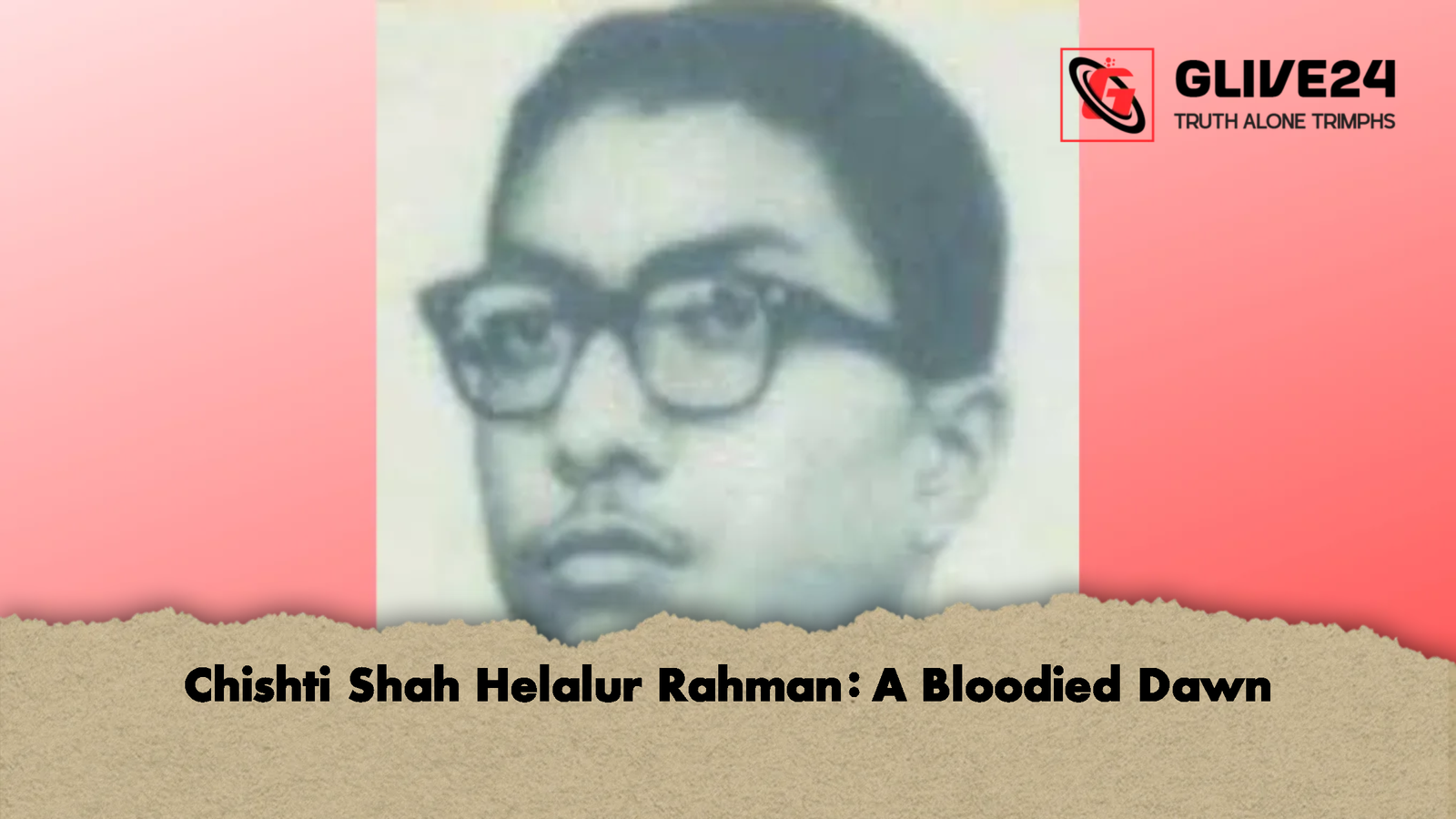
Dhaka, Bangladesh – 25 March 1971 stands as one of the darkest nights in Bangladesh’s history. On that fateful evening, the Pakistani military launched Operation Searchlight, a calculated campaign of terror against students, academics, and civilians. The epicentre of this atrocity was Dhaka University, which became a scene of mass slaughter, its grounds soaked in the blood of the nation’s brightest minds. Among the many martyrs was a luminous yet tragic figure—Chishti Shah Helalur Rahman.
Scholar, Activist, and Journalist
Born in Bogra, Helalur Rahman was an exemplary student in the Department of Philosophy at Dhaka University. He resided in Sergeant Zahurul Haque Hall (then Ikbal Hall) and was not only academically gifted but also politically engaged and socially conscious. Helalur served as the university correspondent for the daily Azad, courageously writing in defence of truth and justice. He also held key student leadership roles, including Library Secretary of the Hall Students’ Union and Vice-President of the University Journalists’ Association.
Helalur’s life was inseparable from the spirit of independence. On 5 March 1971, he played a leading role in hoisting the flag of a free Bangladesh at Ikbal Hall, guiding fellow students in a solemn pledge of sovereignty. As Assistant Secretary of the Central Committee of the East Pakistan Student League, he actively participated in the 1971 non-cooperation movement and led student parades on 23 March at Paltan Maidan, each step of his journey reflecting the dream of a liberated nation.
The Final Sacrifice
History, however, can be merciless. On the night of 25 March, amid the chaos of gunfire, blazing fires, and anguished cries, Helalur attempted to escape by leaping onto a hall shed. He spent the night hidden, yet by dawn he was captured by Pakistani soldiers. His status as a student and journalist offered no protection.
Along a narrow path behind the hall, under a tree, he was executed. As the first bullet pierced his chest, he uttered an immortal cry:
“Joy Bangla.”
These words transcended death, transforming his sacrifice into eternal symbolism. Helalur’s body was never recovered; it may have been consigned to a mass grave or destroyed. Yet his legacy endures—as one of Bogra’s first martyrs and a courageous early victim of Dhaka University’s 25 March atrocities.
Legacy and Reflection
Decades after independence, Bangladesh has made strides in development and progress. Yet the story of Helalur Rahman is a solemn reminder of the ultimate price paid for freedom. He is not merely a name; he is a symbol of responsibility, a moral call for citizens to reflect on whether the dreams of 1971 have been fulfilled.
| Attribute | Details |
|---|---|
| Name | Chishti Shah Helalur Rahman |
| Birthplace | Bogra, Bangladesh |
| University | Dhaka University, Department of Philosophy |
| Hall | Sergeant Zahurul Haque Hall (then Ikbal Hall) |
| Roles | Student leader, journalist, activist |
| Key Contributions | Flag hoisting (5 March 1971), Student League leadership, Non-cooperation movement participation |
| Date of Martyrdom | 25 March 1971 |
| Final Words | “Joy Bangla” |
| Legacy | Symbol of courage, independence, and national responsibility |
Chishti Shah Helalur Rahman’s story remains a timeless testament: every achievement of modern Bangladesh is built on the courage and sacrifice of its youth. Honouring their memory is not only a duty but a call to realise the ideals for which they gave their lives.