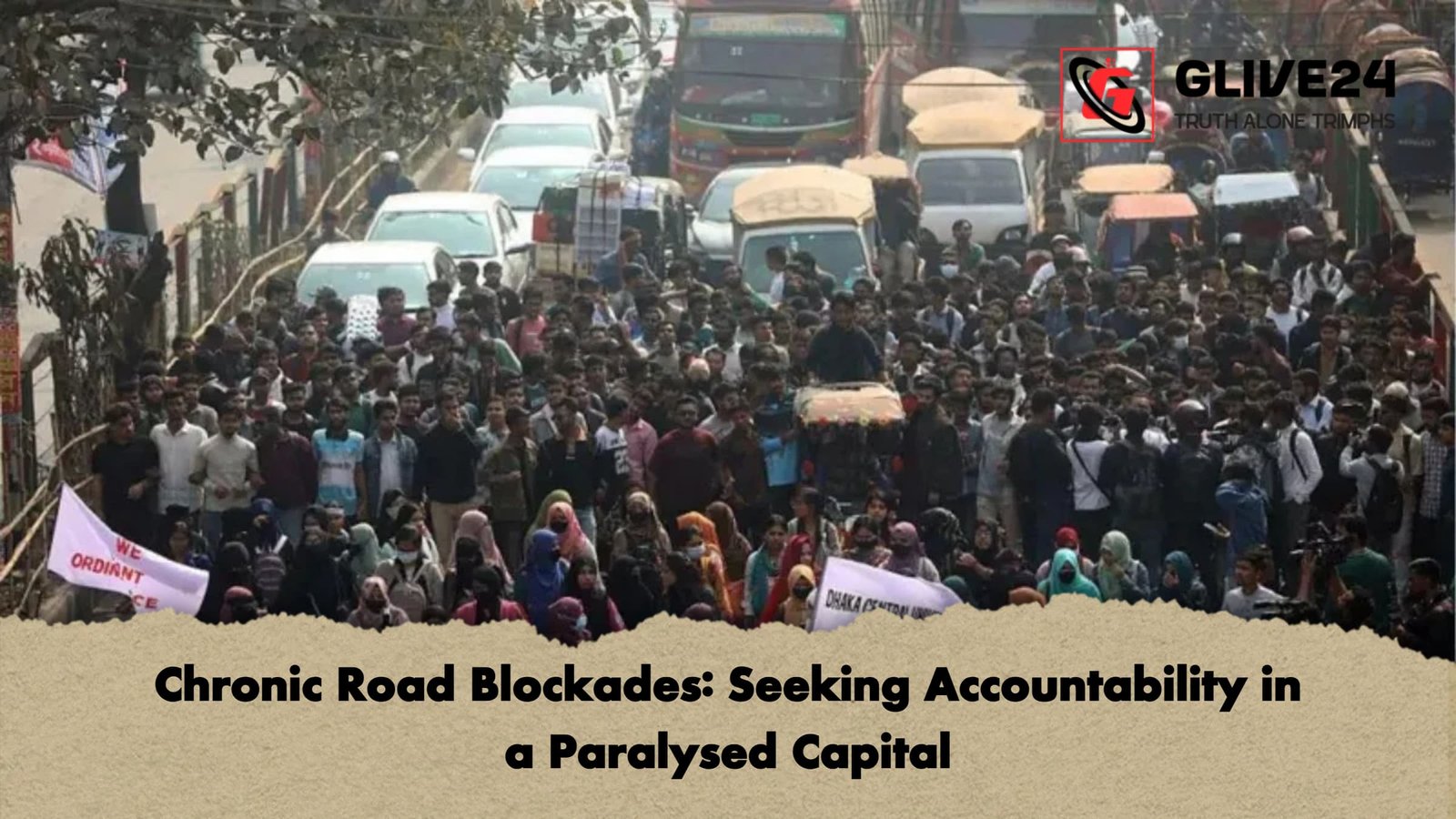
Dhaka’s transit network has long been a fragile ecosystem, but in recent months, the city has faced a mounting crisis: the normalisation of the road blockade as a primary tool for political and social negotiation. For Syed Abid Hussain Sami, a media professional, a routine assignment on Wednesday turned into a vivid illustration of this dysfunction. Despite planning his departure with precision, Sami found himself trapped at the Shahbagh intersection for over two and a half hours, a victim of a city-wide stalemate.
The disruption was orchestrated by students from the seven colleges affiliated with Dhaka University. Their movement, which has intensified in 2026, demands the immediate issuance of an ordinance to establish a dedicated university, alongside a fervent call for justice regarding the murder of their peer, Sakibul. By mid-morning, students had occupied five of the capital’s most vital arteries, effectively severing the city’s north-south and east-west connections.
A Tense Standoff in the Streets
The fallout of these blockades is increasingly volatile. As hours passed under the sweltering sun, the patience of the public evaporated. Social media has been inundated with footage of commuters—ranging from bus drivers to delivery workers—engaging in heated, sometimes physical, altercations with student activists.
The most harrowing aspect of the gridlock, however, remains the impact on emergency services. “I personally counted at least twenty ambulances trapped in the queue,” Sami reported. “Their sirens were constant, but there was simply nowhere for them to go.” This “ambulance paralysis” has become a grim hallmark of modern Dhaka protests, raising urgent ethical questions about the right to demonstrate versus the right to life.
The Cycle of Official Indifference
Observers and sociologists suggest that while the road blockade is a historical tactic in Bangladesh, its frequency has surged under the current interim administration. Critics argue that the responsibility lies not just with the protesters, but with a government that appears selectively deaf to formal grievances.
The prevailing sentiment among activists is that letters, memorandums, and peaceful delegations are ignored by the secretariat. Action, it seems, is only triggered when the capital is brought to its knees. This creates a dangerous precedent: to get a seat at the table, one must first seize the street.
Analysis of Major Dhaka Blockades (January 2026):
| Protesting Group | Core Grievance | Primary Choke Points | Duration of Impact |
| Seven College Students | University Autonomy | Shahbagh, Nilkhet, Science Lab | 8–10 Hours |
| Garment Workers | Wage Disparity & Arrears | Gazipur, Ashulia, Mirpur | Multi-day disruptions |
| Government Job Seekers | Entry Age Limit (35) | Farmgate, Shahbagh | Intermittent |
| Transport Owners | Route Permit Disputes | Mohakhali, Gabtoli | Total Terminal Shutdown |
The Search for a Middle Ground
As protesters threaten further blockades for the remainder of the week, the question of accountability remains unanswered. Is the fault with the students who feel they have no other voice, or with a governing apparatus that fails to anticipate and address grievances before they spill over into the public thoroughfare?
Until a robust and responsive administrative mechanism is developed to handle civic demands, the residents of Dhaka will continue to pay the price for this breakdown in communication—stalling the economy, endangering the sick, and turning the daily commute into an endurance test.