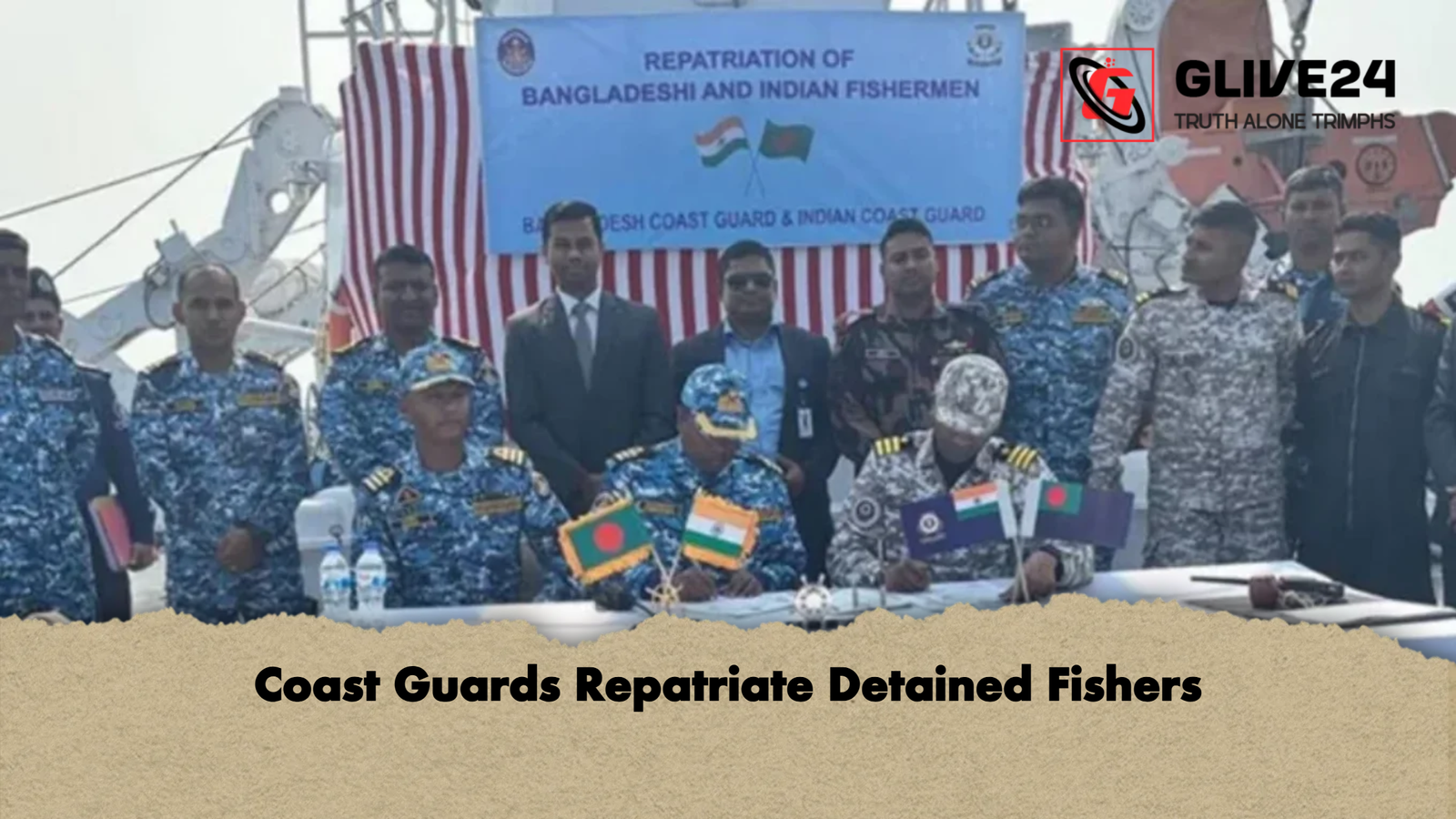
Under an established bilateral repatriation mechanism between Bangladesh and India, 128 Bangladeshi fishermen who had been detained in India for extended periods have been safely returned home. The handover took place on Thursday (29 January) at a designated point along the international maritime boundary line in the Bay of Bengal, during a formally coordinated ceremony attended by officials from the coast guards of both countries.
As part of the repatriation process, Indian authorities also transferred five fishing vessels owned by Bangladeshi nationals to the Bangladesh Coast Guard. The return of both fishermen and boats has been widely viewed as a significant humanitarian gesture and a practical demonstration of diplomatic cooperation between the two neighbouring countries, particularly in addressing recurring maritime challenges affecting coastal communities.
On the same day, in a reciprocal and legally mandated process, Bangladesh returned 23 Indian fishermen who had been detained at various times for illegal entry into Bangladeshi waters. Along with the fishermen, two Indian-owned fishing boats were formally handed over to the Indian Coast Guard. The entire exchange was conducted in an orderly and transparent manner in the presence of senior officers from both forces, ensuring compliance with international maritime norms and bilateral understandings.
Officials noted that the exchange allowed fishermen from both countries, many of whom had spent months away from their families, to finally return home. For coastal communities dependent on small-scale fishing, such prolonged detentions often result in severe economic hardship, making repatriation efforts particularly significant from a humanitarian standpoint.
The successful completion of this large-scale repatriation was the result of sustained coordination among multiple Bangladeshi ministries and agencies. The Ministry of Foreign Affairs played a central role in diplomatic engagement, while the Ministry of Home Affairs oversaw legal and security-related aspects. The Bangladesh Coast Guard led the operational side of the exchange, supported by the Ministry of Fisheries and Livestock in verifying fishermen’s identities and vessel ownership.
Additional support came from the Ministry of Shipping, Border Guard Bangladesh (BGB), Bangladesh Police, and local administrative authorities, all of whom worked together to resolve legal and administrative complexities. According to officials, most of the fishermen had crossed maritime boundaries unintentionally while fishing, often due to poor visibility, strong currents, or sudden changes in weather conditions that caused them to lose their bearings at sea.
Both countries’ coast guard and border security agencies emphasised that such exchange programmes help build mutual trust and strengthen cooperation in maritime border management. They also reiterated the importance of preventive measures, including increased awareness among fishermen, the use of navigation equipment, and better dissemination of weather forecasts to reduce accidental border crossings.
Following their return, the Bangladeshi fishermen will undergo basic health checks and complete necessary legal formalities before being handed over to local administrations, who will facilitate their reunification with families. Authorities stressed that continued dialogue and regular repatriation mechanisms remain essential to safeguarding the rights and welfare of fishermen operating in the often-challenging waters of the Bay of Bengal.
Summary of the Repatriation Exchange
| Category | Bangladesh to India | India to Bangladesh |
|---|---|---|
| Fishermen repatriated | 23 | 128 |
| Fishing vessels returned | 2 | 5 |
| Exchange location | International maritime boundary, Bay of Bengal | |
| Agencies involved | Coast Guards, foreign affairs, home affairs, fisheries, and local authorities |
This latest exchange underscores the role of sustained bilateral cooperation in addressing humanitarian concerns arising from maritime border incidents, while reinforcing goodwill and operational coordination between Bangladesh and India.