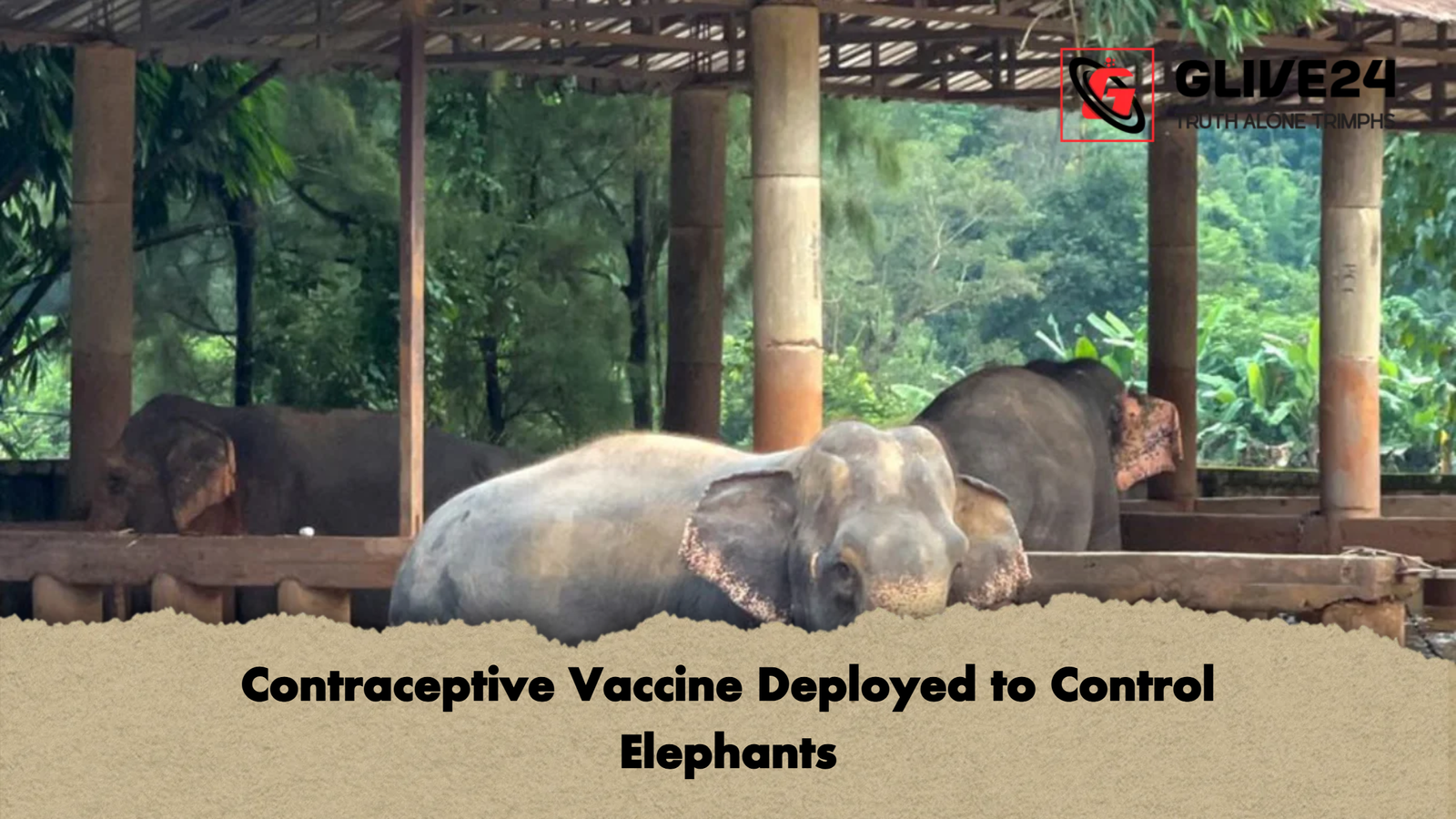
Thailand has launched the use of a contraceptive vaccine to manage its wild elephant population for the first time, wildlife authorities confirmed on Wednesday.
The initiative was announced by Sukhi Bunsang, Director of the Department of Wildlife Conservation, who stated that three female elephants in Trat Province, located in the country’s south-eastern region, received the vaccine last Monday. The primary aim of the programme is to curb rapid population growth and mitigate escalating human-elephant conflicts.
According to Bunsang, elephant birth rates in five eastern provinces are rising at an annual rate of around 8 per cent, compared with just 3 per cent in other regions. “If left unchecked, this population growth could increase encounters between humans and elephants, heightening risks for both parties,” he said.
Veterinary experts administered the vaccine remotely using a dart gun, without resorting to anaesthesia. All three elephants have recovered well and are currently exhibiting normal behaviour. Their health will be closely monitored, with blood tests scheduled every six months to assess the vaccine’s efficacy.
Thailand’s wild elephant population has grown significantly over the past decade. In 2015, the country had just 334 wild elephants; current estimates suggest the number has risen to approximately 800. In addition, several thousand elephants live in captivity or under human care. Conflicts between humans and elephants have claimed nearly 200 human lives and over 100 elephant lives in Thailand since 2012.
Two years ago, a pilot programme in Chiang Mai Province successfully tested the contraceptive vaccine on seven captive elephants. Building on this success, the Department of Wildlife Conservation plans to administer the vaccine to 15 more elephants across various regions before the onset of the monsoon season in May.
The table below summarises the current elephant population and birth rate trends:
| Region/Province | Current Wild Elephants | Annual Birth Rate (%) | Vaccine Programme Status |
|---|---|---|---|
| Eastern Thailand (5 provinces) | ~450 | 8 | Targeted for population control |
| Trat Province | 50 | 7 | Initial three elephants vaccinated |
| Other Regions | ~300 | 3 | Under observation |
Experts have praised the initiative as a positive step towards balancing wildlife conservation with human safety. By controlling population growth in rapidly increasing elephant populations, the programme aims to reduce crop damage, prevent dangerous encounters, and preserve ecological balance.
This move also positions Thailand as a potential model for other nations grappling with similar human-wildlife conflicts, demonstrating how non-lethal measures can effectively manage wildlife populations while safeguarding both humans and animals.