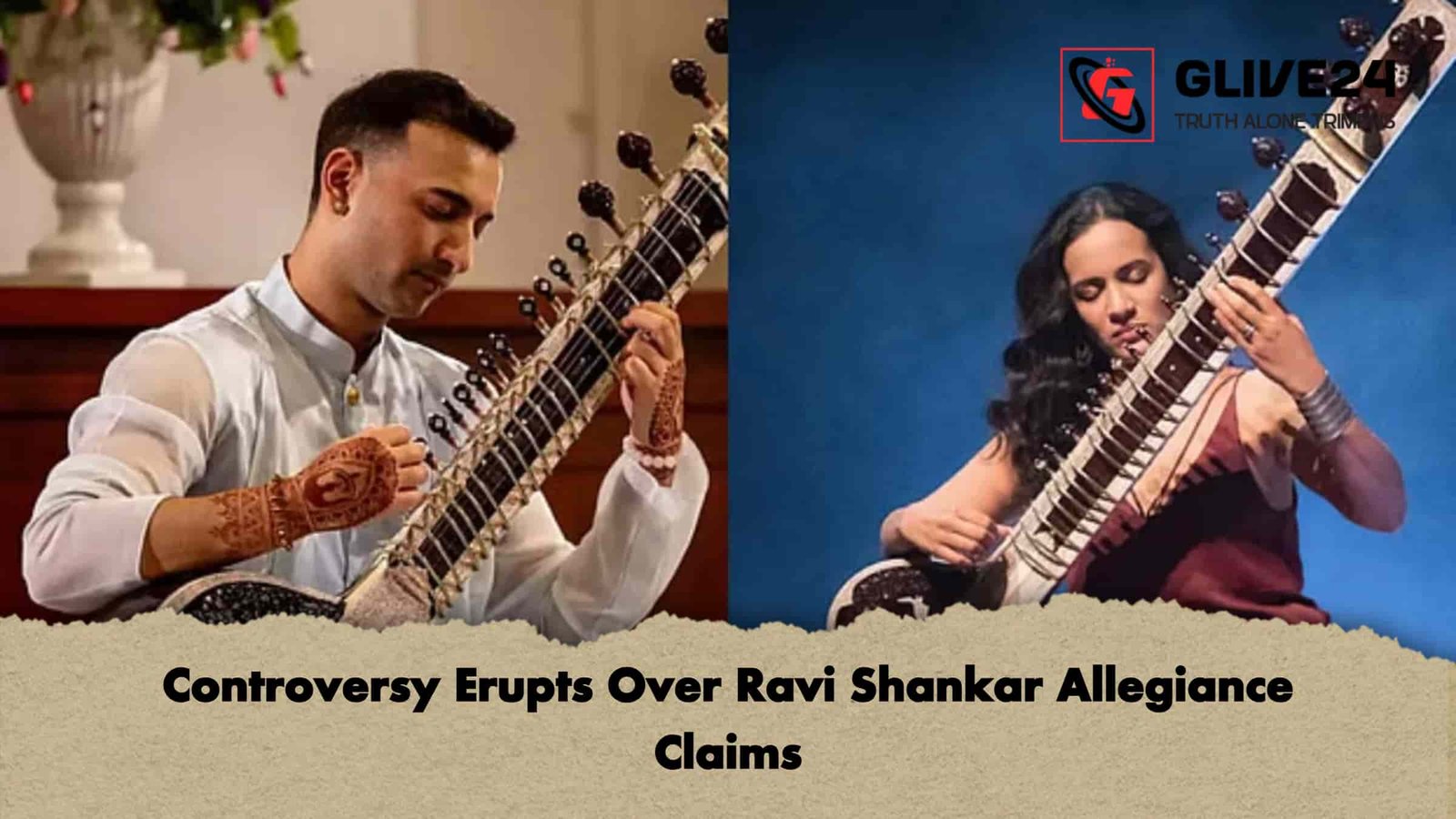
A public debate has recently emerged in the Indian classical music community over claims of discipleship to the late sitar maestro Ravi Shankar. Young sitarist Rishabh Rikhiram has, in various concerts and on social media, described himself as the “final and youngest disciple” of Shankar. This assertion has been explicitly rejected by Shankar’s daughter and internationally acclaimed sitarist, Anoushka Shankar.
During her visit to India, Anoushka clarified in an interview that Rishabh never received formal or sustained training under her father. She emphasised that Rishabh’s true mentor was Parimal Sodafal, himself a recognised disciple of Ravi Shankar. According to Anoushka, brief or informal interactions—even if occurring within close familial or social circles—do not meet the rigorous standards of the guru–shishya (teacher–disciple) tradition.
In Hindustani classical music, the guru–shishya relationship is not merely a pedagogical arrangement; it embodies a profound ethical and cultural commitment. Formal discipleship entails years of immersive practice, personal initiation, and the development of musical artistry under the direct supervision of a guru. By contrast, short-term guidance or occasional proximity does not confer this distinction. Anoushka’s statements bring into focus this subtle yet significant distinction, reinforcing the integrity of the tradition.
Ravi Shankar elevated the sitar to global prominence in the twentieth century. His frequent performances in Europe and North America, coupled with collaborations with Western musicians, introduced the ragas to entirely new audiences. Today, Anoushka Shankar, a multiple Grammy nominee, carries forward this legacy with international concerts and recordings.
Rishabh Rikhiram hails from a musically connected family. His father, Sanjay Rikhiram Sharma, belongs to a renowned Delhi-based instrument-making family with long-standing professional ties to the Shankar family. According to Anoushka, such social and familial proximity may have contributed to the public perception of an official teacher–student relationship.
| Name | Role/Relationship | Relevance |
|---|---|---|
| Ravi Shankar | Legendary sitarist | Rishabh’s claimed guru |
| Anoushka Shankar | International sitarist | Daughter of Ravi Shankar; disputes claim |
| Rishabh Rikhiram | Young sitarist | Claimed as Shankar’s disciple |
| Parimal Sodafal | Sitarist | Formal teacher of Rishabh; Shankar’s disciple |
| Sanjay Rikhiram Sharma | Instrument maker | Rishabh’s father |
During her India tour, Anoushka performed in six cities including Delhi, Mumbai, and Kolkata. She described her final concert in Kolkata as “dreamlike,” featuring guest appearances by popular vocalist Arijit Singh, which added a contemporary dimension to the evening.
This controversy has reignited discussions within classical music circles regarding lineage, transparency, and ethical standards. In a tradition where discipleship forms the very core of an artist’s identity, claims of affiliation carry both cultural and professional significance, underscoring the importance of clarity and authenticity.