
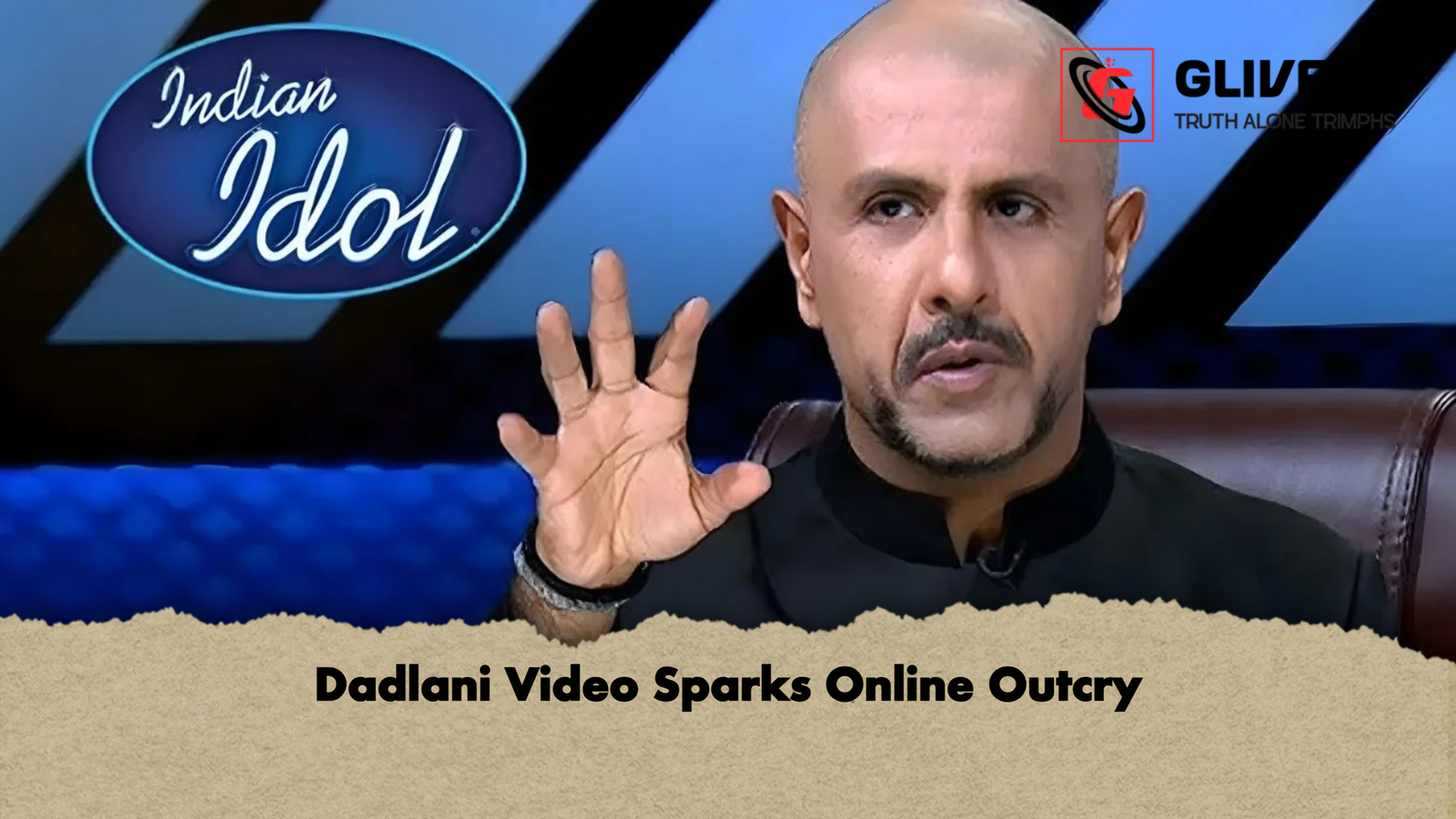
A recently circulated video featuring Indian music director and television personality Vishal Dadlani has triggered a wave of controversy across social media platforms, prompting calls for a boycott and demands for his removal from the popular reality television show Indian Idol.
The footage, reportedly recorded in London during a public gathering, shows Dadlani engaged in a cordial and informal conversation with Pakistani journalist Safina Khan. While the interaction itself appears routine and amicable, its rapid circulation online has ignited sharply divided interpretations among viewers.
Soon after the video surfaced, it gained significant traction on various social media platforms, where users began debating the intent and implications of the exchange. A section of commentators described the interaction as an ordinary moment of professional courtesy in an international setting. However, others interpreted it through a political lens, arguing that such engagements carry symbolic weight given the historically tense relations between India and Pakistan.
According to circulating claims on social media, Safina Khan has previously been associated by some users with critical views of India, a perception that further intensified the backlash. These assertions, however, remain part of online discourse and have not been independently substantiated in official statements.
The reaction on platform X (formerly Twitter) was particularly polarised. Critics accused Dadlani of displaying what they termed “anti-national” behaviour and urged regulatory or legal scrutiny. Some users went further, demanding that broadcaster Sony Television remove him from his judging role on Indian Idol. Others threatened to boycott the programme entirely if action was not taken.
In contrast, a substantial number of users defended the interaction, emphasising the importance of distinguishing between personal conversation and political intent. They argued that the video depicts nothing more than a routine exchange between two media professionals and cautioned against over-politicising informal interactions.
As of now, neither Dadlani nor Sony Television has issued any official statement addressing the controversy, leaving much of the narrative shaped by speculation and social media interpretation.
Summary of online reactions
| Category of response | Main demand or stance | Nature of commentary |
|---|---|---|
| Critical reaction | Boycott and removal from Indian Idol | Nationalistic concerns and allegations of disloyalty |
| Moderate view | Request for clarification | Calls for context and restraint before judgment |
| Supportive response | Defence of personal freedom | Emphasis on free expression and non-political interpretation |
Media analysts suggest that such incidents often escalate rapidly in digitally connected environments, particularly when they involve public figures and cross-border associations. The emotional sensitivity surrounding India–Pakistan relations further amplifies public reactions, frequently transforming routine interactions into contentious debates.
Ultimately, what began as a brief, seemingly informal exchange in a public setting has evolved into a wider online controversy, highlighting the volatility of digital discourse and the speed at which public opinion can polarise in the age of social media.