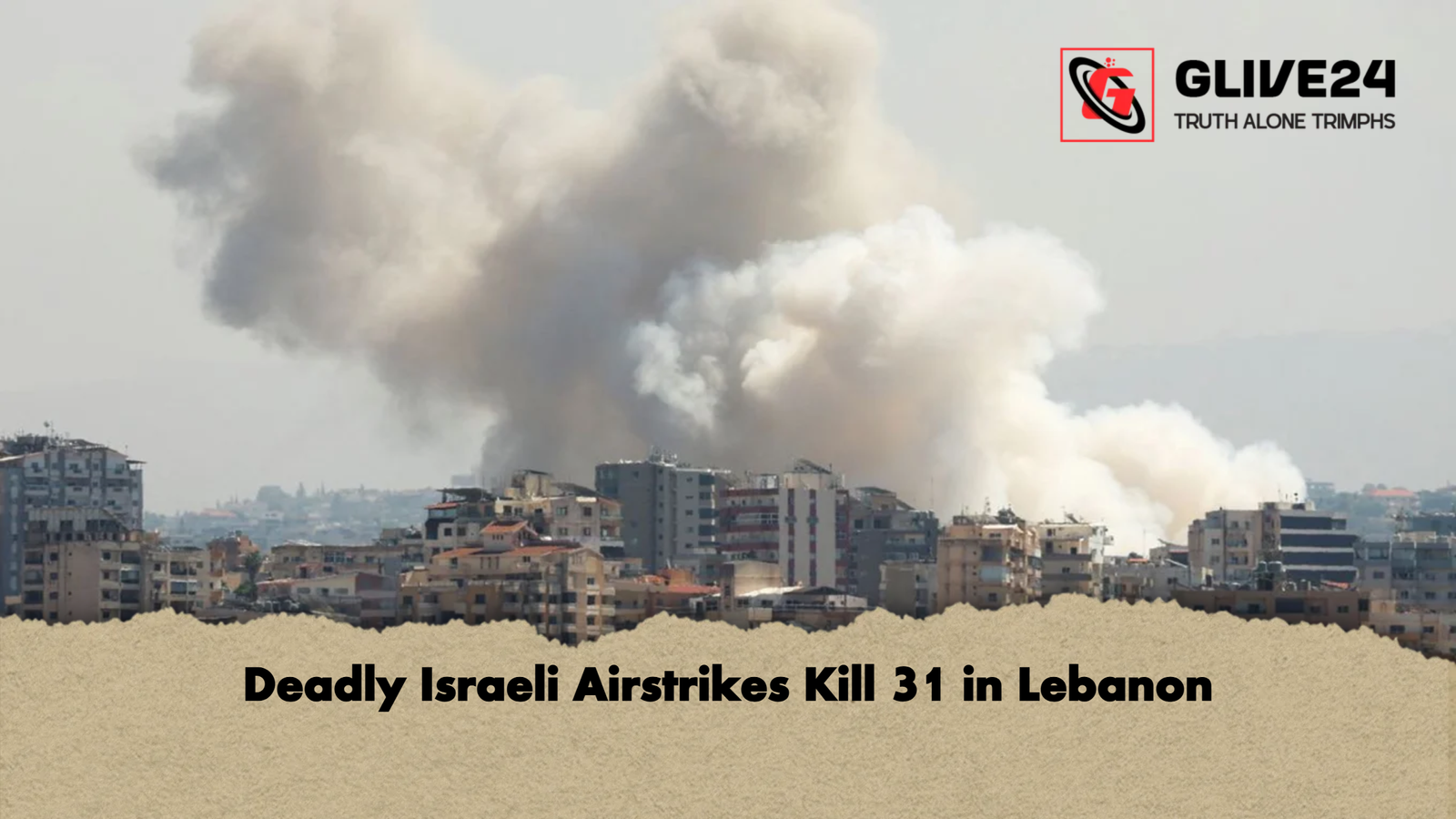
At least 31 people have been killed and 149 injured following a series of Israeli airstrikes across Lebanon, the Lebanese Ministry of Health confirmed on Monday. The strikes mark one of the deadliest escalations in recent months amid heightened tensions along the Israel-Lebanon frontier.
The bombardment reportedly targeted positions linked to Hezbollah in multiple regions, including the capital, Beirut. Health authorities stated that emergency teams continue to conduct rescue operations and provide treatment to the wounded, while hospitals in Beirut and surrounding areas have been placed on high alert.
Eyewitnesses reported that powerful explosions were heard in the southern suburbs of Beirut, particularly in the district of Dahiyeh, a known Hezbollah stronghold. Residents described repeated airstrikes, with Israeli jets carrying out sustained bombardment over several hours, prompting mass evacuations from targeted neighbourhoods.
In a statement, the Israel Defense Forces claimed the airstrikes were in retaliation for a major rocket attack launched by Hezbollah towards northern Israel. The military emphasised that it had struck Hezbollah infrastructure “across Lebanon” and pledged to prevent the group from posing any threat to the Israeli state.
“The organisation will not be permitted to establish any threat against the State of Israel,” the statement said, adding that the response would be “firm and forceful.”
The escalation follows Hezbollah’s claim of targeting a military base in Haifa, reportedly in retaliation for Israeli operations linked to perceived threats against Ali Khamenei. The exact circumstances surrounding this claim remain unclear.
Casualty Overview
| Category | Number Reported |
|---|---|
| Fatalities | 31 |
| Injured | 149 |
| Areas Targeted | Beirut and other regions |
| Responsible for Strikes | Israel Defense Forces |
| Alleged Trigger | Rocket attacks towards northern Israel |
The latest attacks signal a significant escalation in hostilities, raising fears that the conflict could widen and involve other regional actors. Analysts warn that continued exchanges of fire may destabilise the already volatile region.
International observers have expressed concern over the rising civilian toll and have urged restraint from all parties. Diplomatic efforts to de-escalate the situation are reportedly under way, although no immediate breakthrough has been achieved.
As the situation remains volatile, both sides appear prepared for further confrontation, leaving residents in affected areas on edge and sparking fears that the violence could spread beyond its current scope. The humanitarian impact continues to grow as hospitals and emergency services struggle to manage the influx of casualties and those displaced by the airstrikes.
This incident underscores the fragility of regional security and highlights the urgent need for renewed diplomatic engagement to prevent further escalation.