
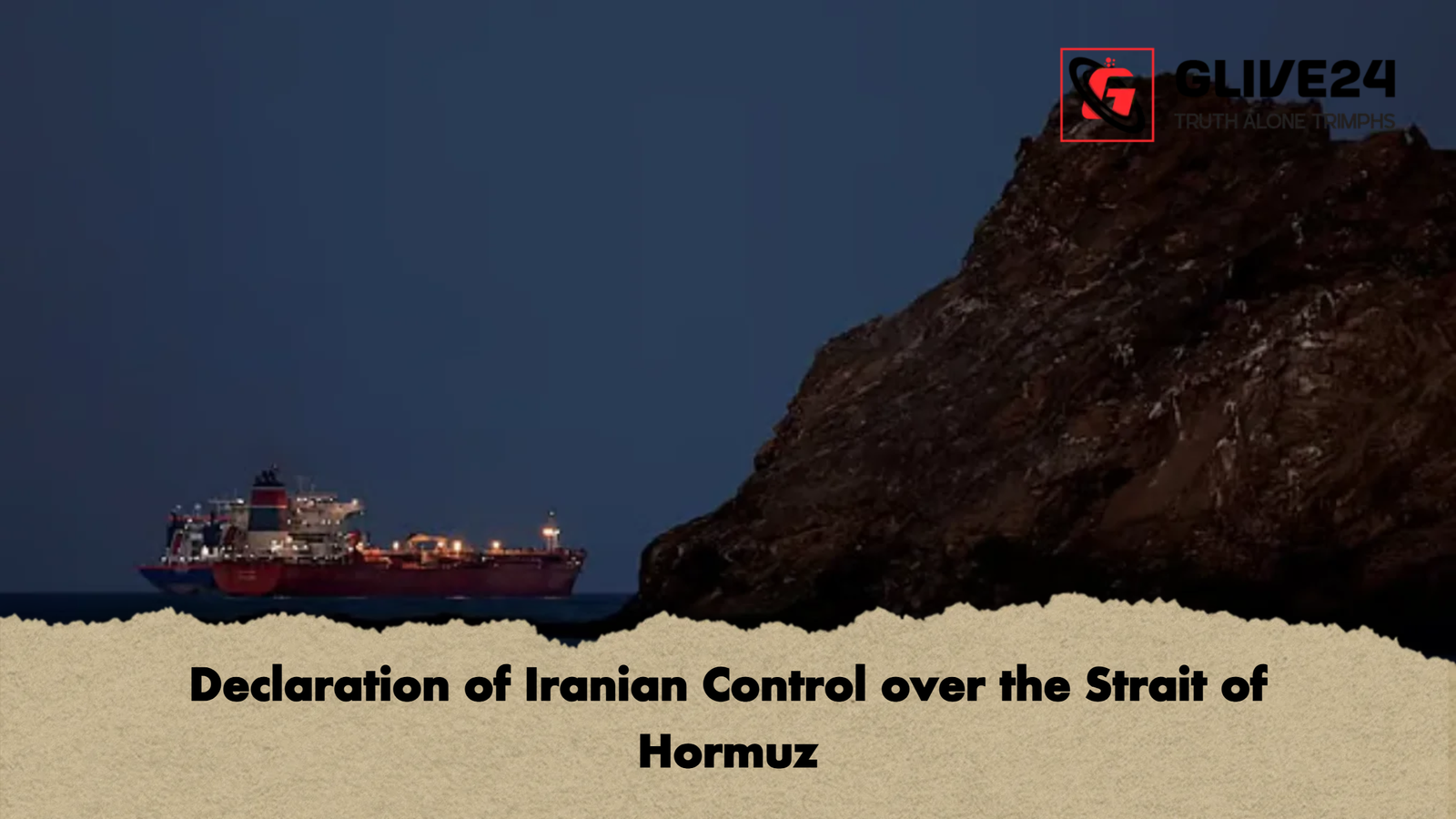
High-level peace talks between the United States and Iran held in Islamabad have concluded without any agreement, with disagreement over control of the strategically significant Strait of Hormuz emerging as a central obstacle. The waterway is reported to carry approximately 20 per cent of the world’s oil consumption as well as liquefied natural gas (LNG) shipments.
According to Iran’s Mehr News Agency, the country’s Deputy Speaker of Parliament, Hajji Babaei, described the Strait of Hormuz as a “red line” for Tehran. He stated that the strait is fully under Iranian control and added that vessels passing through it must pay transit fees in Iranian currency, the rial.
In contrast, former United States President Donald Trump posted on social media on Saturday claiming that the waterway would “soon be opened.” No further details were provided in the statement, which nevertheless coincided with heightened political exchanges regarding maritime access through the strait.
The United States Central Command (CENTCOM) stated that two of its naval vessels had already passed through the Strait of Hormuz. According to CENTCOM, the transit formed part of a broader operation involving mine clearance activities at sea, intended to ensure maritime security and navigational safety in the area.
However, the Islamic Revolutionary Guard Corps (IRGC) of Iran rejected the US claim. The IRGC issued a warning that any attempt by military vessels to pass through the Strait of Hormuz would be met with a strong response. It reiterated that Iran would maintain strict control over the waterway’s security arrangements.
In a statement reported by Iran’s state television network IRIB, and carried by the news agency AFP, the IRGC further indicated that civilian vessels may be permitted to pass through the strait, subject to specific conditions set by Iranian authorities.
The Strait of Hormuz remains one of the world’s most critical maritime passages due to its role in global energy transportation. Any restrictions or regulatory measures affecting its use have significant implications for international shipping and energy supply chains.
Summary of Positions
| Party / Authority | Statement or Position | Key Detail |
|---|---|---|
| Iranian Parliament (Deputy Speaker Hajji Babaei) | Strait is a “red line”; fully under Iranian control | Transit fees to be paid in Iranian rial |
| IRGC (Iran) | Military vessels will face strong response | Civilian passage allowed under conditions |
| United States (CENTCOM) | Two naval vessels transited strait | Part of mine clearance/security operation |
| Donald Trump (social media post) | Waterway will “soon be opened” | No additional operational details provided |
| Mehr News Agency (reporting Iranian position) | Emphasised Iranian control | Reinforced parliamentary statement |
The situation reflects continuing divergence between Iranian and US positions regarding navigation and security arrangements in the Strait of Hormuz, a maritime chokepoint of global strategic importance.