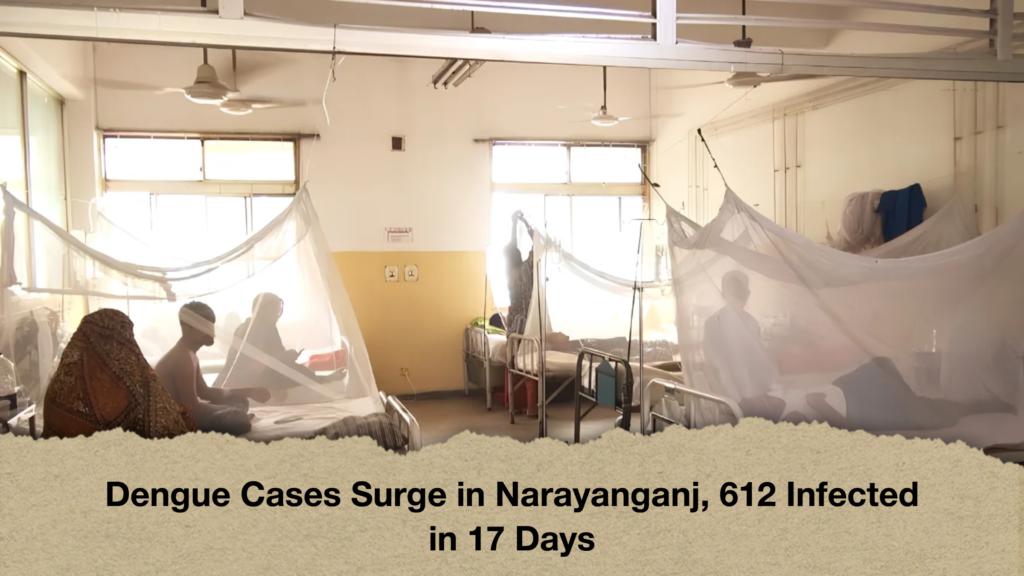
The dengue situation in Narayanganj is becoming increasingly concerning, with 612 people testing positive during the first 17 days of September alone. The figure has pushed the district’s total number of reported dengue cases to 1,931 during the first nine months of the year.
The latest figures were disclosed by Narayanganj District Civil Surgeon Dr SM Sakhawat Hossain on Thursday evening, 17 September.
According to data from the Civil Surgeon’s office, 167 dengue patients are currently receiving treatment at hospitals across the district. In the 24 hours leading up to Thursday, another 37 patients were admitted after being diagnosed with the mosquito-borne disease.
Of the newly admitted patients, five were taken to the 300-bed Narayanganj Hospital and another five to Narayanganj General Hospital. Eight new patients were reported in Araihazar, 10 in Rupganj, two in Bandar and seven in Sonargaon.
During the same 24-hour period, 27 patients recovered sufficiently to be discharged from hospital. None of the patients required referral to another medical facility, according to the health authorities.
No dengue-related deaths have been reported in Narayanganj so far this year. However, the sharp rise in cases in September has drawn particular attention from health officials. With 612 infections recorded in just 17 days, September has so far recorded the highest rate of dengue infections in the district this year.
Health officials have linked the rise to poor environmental cleanliness and a lack of public awareness. Dengue is transmitted primarily by Aedes mosquitoes, which can breed in small collections of stagnant water around homes and other built-up areas. As a result, eliminating potential breeding sites remains a key part of preventing transmission.
Dr Sakhawat Hossain said government hospitals were making efforts to provide comprehensive treatment to dengue patients and that dedicated wards had been arranged for those requiring care.
He also stressed that medical treatment alone would not be enough to contain the rise in infections. Residents need to remain alert and take steps to prevent mosquitoes from breeding around their homes and neighbourhoods.
Containers, flowerpots, discarded items, drums and other receptacles capable of holding stagnant water can provide suitable breeding sites for Aedes mosquitoes. Regularly checking and emptying such containers can therefore help reduce the risk of infection.
The latest figures also show how quickly the situation has changed in Narayanganj. Of the 1,931 cases recorded during the first nine months of the year, nearly one-third were reported within the first 17 days of September. With 167 patients still undergoing treatment, hospitals across the district continue to deal with a significant number of dengue cases.
The Civil Surgeon urged residents not to ignore symptoms associated with dengue and to seek medical advice when necessary. Alongside timely treatment, he emphasised the need for greater public awareness and cleaner surroundings to prevent further transmission of the disease.