
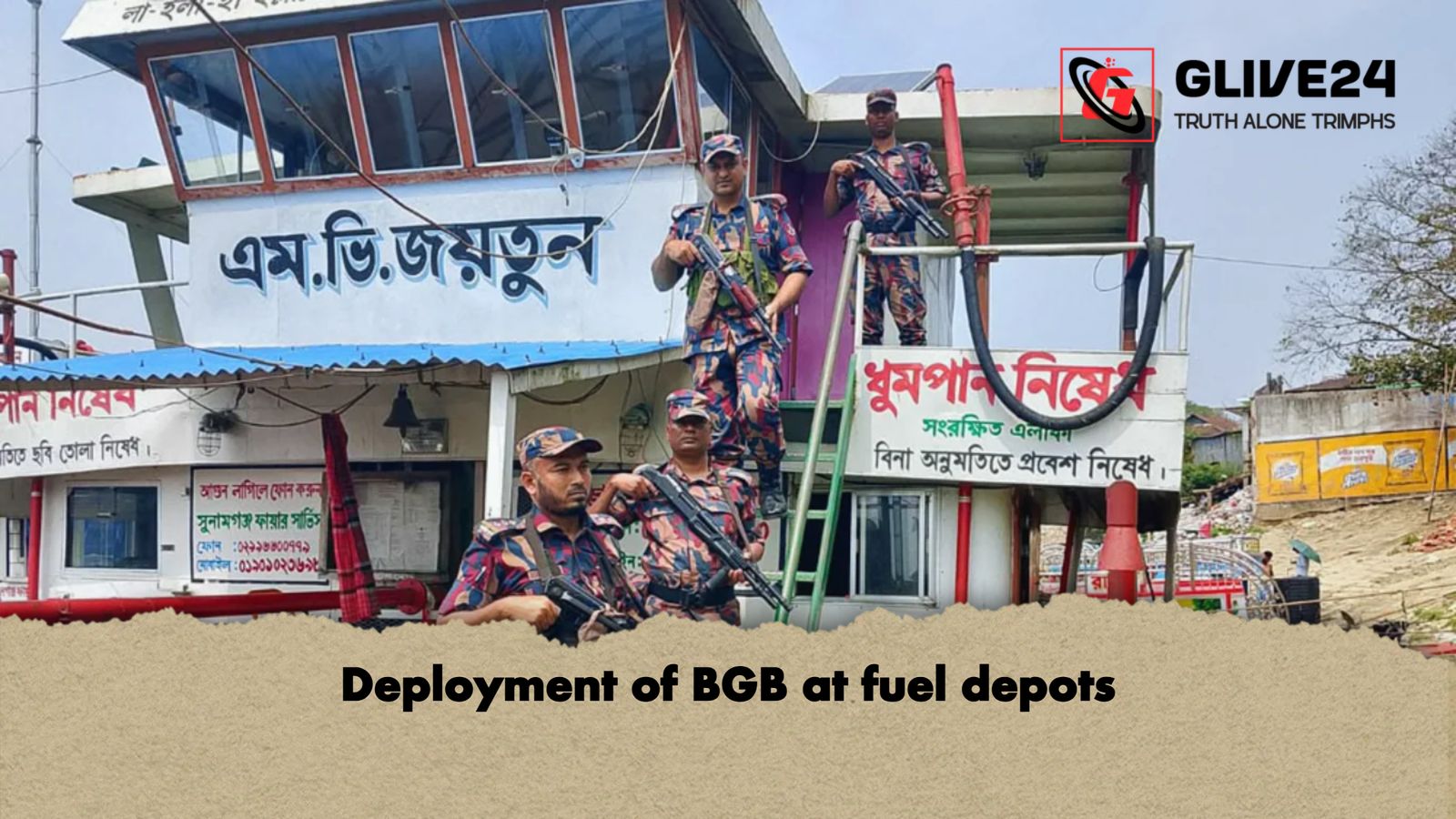
The Border Guard Bangladesh (BGB) has been deployed across 19 fuel depots in nine districts in a nationwide security initiative aimed at preventing illegal stockpiling, ensuring disciplined fuel distribution, and maintaining uninterrupted supply chains amid global market volatility.
The deployment was confirmed on Saturday (28 March) through an official statement signed by Public Relations Officer Major Md. Shariful Islam at BGB Headquarters. According to the statement, the decision follows growing concerns over instability in the Middle East, which has contributed to rising crude oil prices and fears of supply disruptions in international markets.
Authorities have observed attempts by certain groups to engage in unauthorised hoarding of fuel, prompting the government, through the Ministry of Home Affairs, to reinforce security at strategic storage and distribution points.
Table of Contents
Coordinated National Security Framework
The BGB stated that the operation is being conducted under a structured command framework directly overseen by its headquarters. To ensure operational effectiveness in geographically dispersed locations, temporary base camps have been established near each deployment site. These camps allow personnel to maintain continuous surveillance and rapid response capability.
Each deployment unit operates under the leadership of a commissioned officer, responsible for supervising routine inspections, enforcing security protocols, and ensuring strict administrative control within depot premises. The forces are also tasked with preventing sabotage, unauthorised access, and illicit fuel transactions.
Deployment Overview
The distribution of BGB personnel across fuel depots is summarised below:
| District | Number of Depots |
|---|---|
| Dhaka | 1 |
| Kurigram | 2 |
| Rangpur | 3 |
| Rajshahi | 3 |
| Sylhet | 2 |
| Moulvibazar | 3 |
| Cumilla | 3 |
| Brahmanbaria | 1 |
| Sunamganj | 1 |
| Total | 19 |
Enhanced Surveillance and Intelligence Operations
Alongside depot protection, border security measures have been significantly intensified. BGB patrols have been increased in border regions to prevent fuel smuggling and other forms of illicit cross-border trade. Naval patrols in riverine and coastal areas have also been strengthened to close potential trafficking routes.
Furthermore, enhanced checkpoints have been established at key border crossings. Vehicles engaged in import and export activities, including trucks and lorries, are being subjected to routine and random inspections. Intelligence monitoring has also been expanded in border-adjacent areas to detect and deter organised smuggling networks.
Operational Coordination and Public Confidence
The BGB emphasised close coordination with depot authorities to ensure swift communication and operational efficiency. This collaborative approach is intended to enable rapid decision-making in the event of any security breach or emergency situation.
Officials noted that the visible presence of BGB personnel is expected to deter illegal activities while reinforcing public confidence in the stability of fuel distribution systems. By maintaining strict oversight and proactive intelligence gathering, the force aims to ensure that supply chains remain uninterrupted despite external market pressures.
Strategic Objective
The overarching objective of the deployment is to safeguard national energy security by preventing artificial shortages, stabilising the fuel market, and ensuring fair distribution. Authorities believe that the enhanced security framework will play a crucial role in maintaining public trust and preventing disruption in essential services dependent on fuel supply.