
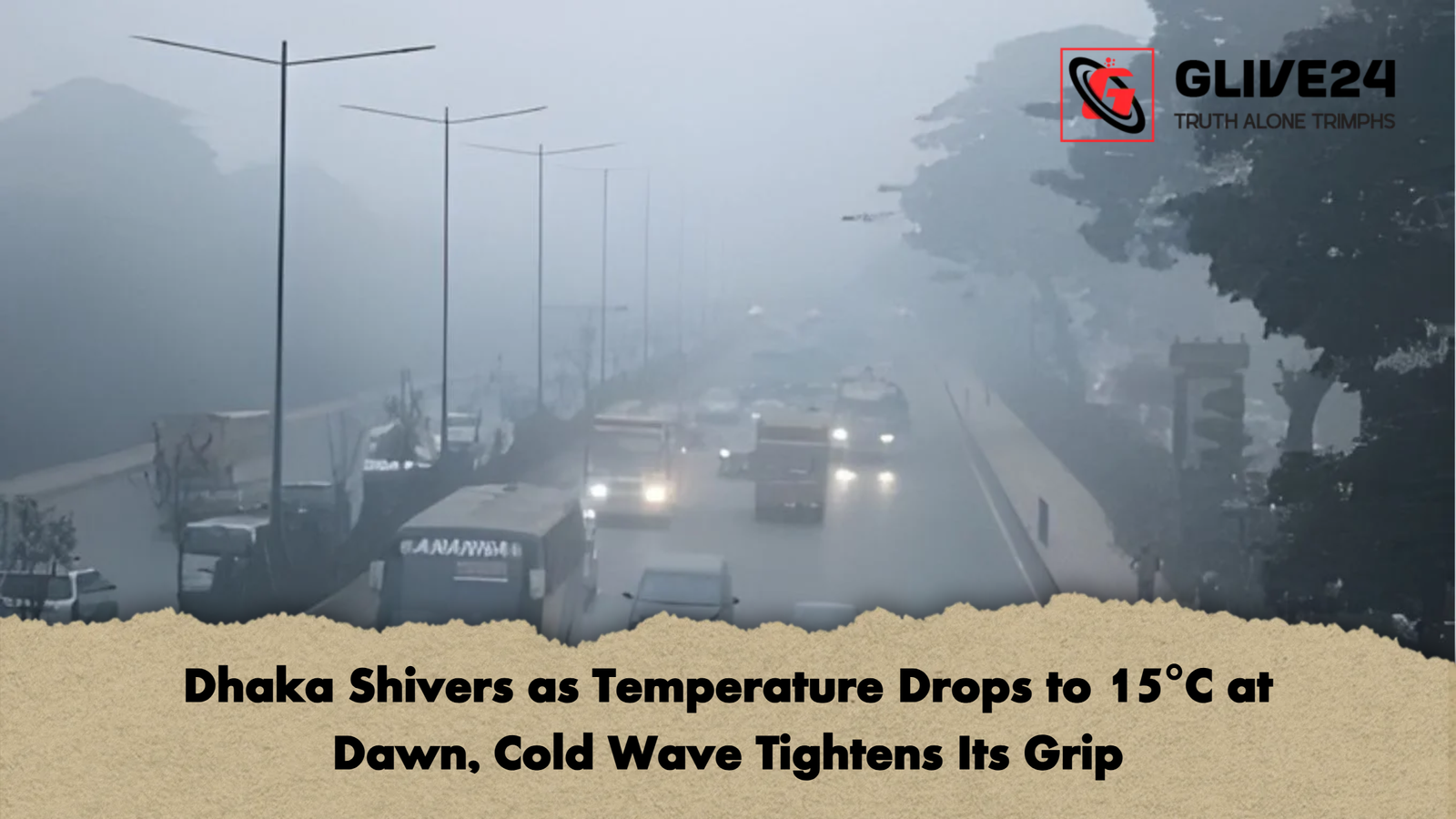
Dhaka experienced a noticeably sharper chill on Friday morning as temperatures dropped to around 15 degrees Celsius, marking one of the coldest mornings of the season so far. According to the Bangladesh Meteorological Department, the capital recorded 15.5°C at dawn, a sudden dip compared with the relatively milder temperatures of the previous few days.
At 6:00am on Friday, the temperature stood at 15.8°C, accompanied by a relative humidity level of 85 per cent, contributing to an even stronger feeling of cold among residents. The crisp morning air, combined with light north-westerly winds sweeping across the region, made the early hours particularly uncomfortable for commuters, labourers, schoolchildren and those who travel by motorcycles or rickshaws.
Meteorologists confirmed that Dhaka’s sky is expected to remain mostly clear, with dry weather persisting throughout the day. Winds from the north and north-west may continue blowing at speeds of 8 to 12 kilometres per hour, bringing with them the typical winter chill that usually intensifies during the first half of December.
Despite the noticeable drop in morning temperatures, daytime conditions are expected to remain nearly constant. Sunshine throughout the afternoon may bring mild warmth, but the chill is likely to return as soon as the sun begins to set. Meteorologists warned that the combined effect of declining night-time temperatures and persistent cool winds could make the evenings and early mornings feel even colder in the coming days.
The Bangladesh Meteorological Department’s three-day forecast indicates that dry weather is likely to dominate nationwide, with only temporary patches of cloud in some places. Daytime temperatures are expected to remain steady, while night-time temperatures may fall slightly, particularly in the northern and north-western districts where winter usually intensifies earliest.
Residents in Dhaka have already begun to adjust their daily routines to cope with the growing cold. Street-side tea stalls saw a sharp increase in customers seeking warmth, while early morning joggers and outdoors workers were seen wearing sweaters, hoodies and scarves—items that often remain unused until deeper winter months.
Experts believe that this current dip marks the beginning of a more persistent cold spell, which could spread across central, northern and north-eastern Bangladesh as December progresses. The city’s urban concrete landscape, which usually retains heat, appears to be cooling faster this year due to reduced cloud cover and continuous cold winds.
Public health officials have also issued reminders urging citizens, particularly children and the elderly, to take precautions against respiratory illnesses that commonly spike during early winter. Dry air, dust pollution and sudden temperature fluctuations often trigger coughs, colds and asthma-related complications.
For now, Dhaka residents are bracing for more cold mornings ahead as winter gradually strengthens its presence across the country.