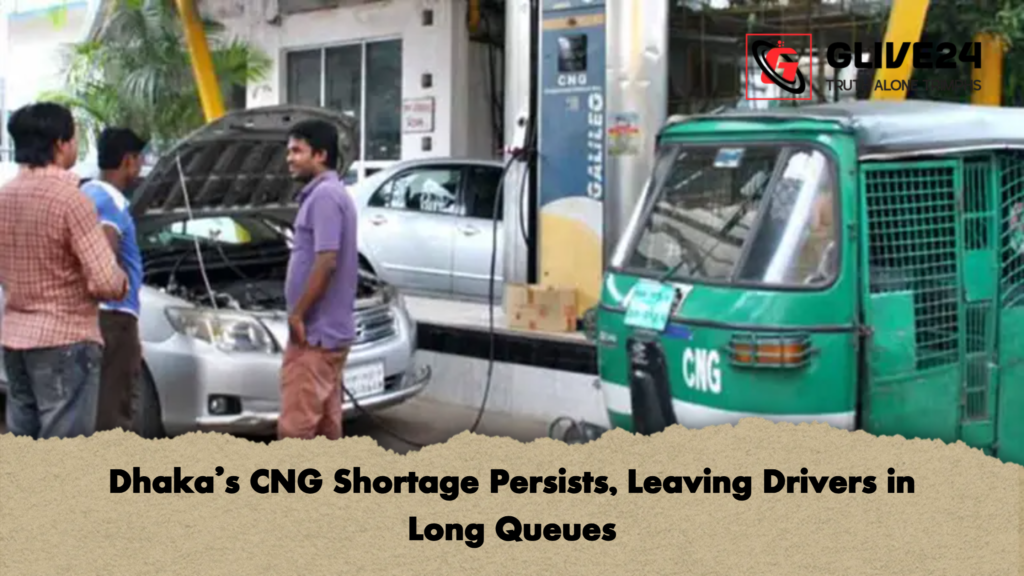
The gas shortage at compressed natural gas (CNG) filling stations across the capital has continued, causing severe inconvenience to drivers and disrupting the daily operations of public and private transport services. Many filling stations have displayed signs saying ‘No Gas’, while those still receiving supplies are struggling to meet demand because of low gas pressure.
The situation was observed on Saturday, 25 July, at several CNG stations in areas including Moghbazar, Tejgaon and Banglamotor. Long queues of vehicles had formed outside stations where gas was available, with drivers waiting for hours to refuel. In some cases, motorists reportedly moved from one station to another after failing to find gas, only to join another lengthy queue.
The prolonged shortage has placed a particularly heavy burden on CNG-powered vehicle drivers and ride-sharing workers, whose daily earnings depend largely on the number of trips they can complete. Hours spent waiting at filling stations mean less time on the road and fewer passengers served. For many drivers, the loss of working hours has translated directly into reduced daily income, while fuel and other operating costs continue to put pressure on their earnings.
Drivers said that securing gas has increasingly become a major part of their working day. Instead of spending their time completing passenger trips, they are forced to travel between filling stations in search of available supplies and then wait in long queues. The uncertainty has made it difficult for them to plan their daily schedules or maintain a regular flow of income.
The disruption is also affecting the operators of CNG filling stations. Station authorities said supply shortages were forcing them to remain at their facilities for five to six hours a day while waiting for adequate gas pressure and supply. When gas is unavailable or pressure remains too low, the stations are unable to serve customers despite the presence of large numbers of vehicles waiting outside.
The shortage is therefore creating difficulties on both sides of the sector. Drivers are losing valuable working hours and income, while station operators are facing business losses because they cannot provide services consistently. The long queues also add to congestion around busy roads and commercial areas, potentially worsening traffic conditions in parts of the capital.
CNG remains a widely used fuel for many vehicles in Dhaka, particularly among commercial transport operators and drivers seeking an alternative to more expensive conventional fuels. Any prolonged disruption in supply can therefore have a wider impact on urban mobility and the livelihoods of thousands of drivers who depend on uninterrupted access to fuel.
Drivers and CNG station authorities have called for effective and immediate measures to restore a stable gas supply. They said a reliable flow of gas and adequate pressure at filling stations would help reduce waiting times, restore normal transport operations and ease the financial pressure currently being felt by drivers and station operators.
Until the supply situation improves, however, drivers in several parts of Dhaka continue to face the same daily challenge: spending hours searching and waiting for gas instead of earning a living on the road.