
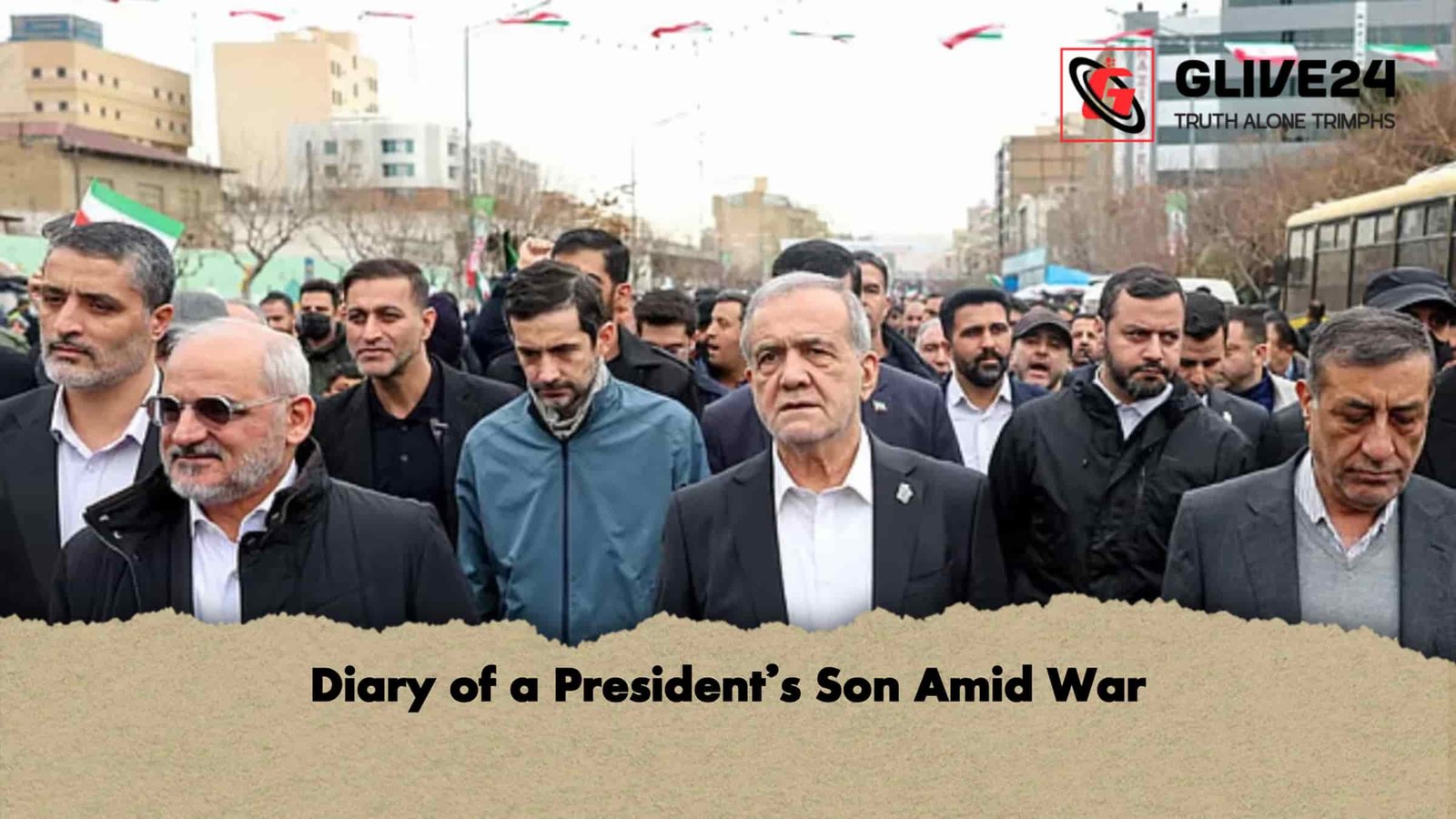
In a conflict-scarred Iran, personal reflections are rarely publicised—yet the diary of Yusef Pajeshekian, son of President Masoud Pajeshekian, offers an unusual window into life during war. His entries blend private grief, moral reflection, and observations of national strategy, revealing the emotional and societal pressures faced by ordinary citizens and the elite alike.
Yusef, 45, an assistant professor of physics, has kept meticulous notes throughout the war, despite having no access to classified information. “I do not possess secret intelligence,” he admits in his journal. “Even the idea of knowing events 48 hours in advance seems questionable.” Instead, he relies on televised reports and social media to capture the rapidly shifting perceptions of Iranians, under conditions of strict censorship.
The diary contains strikingly personal moments. One entry recounts:
“Missiles sounded at noon while rain fell. Tehran appeared almost like spring. If only I had a camera to record the city’s beauty. If only the war did not exist, I could stroll the streets with my family.”
Yusef also reflects on Iran’s geopolitical stance and the domestic perception of the conflict. His social media posts convey anti-United States and anti-Israel sentiment, coupled with strong support for his father’s decisions, while also expressing frustration at internet blackouts and censored news. He questions whether apologies should be offered to Gulf nations affected by Iran’s missile strikes.
A conversation with a friend illustrates the psychological toll: a missile had struck near the friend’s home, just as a recent dream predicted. Yusef notes the trembling hands, laughter as a coping mechanism, and the constant uncertainty that shadows daily life.
He also evaluates strategic and military considerations:
| Topic | Diary Reflection |
|---|---|
| Duration of conflict | “Will we fight indefinitely, until Israel is destroyed or Iran is annihilated?” |
| Resources | “How long will our missiles last? How prepared is the enemy?” |
| Truthfulness of reports | “Who is lying? Did Iran plan nuclear weapons? Were thousands of citizens killed in protests?” |
| Responsibility and morality | “Yes, we have erred, but this does not justify US or Israeli aggression.” |
Even amid national crises, personal grief permeates his diary. Yusef recounts comforting his elderly grandmother, who had been kept in the dark about early casualties, only to weep privately afterward.
“Nothing feels normal,” he concludes, underscoring the tension between familial duty, national loyalty, and human vulnerability.
Yusef Pajeshekian’s writings stand as both a testament to personal resilience and a lens into Iran’s internal debates, revealing the psychological and moral complexities of war as experienced within the president’s own household.
Source: Patrick Wintour, The Guardian