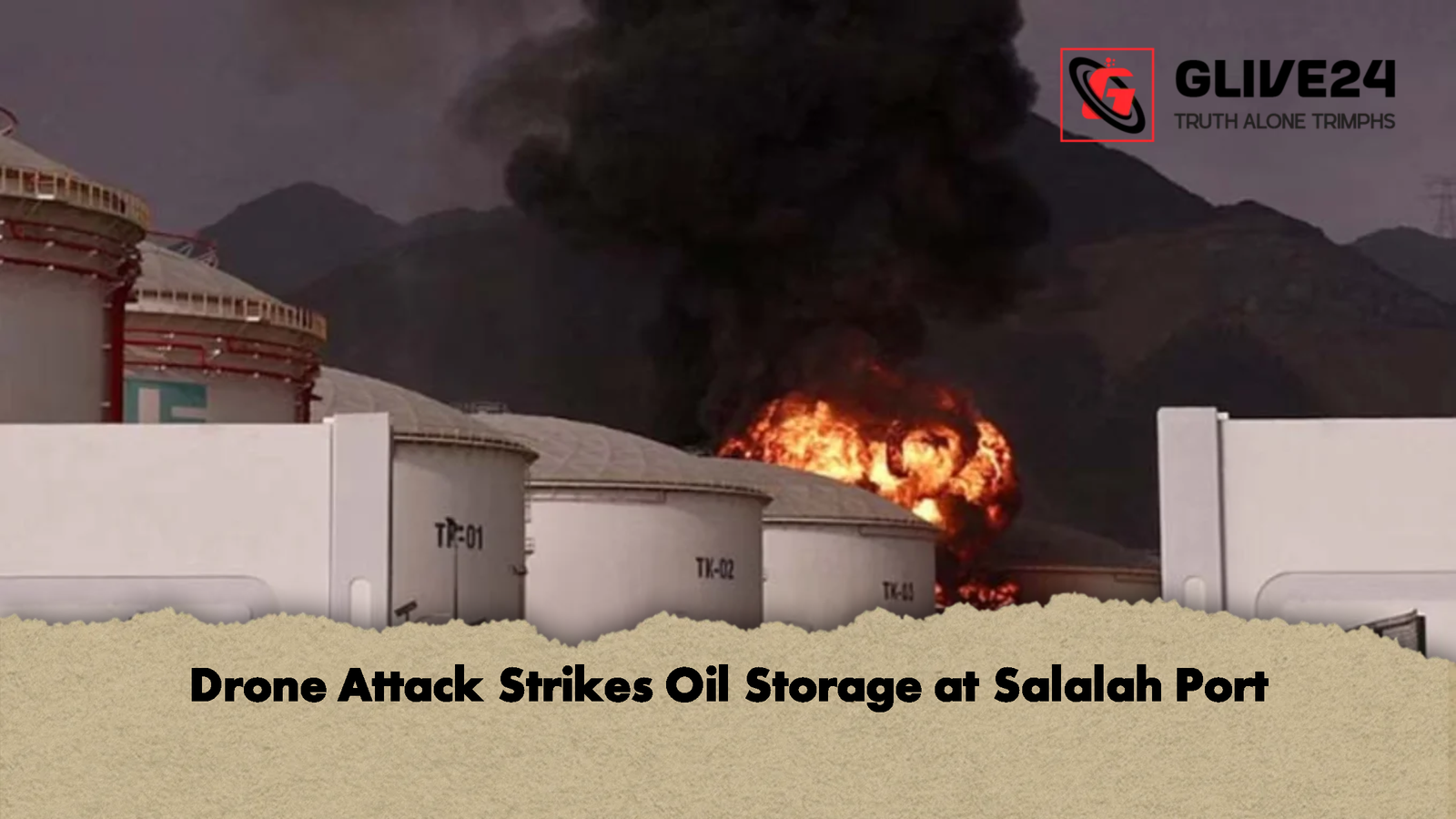
A drone strike has targeted oil storage tanks at the Port of Salalah, Oman, raising serious concerns over the security of the Middle East’s energy infrastructure amid escalating regional tensions. The incident, reported on Wednesday by the British maritime security firm Ambrey and confirmed by Oman TV, underscores the growing vulnerability of strategic fuel facilities in the region.
Table of Contents
Incident Overview
According to initial reports, unmanned aerial vehicles struck fuel storage tanks within the port complex, one of Oman’s most critical maritime hubs. Authorities have yet to confirm casualties or provide a full assessment of the damage.
Security analysts note that these attacks come against the backdrop of increasing military tensions across the region, where energy facilities and shipping lanes are frequent targets. Although Omani officials have not publicly identified the perpetrators, such strikes are typically intended to disrupt supply chains and create volatility in global oil markets.
| Key Detail | Information |
|---|---|
| Location | Port of Salalah, Oman |
| Target | Petroleum storage tanks |
| Method | Drone strike |
| Reported by | Ambrey Maritime Security, Oman TV |
| Casualties | Not immediately confirmed |
| Damage | Under assessment |
Strategic Importance of Salalah
The Port of Salalah occupies a crucial position along the maritime route connecting the Arabian Sea with the Indian Ocean trade network. It serves as a major logistics and refuelling hub for vessels operating between the Persian Gulf, East Africa, and South Asia.
Unlike facilities situated near the narrow Strait of Hormuz, Salalah is considered relatively safer, making the port a vital alternative for energy storage and shipping. However, this recent attack highlights that even strategically “safer” locations are now exposed, raising broader questions about regional energy security.
Regional Risks and Energy Implications
The strike comes amid a spike in incidents targeting energy infrastructure, commercial shipping, and maritime transport routes in the Middle East. Experts warn that repeated attacks could destabilise regional security further, potentially triggering a ripple effect on global oil prices, shipping insurance costs, and supply chains.
Energy analysts emphasise that pipelines, storage depots, and tanker routes have historically been high-value targets during geopolitical confrontations. A prolonged campaign against such assets could have far-reaching consequences for both regional and international energy markets.
Outlook and Precautionary Measures
Omani authorities are currently assessing the damage while strengthening security protocols at the port. Maritime agencies have advised shipping operators in surrounding waters to maintain heightened vigilance.
If drone strikes on ports and oil facilities continue, the impact may extend well beyond regional geopolitics, potentially affecting global energy supply, market stability, and oil pricing. Analysts stress the importance of proactive risk mitigation to safeguard both regional infrastructure and international markets.