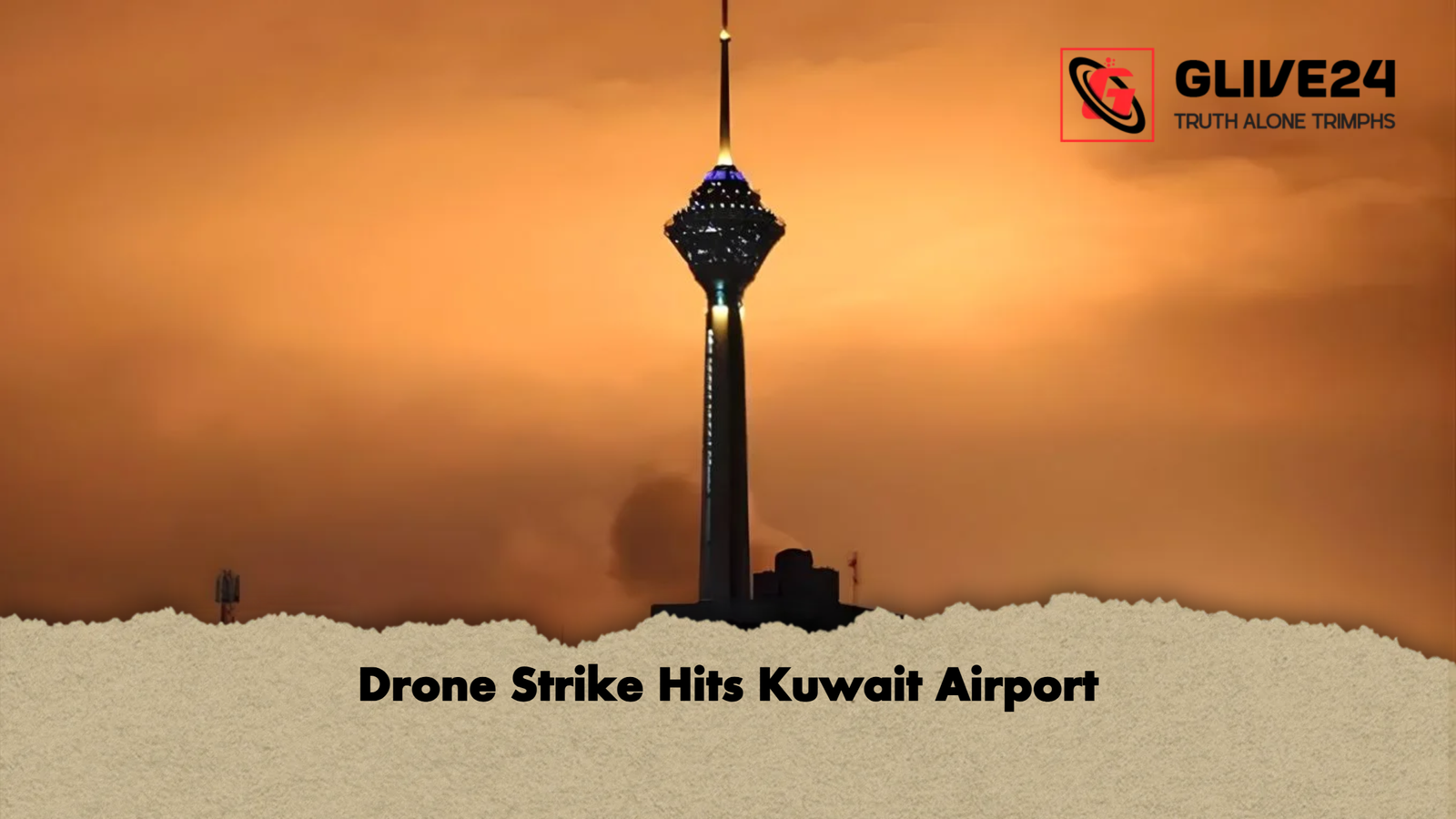
Amid rising tensions across the Middle East, a drone attack struck Kuwait’s main international airport, triggering fires at key facilities and raising fresh security concerns in the strategically important Gulf region. Authorities confirmed that emergency teams were able to bring the situation under control within a short period, preventing wider damage and disruption.
According to official statements from the Kuwaiti government, the incident occurred when several aerial threats were detected in the country’s airspace. Kuwait’s air defence systems reportedly identified three ballistic missiles, which were intercepted and destroyed before they could reach their targets. Officials said the successful interception prevented what could have been far more serious destruction.
However, at roughly the same time, drones managed to strike near Kuwait International Airport, igniting a fire at a fuel storage tank. Flames also broke out at the headquarters building of the Public Institution for Social Security, a significant government organisation responsible for managing the country’s social insurance and pension programmes.
Emergency response units, including the Kuwait Fire Force and Civil Defence teams, were dispatched immediately after the attack. Firefighters worked rapidly to contain the blaze at both locations. Authorities later confirmed that the fires were fully extinguished within a relatively short period. Preliminary reports indicate that no casualties have been recorded, although some structural and infrastructural damage is believed to have occurred.
Airport authorities said security measures were tightened following the incident. While the airport continued operating, some flights were temporarily subject to heightened safety checks and precautionary adjustments. Officials emphasised that passenger safety remained the top priority and that operations would continue to be closely monitored.
Analysts link the incident to the wider escalation of military tensions in the Middle East. On 28 February, the United States and Israel reportedly launched a joint military operation targeting Iranian assets. In response, Iran has been accused of carrying out retaliatory strikes against locations linked to American interests across the region.
Security observers believe such attacks are intended to exert pressure on the United States and its allies while signalling Iran’s ability to project influence across the Gulf. In recent years, the region has witnessed a growing reliance on drones and missile systems in asymmetric warfare.
Experts warn that the Gulf region is one of the world’s most critical energy supply hubs, and any instability there could have wider consequences for global energy markets and economic stability. Key infrastructure—including airports, oil facilities and government installations—are particularly sensitive targets during periods of geopolitical tension.
The following table summarises the main details of the incident:
| Key Aspect | Details |
|---|---|
| Location of attack | Kuwait International Airport |
| Type of assault | Drone strike alongside missile threats |
| Facilities affected | Fuel storage tank and Public Institution for Social Security building |
| Air defence response | Three ballistic missiles intercepted and destroyed |
| Fire response | Kuwait Fire Force quickly contained the fires |
| Casualties | None confirmed so far |
| Operational impact | Heightened airport security and precautionary flight monitoring |
Kuwaiti authorities remain on high alert as regional tensions continue to evolve. Additional defensive measures have reportedly been implemented to strengthen airspace security and protect vital infrastructure. Analysts caution that if the broader Middle Eastern conflict intensifies, similar attacks on strategic facilities could become more frequent, posing further risks to regional stability.