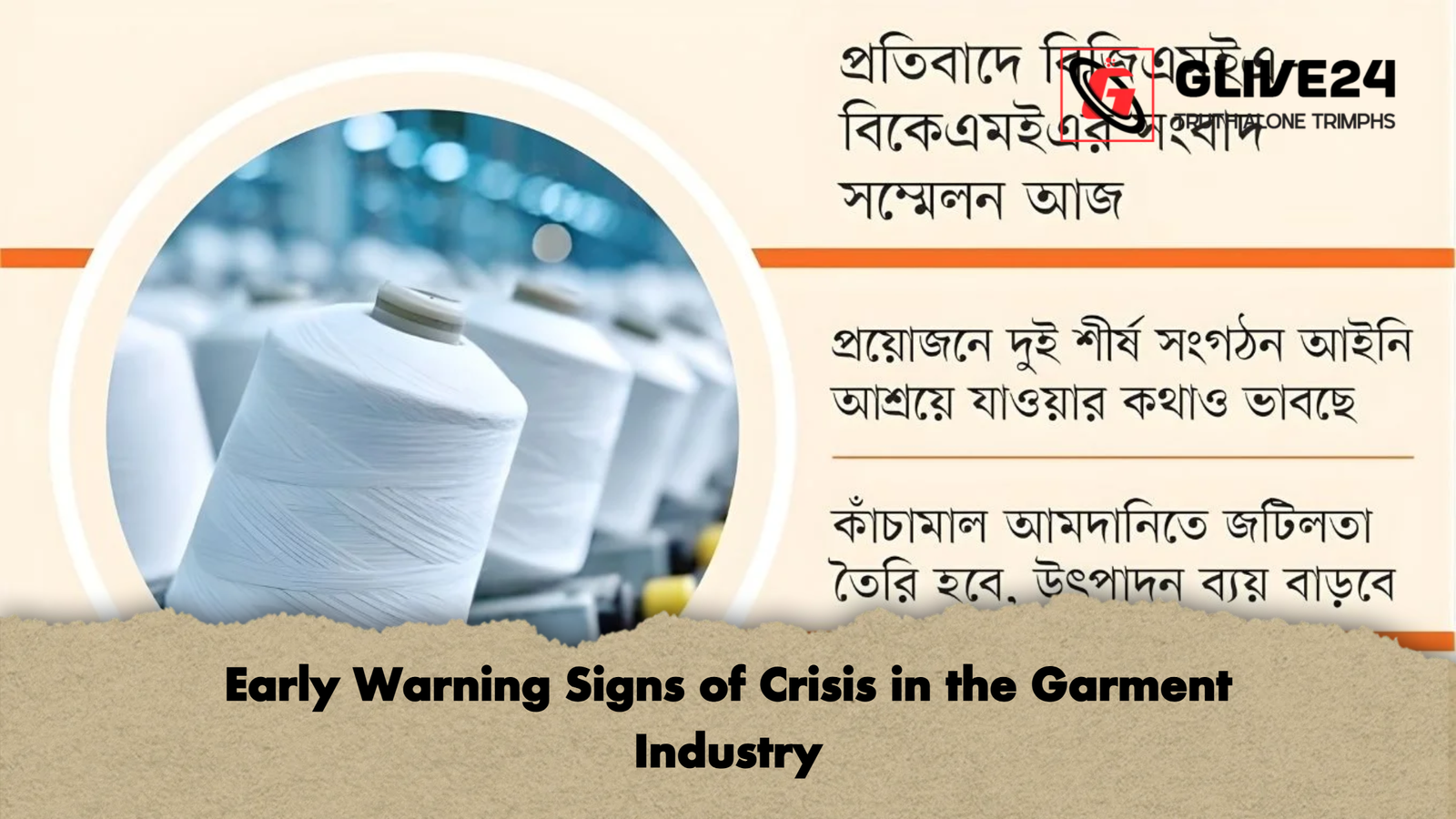
The Government of Bangladesh has decided to withdraw bonded warehouse facilities for cotton yarn of counts ranging from 10 to 30, citing the need to protect the domestic spinning industry. However, this move has sparked concerns of a significant disruption in the country’s leading export sector—the ready-made garments (RMG) industry.
In protest, the Bangladesh Garment Manufacturers and Exporters Association (BGMEA) and the Bangladesh Knitwear Manufacturers and Exporters Association (BKMEA) have jointly called a press conference today, Monday. Sources indicate that, if necessary, these leading industry bodies may resort to legal action to challenge the decision.
Industry stakeholders argue that the sudden removal of bonded facilities will complicate raw material imports, raise production costs, and make it challenging to meet export orders on time. This could undermine Bangladesh’s credibility among international buyers and put export earnings at risk.
According to the Ministry of Commerce, the prolonged bonded import privileges for low-count yarns in the export-oriented RMG sector have led to a surge in imports at either duty-free or minimal duty rates. Consequently, imported yarns are being sold at lower prices in the domestic market, making it difficult for local spinning mills to compete effectively.
The government’s decision follows recommendations from the Bangladesh Tariff Commission and demands from the Bangladesh Textile Mills Association (BTMA). Recent import statistics highlight the growing trend:
| Fiscal Year | Yarn Count (10–30) | Quantity Imported (Metric Tonnes) | Import Value (Billion BDT) |
|---|---|---|---|
| 2022–23 | 10–30 | 36,000 | 148.0 |
| 2023–24 | 10–30 | 41,000 | 220.0 |
| 2024–25* | 10–30 | Ongoing Increase | Ongoing Increase |
*Preliminary data for the current fiscal year.
The Ministry notes that due to bonded imports, domestic spinning mills are currently operating at only 60% capacity. Around 50 mills have already closed, and many others face financial losses, threatening both investment and employment in the sector.
Garment industry leaders warn that implementing this decision could immediately trigger a raw material shortage, particularly affecting the knitwear and woven sub-sectors. The press conference today is expected to call for a government review of the policy, while also signalling potential legal recourse if policy coordination is not achieved.
Officials further emphasise that, with Bangladesh transitioning from LDC status in 2026, duty-free access to major markets such as the EU, the US, and Japan will be significantly reduced. To maintain competitiveness, strengthening the domestic spinning industry is crucial. The government has directed the National Board of Revenue (NBR) to ensure clear declaration of yarn counts on bills of entry and to monitor potential misuse of HS codes.
Fazle Ehsan Shamim, Executive President of BKMEA, told Kaler Kantho that the Ministry’s decision places the RMG sector—the country’s top export earner—under severe strain. “It will increase lead times, disrupt exports, and create a conflict of interest between the spinning and garment industries,” he added.