
As Bangladesh prepares for a possible combined national parliamentary election and referendum, the Election Commission (EC) is considering how to efficiently accommodate voters without expanding the total number of polling stations. Drawing on lessons from recent mock voting exercises, the EC suggests that adding a second private booth to each voting compartment could suffice. This measure would allow multiple voters to cast ballots simultaneously while maintaining privacy. Further evaluation is underway to confirm whether this approach is universally practical.
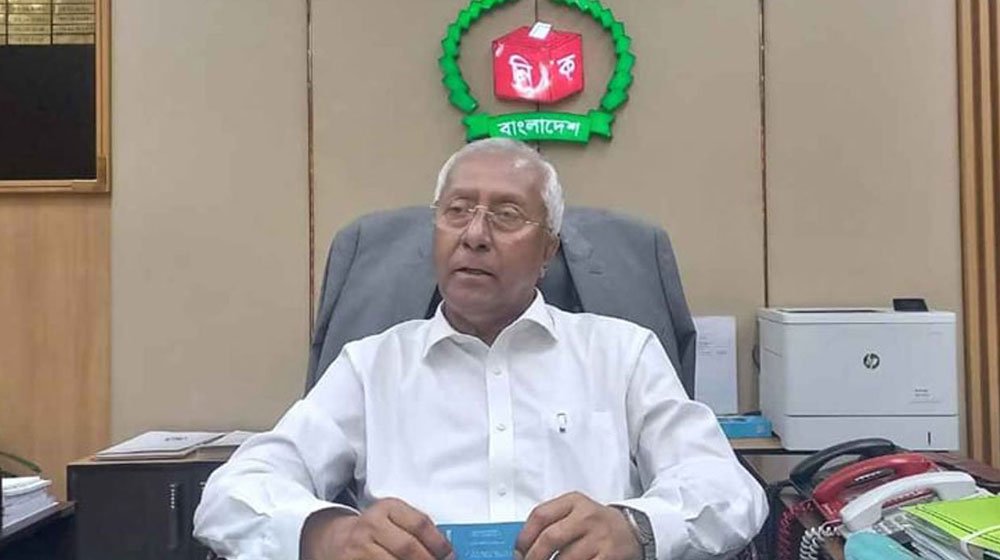
On Sunday, the EC convened a comprehensive preparatory meeting with over 30 ministry and departmental officials involved in election management. Presided over by Chief Election Commissioner A. M. M. Nasir Uddin, the meeting also included four Election Commissioners. Senior Secretary Akhtar Ahmed briefed the media afterwards, highlighting the EC’s focus on three priorities: conducting the parliamentary election, managing a potential referendum, and integrating expatriate voters into the process.
Ahmed emphasised the need for coordination between planning and execution, stating, “Quality must be maintained at every stage. Collaboration among the Election Commission, field administration, and judiciary is critical; merely providing lip service will not suffice.”
Currently, 42,761 polling stations and 244,649 voting booths are planned nationwide. The feasibility of holding both elections on the same day without increasing polling stations was examined. The mock election held on Saturday indicated that two private booths per voting compartment could accommodate voters without the need for additional stations. However, Ahmed cautioned that the infrastructure in some hilly or remote areas might require further adjustment, with additional booths or alternative arrangements necessary.
The EC also observed that many voters took longer than anticipated to cast ballots on the four referendum issues included in the mock exercise. If voters are familiarised with the referendum issues in advance through education campaigns, voting could be more efficient. In addition, voter education, expatriate registration, adherence to codes of conduct, and measures to prevent AI-based interference are receiving special attention.
To prevent influence from local political figures, the EC is considering additional allowances and benefits for polling officials, alongside clear protocols for returning and presiding officers. Ballot papers will be printed at BG Press for domestic voters, and at the Army Security Printing Press for expatriate voters under government supervision. Law enforcement agencies report that overall law and order remains stable, with only minor isolated incidents.
Finally, both state-run and private television networks have been requested to intensify campaigns promoting awareness of elections, referendums, and overseas voting, ensuring that voters are well-informed and the process remains transparent and accessible.