
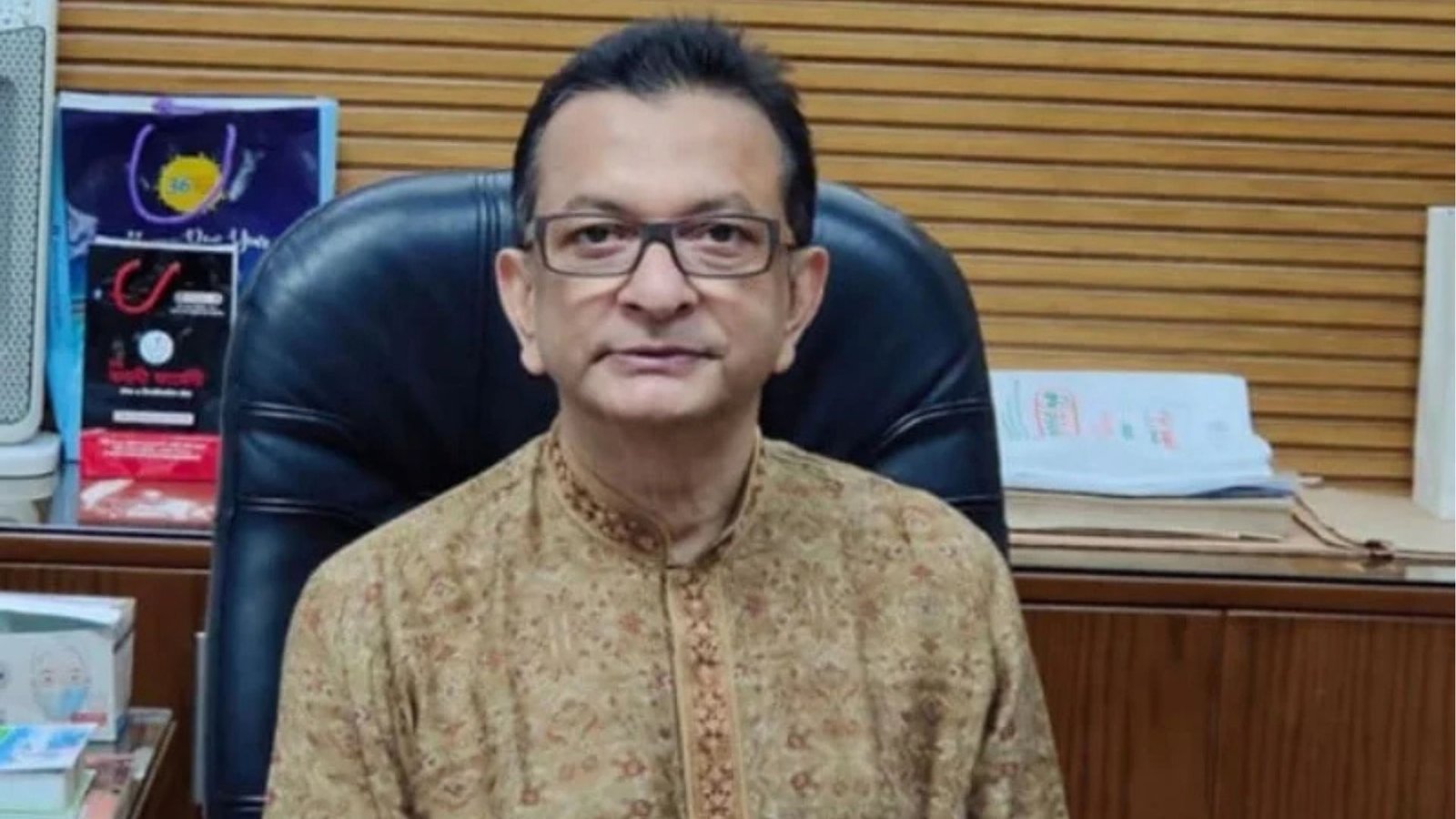
A major financial crime investigation has been launched against Khandaker Enayet Ullah, a dominant figure in Bangladesh’s transport sector, following allegations that he laundered vast sums of extortion money. The Criminal Investigation Department has filed a case accusing him of converting illegally obtained funds—totalling more than 107 crore taka—into seemingly legitimate income through a sophisticated network of financial layering.
The case, lodged on Tuesday and announced publicly on Wednesday, details a sweeping investigation into the long-influential transport leader. According to CID, Enayet Ullah and members of his family operated 199 bank accounts through which 2,131 crore taka was deposited over the years, with nearly the entire amount withdrawn. Investigators argue that such movements bear striking resemblance to internationally recognised money laundering techniques involving deliberate fragmentation of transactions to avoid scrutiny.
During the probe, CID reviewed records from financial intelligence agencies, land and registry offices, banks, the national transport owners’ association, and reports from the press. Court orders led to the confiscation of two luxury flats in Dhanmondi and two plots of land in Rupganj—altogether valued at around 10 crore taka—as well as the freezing of 53 bank accounts worth approximately 110 crore taka.
A Rise Fueled by Influence and Political Reach
Enayet Ullah’s journey from purchasing a second-hand bus in the late 1980s to becoming a major force in the transport industry reflects the power structures that characterise the sector. Within a short span, he expanded to a fleet of around 20 buses and secured key positions in transport owners’ associations. His political engagements—first with the BNP and later with the Awami League—further strengthened his influence. He eventually became Vice-President of Dhaka South Awami League.
For 16 years, from the Awami League’s return to power in 2008 until the government’s collapse in August 2025, he held two of the most powerful posts in the sector: General Secretary of the Dhaka Road Transport Owners’ Association and Secretary-General of the Bangladesh Road Transport Owners’ Association. CID asserts that this prolonged authority enabled him and his associates to operate without challenge.
The Alleged Syndicate and Systematic Extortion
According to CID’s findings, bus owners were routinely compelled to pay daily and monthly extortion fees. Introducing a new bus onto any route required payments ranging from 2 to 5 lakh taka. In some cases, bus owners had to surrender a portion of their newly purchased vehicles to Enayet Ullah to avoid operational obstruction. This created a parallel financial system where transport companies often charged buyers extra to cover these compulsory “payments”.
The case has reignited debate over corruption and political patronage in Bangladesh’s transport sector. Analysts suggest that the charges, if proven, could expose deeper structural issues that have long hindered transparency and accountability within the industry.