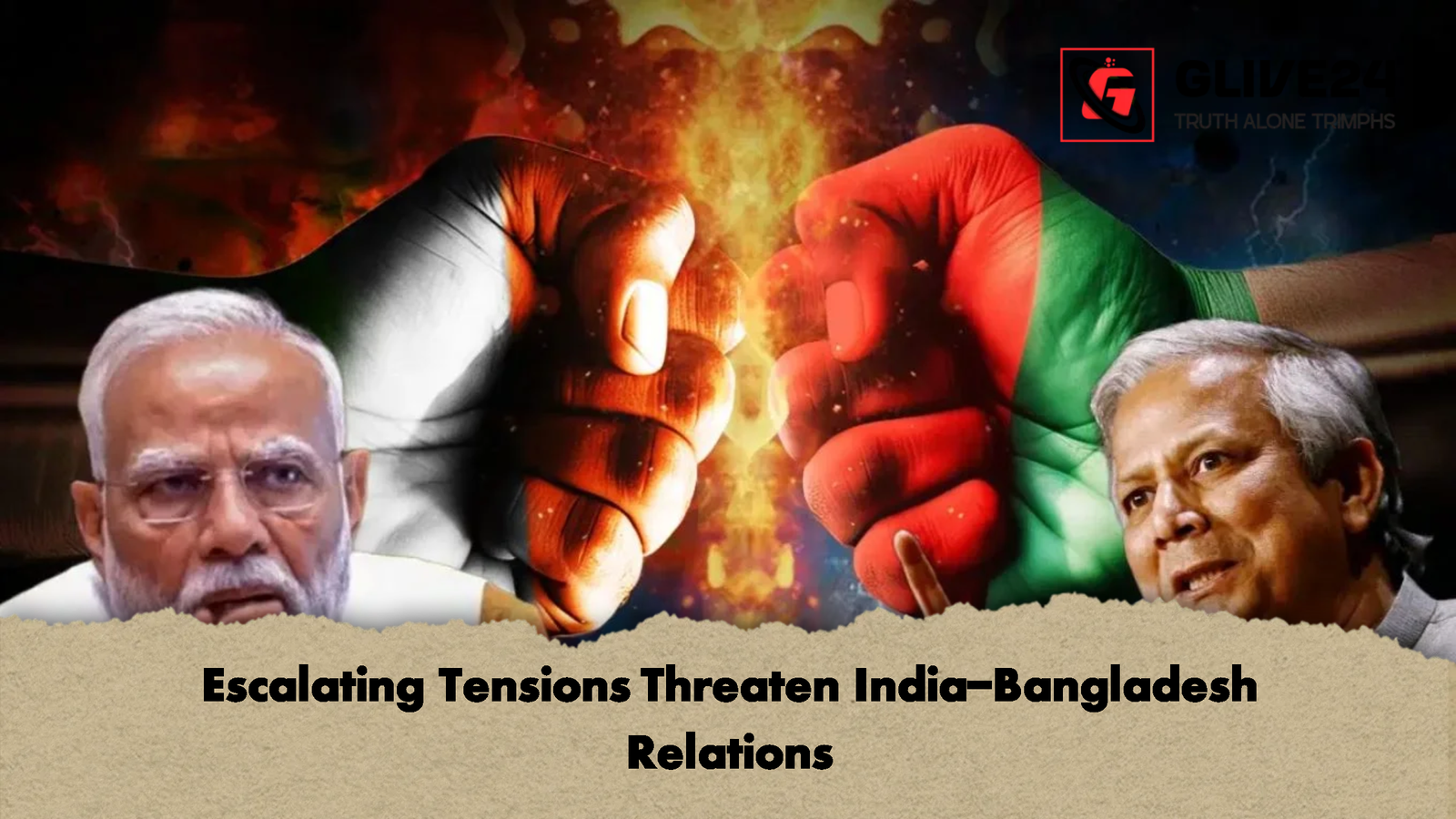
The recent violent protests and the brutal murder of a Hindu man in Bangladesh have further strained the already fragile ties between India and Bangladesh. The growing tensions, marked by inflammatory accusations from both nations, raise the critical question of whether the historically strong relationship between these two neighbouring countries can be salvaged or if it has reached a point of irreparable breakdown.
Table of Contents
The Incident That Sparked the Conflict
The violence began with the tragic killing of 27-year-old Dipu Chandra Das, a Hindu from Bangladesh’s religious minority, in Mymensingh. The murder was reportedly motivated by accusations of blasphemy, sparking widespread outrage in India, particularly among Hindu nationalist groups. A chilling video of the brutal attack quickly spread across social media platforms, amplifying anger and condemnation.
The killing occurred just hours before another politically charged event—the assassination of student leader Sharif Osman Hadi in Dhaka. This incident further inflamed the already volatile political atmosphere in Bangladesh, triggering violent protests. Many of the protestors accused members of the ruling Awami League of being involved in Hadi’s death, fuelling rising anti-India sentiments among the majority Muslim population in Bangladesh.
Bilateral Tensions Escalate
Following these incidents, tensions between India and Bangladesh reached a boiling point. Violent demonstrations erupted, with protestors marching towards the Indian High Commission in Dhaka. Security forces were forced to step in, and the situation took a further turn when demonstrators in Chattogram threw stones at the Indian Assistant High Commission, escalating the diplomatic crisis.
India swiftly condemned these actions as “unjustifiable,” a move that only deepened the rift between the two countries. These violent outbreaks are symptomatic of a long-standing rise in anti-India sentiment in Bangladesh, which has grown more pronounced since the fall of Prime Minister Sheikh Hasina’s government. Some political analysts argue that Hasina’s ouster and her subsequent refuge in India have fuelled a narrative of Indian interference in Bangladesh’s internal affairs, further exacerbating the resentment.
Religious Extremism and Human Rights Concerns
Religious extremism has been on the rise in Bangladesh in recent years, with increasing attacks on religious minorities, particularly Hindus. Hardline Islamic groups have been behind many of these assaults, including attacks on Hindu temples, the destruction of Sufi shrines, and the suppression of cultural and religious activities. Human rights organisations have raised serious concerns about the escalating wave of mob violence, often directed at those accused of blasphemy.
Analysts worry that these extremist factions are exploiting the rising anti-India rhetoric to further their own agenda. By stirring up sectarian divisions, they may be pushing Bangladesh down a dangerous path of communal unrest, with implications that could destabilise the entire region.
The Road Ahead: February 2025 Elections
Bangladesh is set to hold its parliamentary elections in February 2025, and the issue of anti-India politics is expected to be a significant factor. The Bangladesh Nationalist Party (BNP) and the Jamaat-e-Islami, both of which have historically been critical of India, are likely to play a decisive role in the outcome. The growing influence of these parties could destabilise the political landscape, leading to increased instability both within Bangladesh and in its relations with India.
India has expressed concern that the strengthening of religious parties and their anti-India rhetoric may further polarise Bangladesh’s political and social fabric, leading to deeper instability. International observers have warned that the current situation represents a serious strategic challenge for India, with potential consequences that could ripple through the region.
Possible Solutions and Diplomatic Efforts
The Bangladesh interim government has faced widespread criticism for its failure to maintain law and order during the recent unrest. Experts argue that only a democratically elected government with the legitimacy to restore stability can effectively address both internal and external challenges.
India has signalled its willingness to work with a democratically elected Bangladesh government, showing interest in rebuilding diplomatic relations. However, analysts caution that as long as public sentiment remains volatile, with continued protests and tensions on the streets, restoring calm and repairing ties will be a difficult task.
Source: BBC