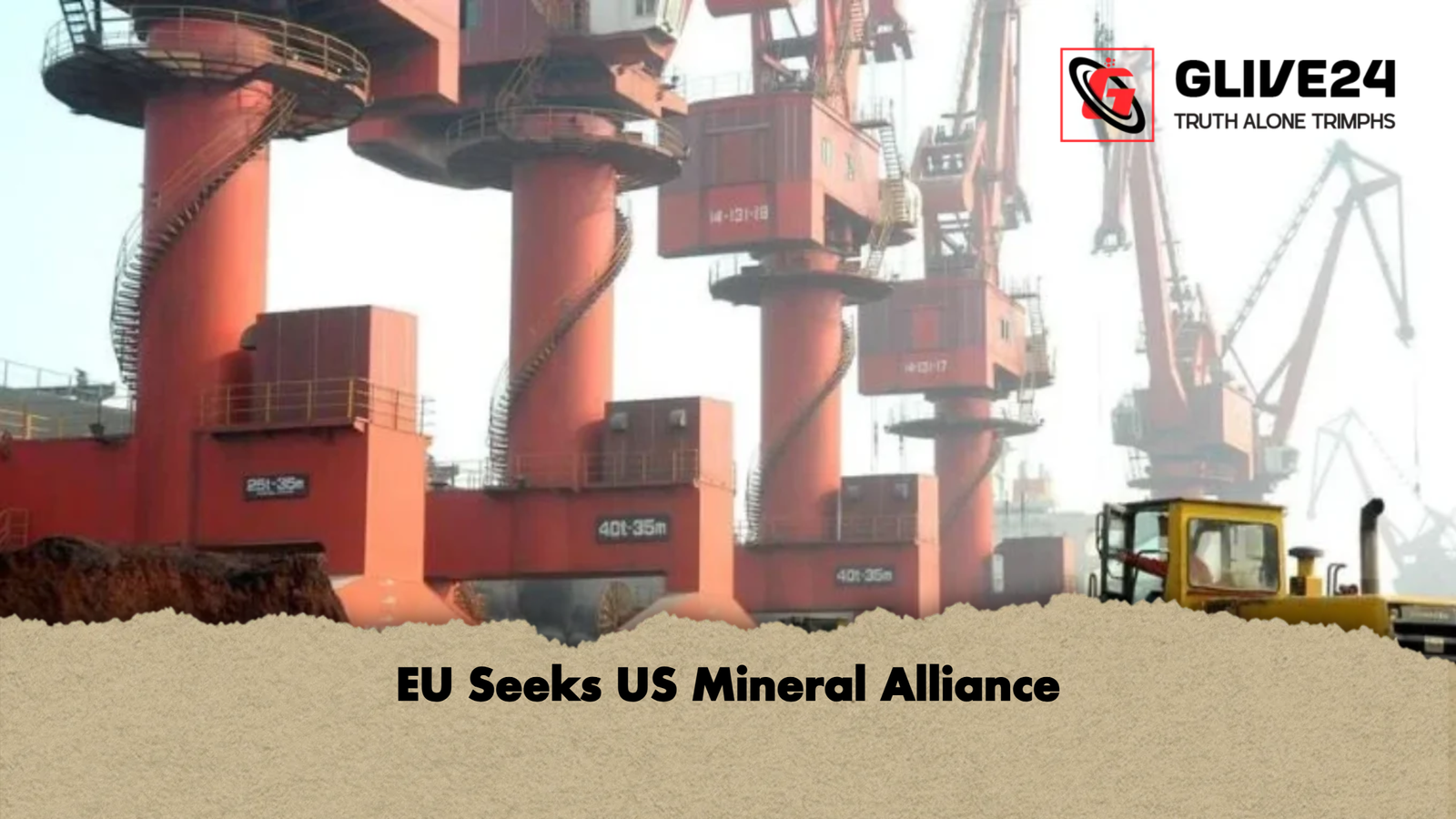
The European Union is moving to establish a strategic partnership with the United States in an effort to curb China’s growing influence over critical mineral supply chains. Officials familiar with the matter say a formal proposal is currently being prepared by the EU and is expected to be presented to Washington in the near future, reflecting mounting concern in Brussels over Europe’s dependence on Chinese-controlled minerals essential to modern industry.
According to sources involved in the discussions, the EU and the United States are preparing to sign a memorandum of understanding within the next three months. The agreement would lay the groundwork for a long-term strategic partnership focused on reducing reliance on China for minerals that are vital to advanced technologies, including semiconductors, electric vehicles, renewable energy systems and defence equipment. A key pillar of the initiative is the joint identification and development of alternative sources of supply beyond China.
At present, both the EU and the US remain heavily dependent on China for a wide range of critical and rare earth minerals, such as lithium, cobalt, graphite and rare earth elements. China dominates not only the extraction of many of these resources but also their processing and refining, giving Beijing considerable leverage over global supply chains. This dominance has increasingly been viewed in Western capitals as a strategic vulnerability, particularly amid heightened geopolitical tensions and the risk of export restrictions.
Individuals with knowledge of the proposal, speaking on condition of anonymity, say the draft outlines several pathways to reduce dependence on Chinese minerals. These include coordinated investment in mining projects in third countries, the expansion of domestic extraction and processing capacity, and closer cooperation on research, recycling and substitution technologies.
The proposed memorandum of understanding also recommends that the EU and the US explore joint ventures in mineral extraction and processing, as well as mechanisms for fair and transparent pricing. Establishing a secure, resilient and sustainable supply chain is a central objective. The document further emphasises respect for the territorial integrity and strategic interests of partner countries, an apparent effort to distinguish the initiative from more coercive approaches to resource security.
The timing of the proposal is politically significant. Last month, former US President Donald Trump reignited controversy by threatening to take control of Greenland—an autonomous territory under Danish sovereignty—citing US national security interests and the island’s vast reserves of rare minerals. Shortly afterwards, the EU’s proposal for a transatlantic minerals partnership came to light, underscoring Europe’s desire to address resource security through cooperation rather than unilateral action.
In addition, a high-level meeting involving foreign ministers and senior officials from several countries is scheduled to take place in Washington on Wednesday local time. One of the central aims of the meeting is to advance agreements that would collectively reduce dependence on Chinese mineral supplies and strengthen cooperation among like-minded nations.
Below is a summary of key minerals of concern and the proposed areas of cooperation:
| Mineral | Key Uses | Current Challenge | Proposed EU–US Approach |
|---|---|---|---|
| Rare earth elements | Electronics, defence, wind turbines | Heavy Chinese processing dominance | Joint processing and diversification |
| Lithium | Electric vehicle batteries | Limited non-Chinese supply | Investment in alternative producers |
| Cobalt | Batteries, aerospace | Supply concentration and ethical concerns | Secure and responsible sourcing |
| Graphite | Battery anodes, industry | Chinese export leverage | Recycling and new supply chains |
Taken together, the proposed partnership signals a clear shift in EU strategy towards deeper transatlantic cooperation on resource security. European policymakers believe that working closely with the United States will not only strengthen supply chains but also enhance economic resilience and technological sovereignty in an increasingly competitive global landscape.