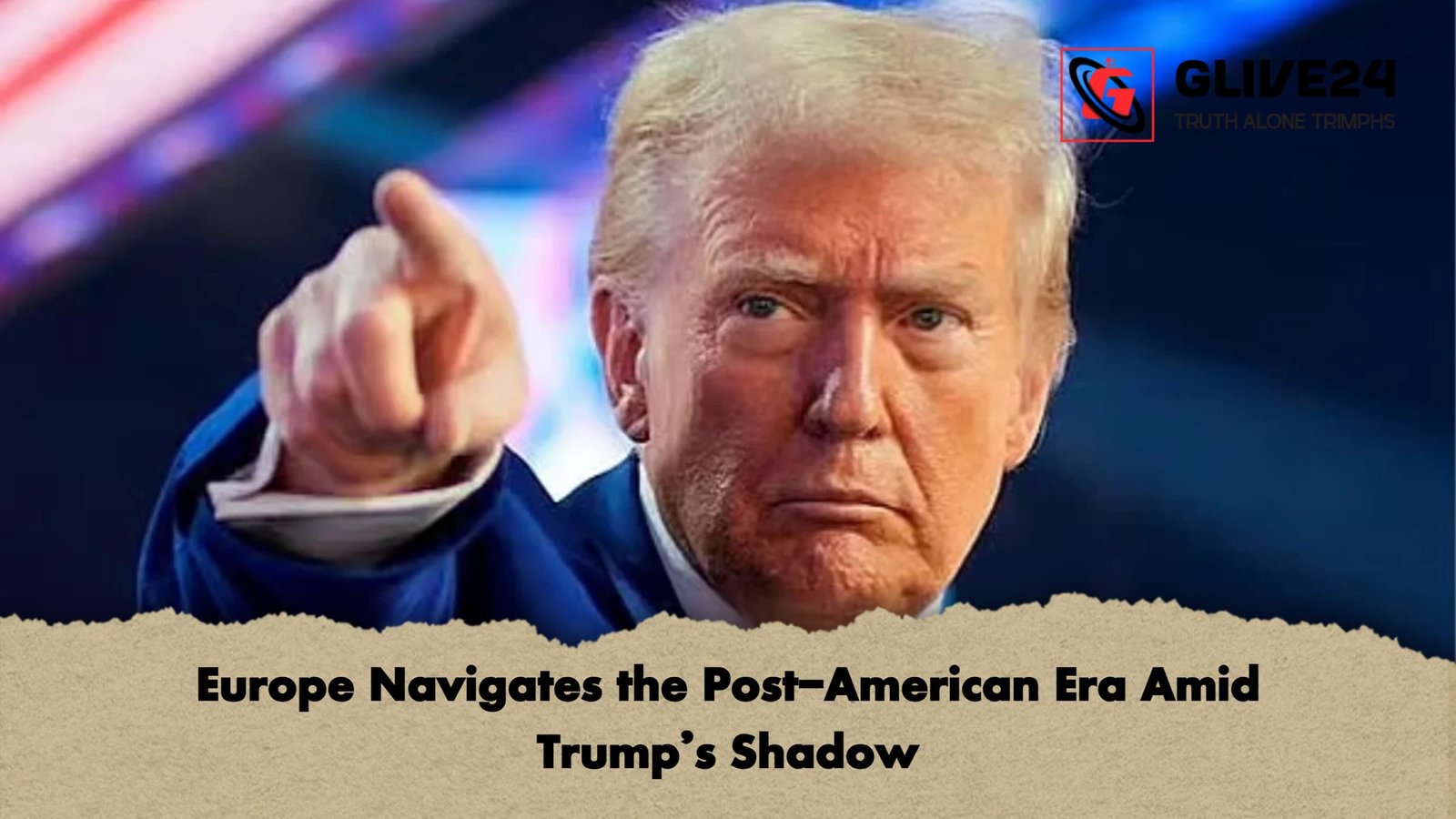
The recent Munich Security Conference served as a somber backdrop for a shifting global order, as European leaders and American Democrats grappled with the structural damage inflicted upon the Transatlantic alliance. For the prominent Democrats in attendance—many of whom harbour aspirations for the White House—the coveted mantle of “Leader of the Free World” feels increasingly out of reach. The calculations of global leadership have fundamentally altered over the past year.
Table of Contents
The “Post-American” Reality
Gavin Newsom, the Governor of California, remarked during the summit that the erosion of trust between the United States and its European allies may now be irreparable. While the blame is largely directed at President Donald Trump, the sentiment in Munich suggests the issue is systemic rather than merely a personality clash.
German Chancellor Friedrich Merz delivered a poignant address that defined the new geopolitical climate as the “Post-American” century. Merz highlighted a growing schism, noting that Europe no longer operates under the assumption that Washington will reflexively defend its allies. Crucially, Merz revealed ongoing discussions with France regarding a self-sufficient European nuclear deterrent—a clear signal that Europe is preparing for a future without the American security umbrella.
Shift in Global Influence Metrics
The decline of American diplomatic weight was palpable when comparing this year’s summit to the era of the late Republican Senator John McCain, who once made Munich the premier stage for American foreign policy.
| Feature | The McCain Era (Pre-2017) | The Current Climate (2026) |
| US Presence | Robust, bipartisan delegations | Small, fractured groups; official trips cancelled |
| European Stance | Reliance on NATO/US leadership | Pursuit of “Strategic Autonomy” |
| Global Outlook | Rules-based international order | Fragmentation and “Post-American” realism |
| Security Focus | Shared Transatlantic goals | European-only nuclear & defense talks |
Internal Friction and Diplomatic Decay
The weakening of the American voice was exacerbated by domestic political infighting. Republican Speaker Mike Johnson cancelled the official Congressional delegation, forcing Democrats like Jason Crow to attend in a private capacity. Crow attempted to reassure European counterparts that Democrats are prepared to reclaim executive powers from Trump, but his warnings were sober. He noted that the post-WWII international order is failing to deliver results for modern societies, further emboldening isolationist rhetoric.
Meanwhile, Trump’s allies, such as Senator Lindsey Graham, continue to advocate for aggressive unilateralism. Graham’s calls for “regime change” in Iran as a deterrent to Russia and China only served to deepen European anxieties regarding American volatility and unpredictability.
A Domestic Silver Lining?
While international standing falters, the domestic landscape for Democrats appears to be improving. Governor Newsom suggested that Trump’s polarizing foreign policy and declining approval ratings could lead to a significant Republican defeat in the upcoming midterm elections. “The world is slowly waking up to the reality that Trump faces a major setback at home,” Newsom told CNN.
However, for European leaders who once viewed Trump’s 2016 victory as a historical anomaly, his continued influence and the potential for a second term have shattered that illusion. As Friedrich Merz concluded, the rules-based international order is not merely under threat—it is being fundamentally dismantled.