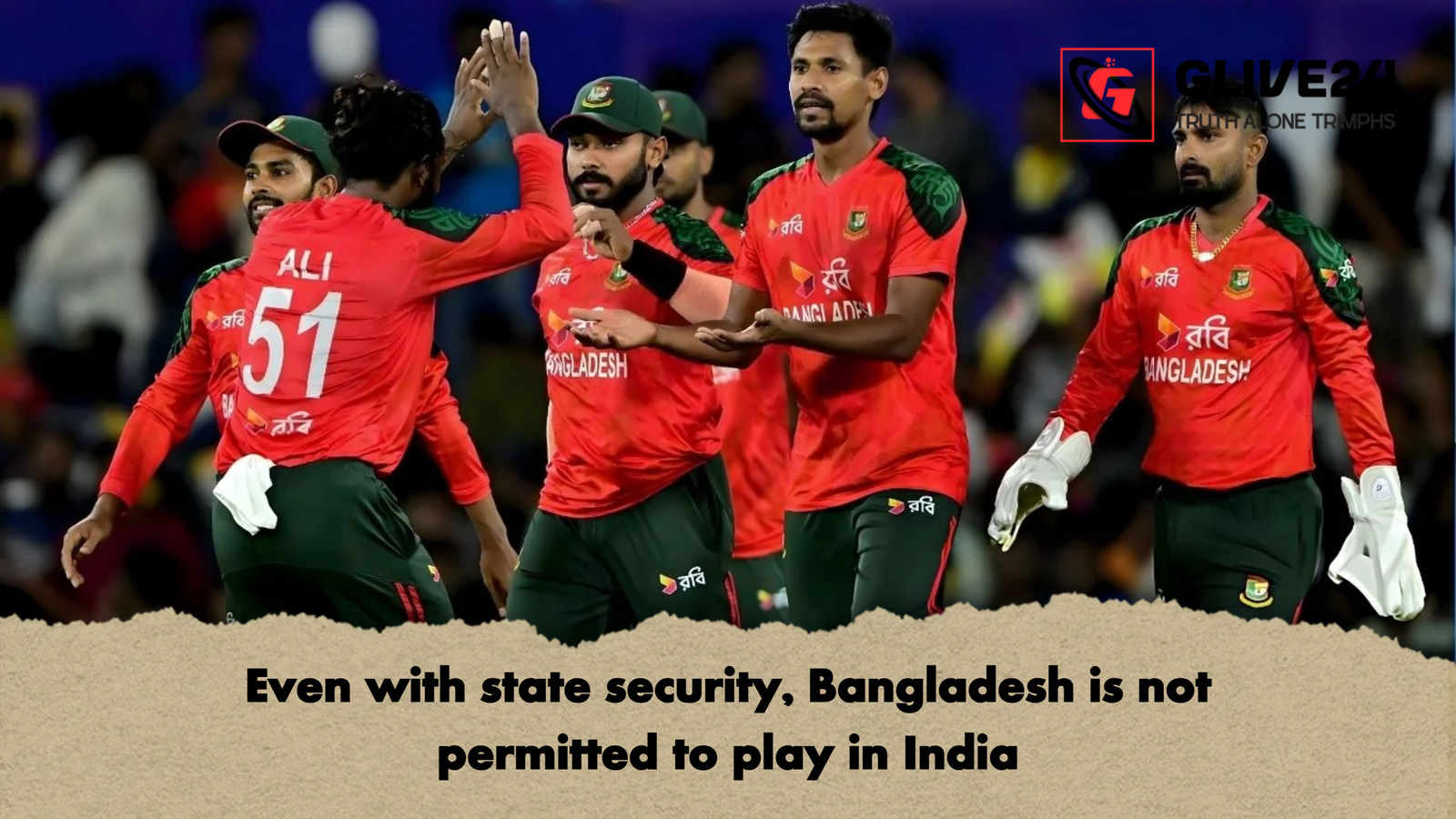
The Bangladesh Cricket Board (BCB) has reaffirmed its firm stance that the national team will not play its scheduled matches in India during the upcoming ICC Men’s T20 World Cup, citing serious security concerns despite indications that state-level protection could be offered. The International Cricket Council (ICC) has already stepped in to mediate, with an online meeting between ICC officials and the BCB scheduled for Tuesday, 6 December, as the impasse threatens to disrupt the tournament barely a month before its start.
Under ICC regulations, host nations and participating teams enter into formal agreements ahead of any global tournament. These agreements require a participating country to provide a credible and acceptable explanation should it later withdraw from a tournament or refuse to play specific matches. Historically, government advisories or official security restrictions have been treated as the most legitimate grounds for non-participation. Precedents include the repeated cancellation or relocation of India–Pakistan bilateral series and, more recently, the decision to stage some of Pakistan’s World Cup fixtures in Sri Lanka—both of which were accepted by the ICC.
The BCB now seeks to rely on similar grounds. According to board officials, the Bangladesh government believes that the safety of players, support staff, officials and associated personnel cannot be adequately guaranteed in India at present. On that basis, the BCB has formally conveyed its unwillingness to travel and has requested that Bangladesh’s World Cup matches be relocated to a neutral venue outside India.
Fresh concerns were reportedly triggered by the exclusion of Bangladeshi fast bowler Mustafizur Rahman from the Indian Premier League, a decision linked by Indian authorities to security threats from political and extremist groups. The BCB argues that if the safety of an individual international cricketer cannot be ensured, it is reasonable to question whether adequate protection can be provided for an entire delegation, alongside journalists, broadcasters and travelling supporters.
BCB president Aminul Islam reiterated on Monday that, in the current climate, playing in India does not feel safe. He described Mustafizur’s IPL exclusion as “deeply disrespectful” and indicative of broader security risks. While ICC intermediaries may propose state-level security guarantees from Indian authorities during the upcoming meeting, BCB insiders suggest that such assurances are unlikely to change the board’s position.
The situation places significant pressure on the Board of Control for Cricket in India (BCCI), which, as host, bears ultimate responsibility for ensuring both participation and safety. The issue is further complicated by the fact that the current ICC chair is Indian, making a neutral resolution politically and administratively sensitive. Some Indian media outlets have reported that the ICC may consider relocating Bangladesh’s matches, though doing so so close to the tournament would be logistically complex.
Bangladesh’s Group-Stage Commitments
| Item | Details |
|---|---|
| Tournament | ICC Men’s T20 World Cup |
| Host nation | India |
| Bangladesh group matches | 4 |
| BCB request | Relocate matches to neutral venue |
| ICC position | Under discussion |
Any venue change would require revisions to schedules, broadcast arrangements and the consent of opposing teams. If the ICC ultimately rejects the BCB’s proposal and Bangladesh still refuses to play, the regulations allow for walkovers in favour of opponents and potentially severe sanctions. Nevertheless, BCB officials remain confident that no harsh punishment will be imposed, arguing that their security concerns are genuine, reasonable and consistent with past ICC precedents.