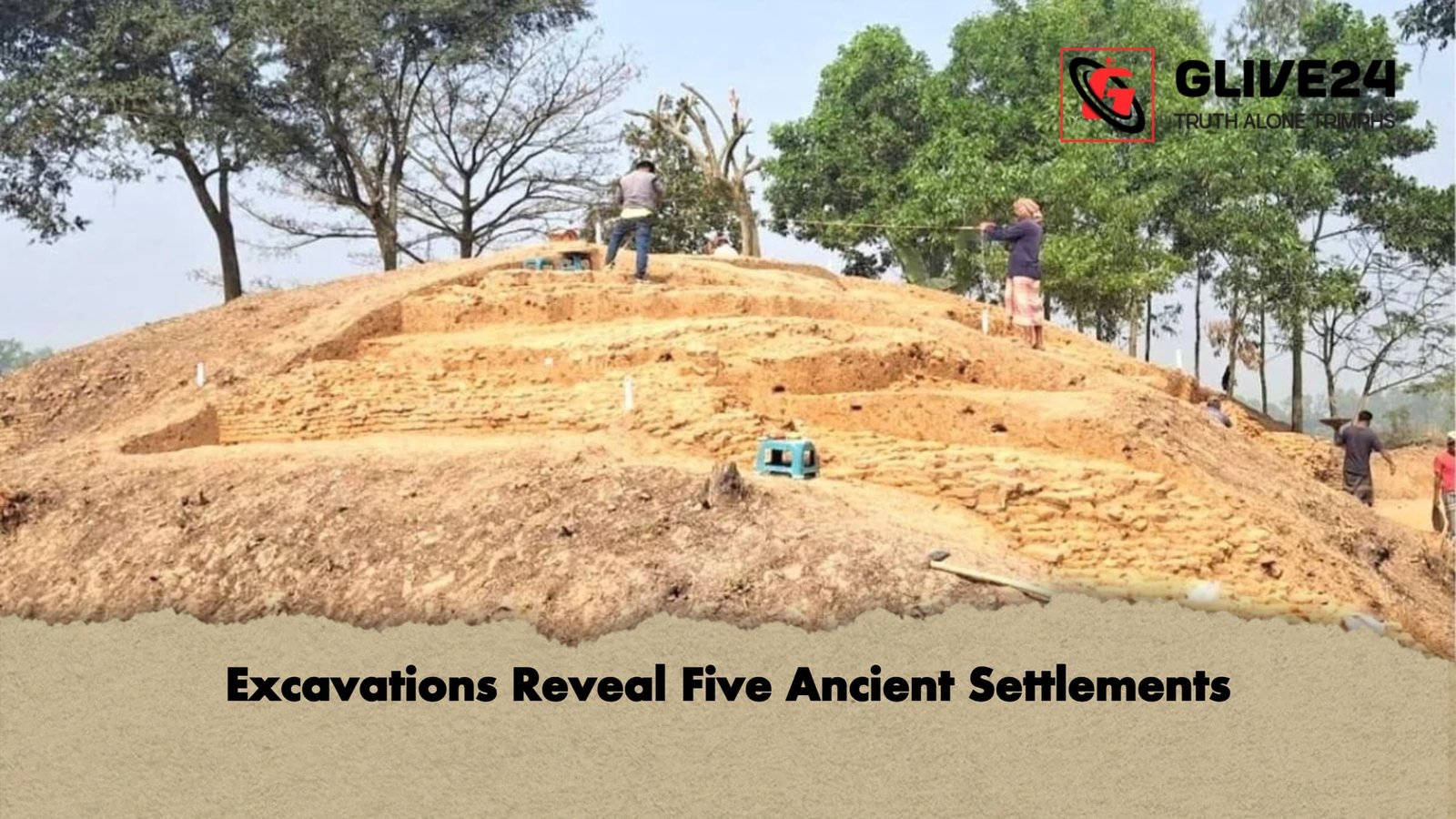
Archaeologists have uncovered evidence of five distinct settlement periods in the historic Mahasthangarh fort city, one of Bangladesh’s most significant archaeological sites, during recent excavations in the Bishmordon area to the west of the citadel.
A six-member team began digging at Bishmordon on 12 January 2026, and the excavation is expected to conclude later this month. Officials from the Bogura Regional Directorate of Archaeology suggest that one of the temples discovered may have been constructed between 800 and 1,000 years ago.
The site has previously yielded hundreds of artefacts spanning multiple periods, including pre-Mauryan, Mauryan, Gupta, Pala, Sena, and Muslim eras. Excavated items include stamped gold coins, burnt clay plaques with decorative motifs, figurines, and objects made of metal, clay, and stone. Remarkably, one piece of clay hair predates the birth of Jesus Christ, underscoring the antiquity of Mahasthangarh’s settlements.
The current excavation aimed to map the internal settlements within the fort city and understand their relationship with peripheral habitations. Archaeologists discovered that temples were constructed sequentially over time, with the lowest structures built atop the floodplains of the ancient Karatoa River. Comparisons of the lower temple foundations suggest similarities with Mauryan-era walls. Experts believe new temples were erected after the destruction of older ones.
Excavation Highlights
| Feature | Findings |
|---|---|
| Excavation Site | Bishmordon area, west of Mahasthangarh |
| Number of Settlement Periods | 5 |
| Estimated Temple Age | 800–1,000 years |
| Construction Material | Reused Pala-era bricks, baked clay, stone |
| Temple Foundation | Built on floodplain; multiple construction layers identified |
| Artefacts | Gold coins, burnt clay plaques, figurine fragments, pottery shards, clay lattice sticks |
| Maximum Structure Height | ~5 metres above ground level |
A.K.M. Saiful Rahman, Regional Director of Archaeology in Bogura, explained that the temples’ walls were constructed using bricks from the Pala period and date between the 4th and 12th centuries CE. The temples were built on solid ground above flood-prone areas and show multiple stages of construction.
S.M. Hasanat Bin Islam, Research Assistant at the Bogura office, noted that while some structures west of the fort city were largely destroyed, continuing excavations may reveal further artefacts. “We are carefully digging deeper and hope to uncover additional evidence of ancient settlements,” he said.
Razia Sultana, custodian of the Mahasthangarh Museum, highlighted the diversity of artefacts uncovered, including decorated bricks, numerous pottery shards, fragments of burnt clay plaques, pieces of clay figurines, and hundreds of ancient bricks. Many shards were concentrated in a single location beneath the earth, offering insights into the scale and sophistication of these early communities.
The discoveries underscore Mahasthangarh’s long-standing significance as a centre of urban life, trade, and religious activity, shedding light on Bangladesh’s rich archaeological heritage.