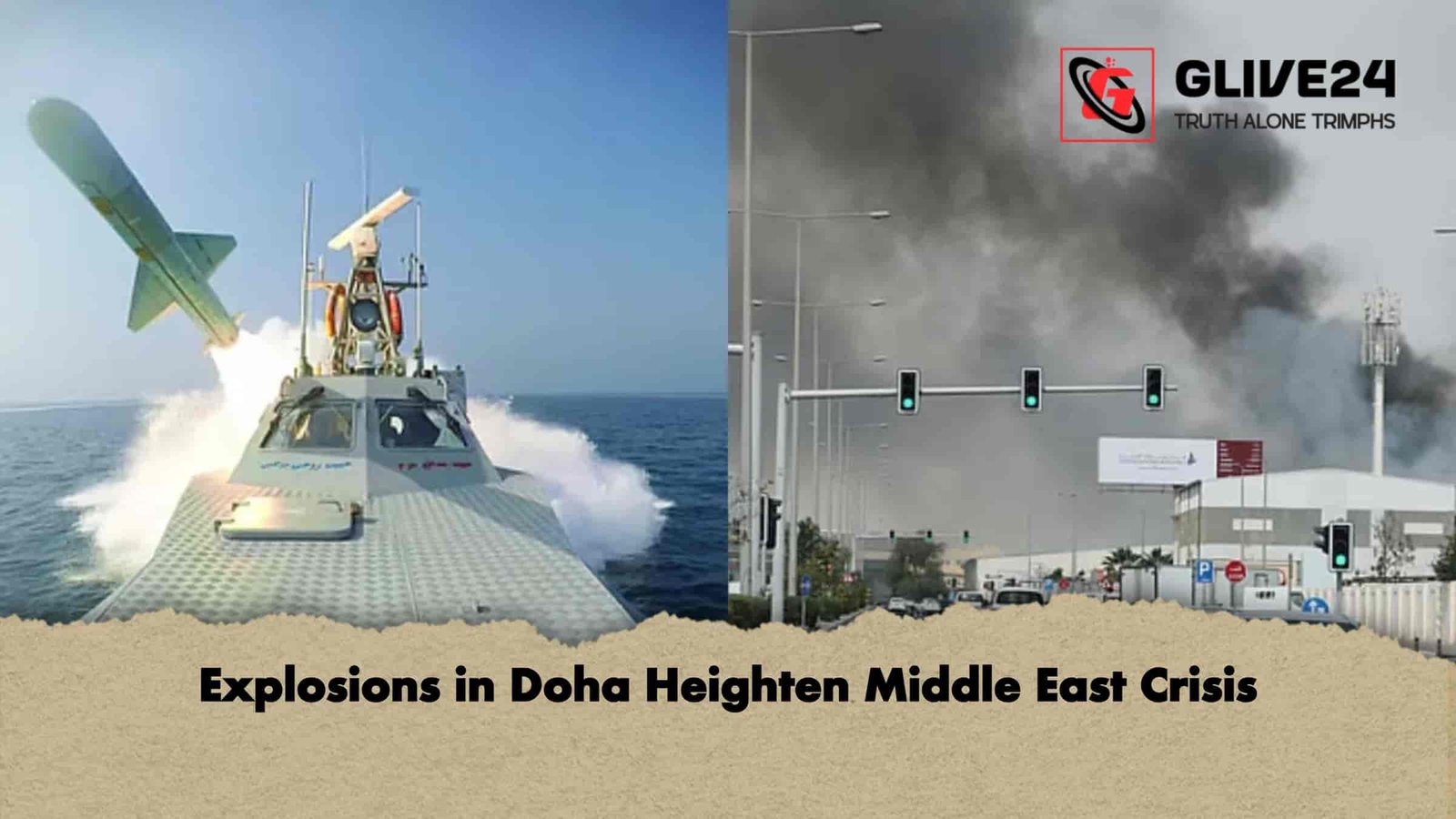
Early this morning, multiple explosions rocked Doha, the capital of Qatar, triggering widespread alarm among the city’s residents. According to an AFP journalist on the scene, the blasts were heard across several districts, prompting local security forces to move into heightened alert. Anxiety has been particularly acute near the United States Embassy, where residents report a tense and uncertain atmosphere.
At the same time, Iran’s Islamic Revolutionary Guard Corps (IRGC) claimed responsibility for an attack on a U.S. tanker in the northern Gulf. The IRGC warned that military and commercial vessels belonging to the United States, Israel, or their European allies would not be permitted to transit the Strait of Hormuz. “Any such vessel attempting passage will face immediate action,” the statement declared.
The IRGC asserted that, under international law, Iran retains the right to regulate maritime traffic in the Strait of Hormuz during wartime. Security analysts warn that such threats dramatically increase the risk of conflict and have far-reaching implications for regional trade and military stability.
In response to the escalating situation, the Qatari government has relocated residents in the vicinity of the American Embassy as a precautionary measure. Officials described the move as a necessary step to safeguard civilians and prevent potential casualties.
The following table summarises significant attacks in the region over the past week:
| Date | Location | Target | Type of Attack | Perpetrator |
|---|---|---|---|---|
| 2 March | Saudi Arabia | U.S. Embassy | Rocket Strike | Iran-backed Group |
| 3 March | Kuwait | U.S. Embassy | Armoured Vehicle Assault | Iran-backed Group |
| 4 March | Dubai | U.S. Consulate | Fire Attack | Iran-backed Group |
The recent surge in attacks follows joint military action by the United States and Israel in Iran last Saturday. In retaliation, Iran has targeted U.S. facilities across the region, with American embassies in Saudi Arabia and Kuwait, and the consulate in Dubai, suffering assaults over the past week.
Experts caution that any military or commercial strike in the Strait of Hormuz could severely disrupt global shipping lanes. Moreover, the broader security landscape in the Middle East remains volatile, with further escalation likely unless diplomatic interventions are pursued.
The situation in Doha continues to cause public alarm, with authorities maintaining robust security protocols. International monitoring agencies are observing the events closely, warning that the convergence of urban explosions and regional military threats could have severe consequences for international trade, diplomatic relations, and political stability.