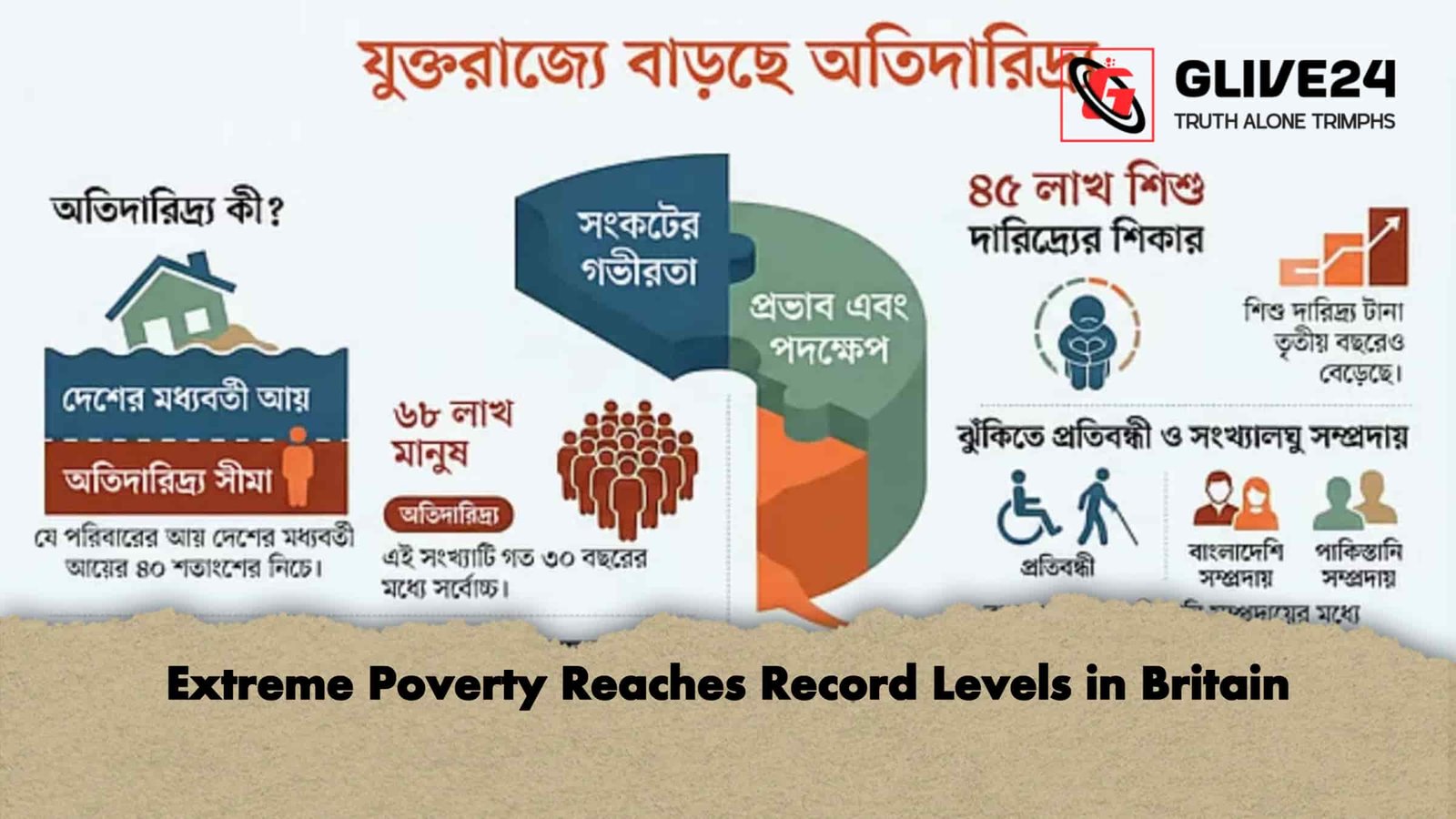
Extreme poverty in the United Kingdom has risen to its highest level in more than thirty years, with an estimated 6.8 million people now living in what researchers define as “very deep poverty”. The findings were published on Tuesday in a major study by the Joseph Rowntree Foundation (JRF), a leading independent organisation focused on poverty reduction.
Under the JRF definition, households are considered to be in extreme poverty when their income, after deducting housing and rental costs, falls below 40 per cent of the national median. For a couple with two dependent children, this threshold is equivalent to an annual income of around £16,400. Falling beneath this line often means persistent hardship, limited access to essentials, and little capacity to absorb financial shocks.
While overall poverty levels in the UK have marginally declined over the long term, the proportion of people experiencing the most severe deprivation has grown. According to the report, the total poverty rate fell from 24 per cent in 1994–95 to 21 per cent in 2023–24. Over the same period, however, the share of the population living in extreme poverty increased from 8 per cent to 10 per cent. This means that almost half of all people classified as poor are now trapped in the most acute form of poverty.
Poverty indicators in the UK
| Indicator | 1994–95 | 2023–24 |
|---|---|---|
| Overall poverty rate | 24% | 21% |
| Extreme poverty rate | 8% | 10% |
| People in extreme poverty | — | 6.8 million |
| Children living in poverty | — | 4.5 million |
One of the most alarming trends highlighted in the report is the sustained rise in child poverty. Around 4.5 million children are currently living below the poverty line, with rates increasing for the third consecutive year. In response to mounting concern, Chancellor of the Exchequer Rachel Reeves announced in November that the long-standing two-child limit on certain welfare benefits would be abolished from April this year. The policy change is intended to boost household incomes and curb rising child poverty, at an estimated cost of £3.1 billion.
The two-child benefit cap was introduced in 2017 by the Conservative government, restricting additional support for families with a third or subsequent child. Critics have long argued that the policy disproportionately harmed low-income households and exacerbated hardship among larger families.
The Joseph Rowntree Foundation has welcomed the decision to scrap the cap but cautioned that it must form part of a broader, sustained strategy. Without further structural reforms, the organisation warned, progress in reducing child poverty could stall or reverse. The report also notes that children and disabled people are particularly vulnerable to the effects of deep poverty.
In addition, poverty rates remain significantly higher among some minority communities, notably people of Bangladeshi and Pakistani heritage. Commenting on the findings, John Bird, founder of the Big Issue, described the report as “bad news for society”, warning that entrenched extreme poverty carries long-term social and economic costs that the country can ill afford.