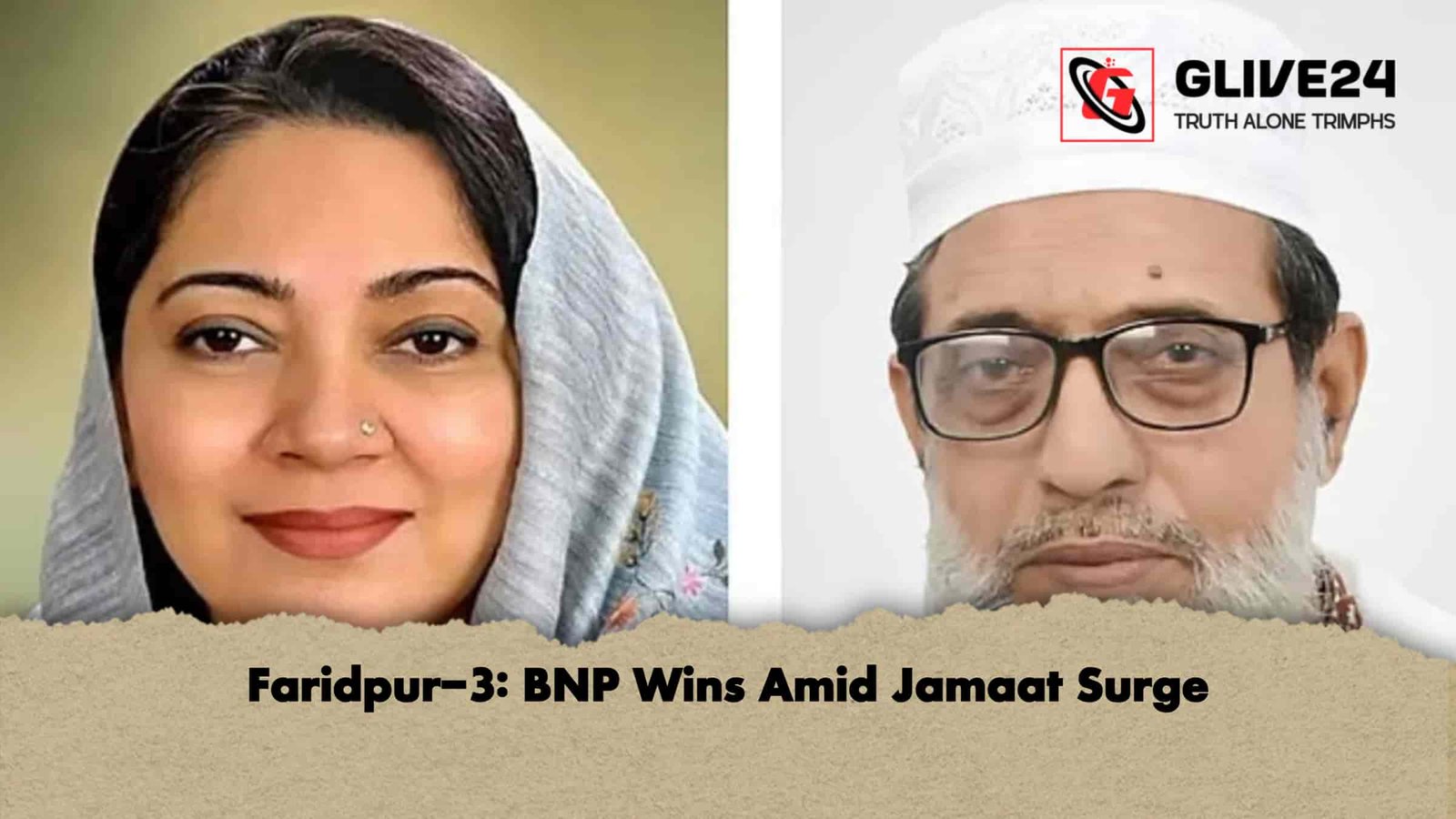
Faridpur-3, a parliamentary constituency long regarded as a stronghold of the Bangladesh Nationalist Party (BNP), has witnessed a notable shift in political dynamics during the latest elections. Traditionally encompassing the Sadar Upazila, this seat has historically been secured by candidates from the influential Mojez Manzil family when backed by the BNP. However, recent results indicate a changing landscape and heightened electoral competition.
In the most recent election, BNP candidate Nayeeb Yusuf successfully retained the seat, contesting with full party support and the endorsement of the Mojez Manzil family. Despite this advantage, the contest proved far more competitive than in previous years.
A striking development emerged from the results: while the BNP maintained its hold, Jamaat-e-Islami candidate Abdut Tawwab achieved an unprecedented surge in votes. Historically, Jamaat candidates rarely exceeded 30,000 votes in Faridpur-3. In contrast, Tawwab amassed 124,115 votes, narrowing the gap with Nayeeb Yusuf to just 24,430 votes.
A brief overview of past election outcomes in Faridpur-3 illustrates the constituency’s historical voting patterns:
| Election Year | BNP Candidate | BNP Votes | Jamaat Candidate | Jamaat Votes | Other Candidates | Other Votes |
|---|---|---|---|---|---|---|
| 1991 | Chowdhury Kamal Ibne Yusuf | 62,432 | Ali Ahsan Muhammad Mujahid | 16,502 | – | – |
| 1996 (12 June) | Chowdhury Kamal Ibne Yusuf | 60,779 | Ali Ahsan Muhammad Mujahid | 12,334 | – | – |
| 2001 | Chowdhury Kamal Ibne Yusuf (BNP-Militi) | Elected | – | – | – | – |
| 2008 | Chowdhury Kamal Ibne Yusuf (Independent) | 76,478 | Ali Ahsan Muhammad Mujahid (Militi) | 30,821 | Khandakar Mosharraf Hossain (Awami League) | 122,047 |
Nayeeb Yusuf hails from a prominent political lineage. His grandfather, Yusuf Ali Chowdhury, was a key political influencer locally, while his father, Chowdhury Kamal Ibne Yusuf, was a principal organiser of the BNP in Faridpur and served five terms as a member of parliament.
Following his victory, Nayeeb Yusuf remarked, “It is surprising that the Jamaat candidate received such a significant number of votes. Understanding the reasons behind this trend is essential.”
AKM Kibria Swapon, Secretary General of Faridpur BNP, acknowledged the challenge, stating, “We did not receive the expected level of support. Detailed, constituency-level analysis will help identify our weaknesses.”
Jamaat had targeted both Faridpur-1 and Faridpur-3 for vote growth. While successful in Faridpur-1, the party fell short in Faridpur-3. Abdut Tawwab, a college professor and central Shura committee member, attributed his vote surge to his personal reputation and independent voter choice. However, the formation of alliances between factions of the Awami League and BNP ultimately prevented a Jamaat victory.
The outcome in Faridpur-3 demonstrates that even in traditional party strongholds, family prestige or party dominance alone no longer guarantees success. Local social influence, candidate strategy, and evolving political alliances now play decisive roles, reflecting the ongoing transformation of parliamentary politics in Bangladesh.