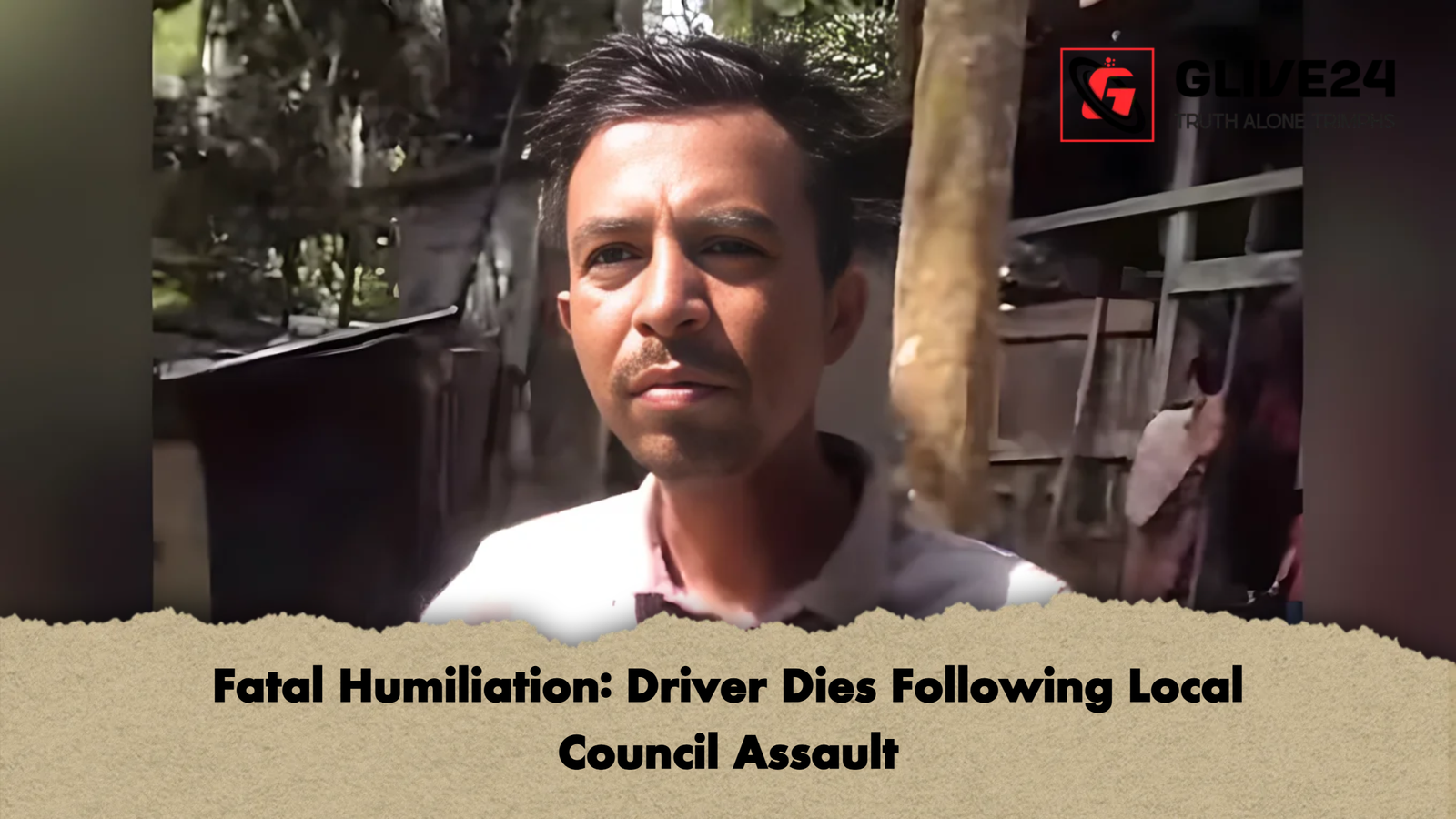
The tranquil community of Nesarabad, situated within the Pirojpur district, has been plunged into a state of profound shock and mourning following the tragic death of a local resident. Abdullah Al Mamun Sabuj, a 33-year-old auto-rickshaw driver, reportedly took his own life after being subjected to a brutal and humiliating “trial” conducted by local authorities. The incident has sparked a fierce debate regarding the legality of informal village arbitrations and the devastating consequences of mob-led justice.
Table of Contents
The Trial of Shame
The sequence of events began on the morning of Sunday, 1 March, when Sabuj, a hardworking father from Baliari village, was summoned to the Sutiakathi Union Parishad office. He was escorted there by a village constable and local shopkeepers on allegations of stealing cigarettes and a sum of money from two nearby businesses.
What was purportedly intended to be a communal mediation quickly spiralled into a harrowing ordeal. According to harrowing accounts from the victim’s family, Sabuj was subjected to a severe physical assault within the Parishad premises. Most distressingly, this “punishment” was allegedly carried out in the presence of his five-year-old son, Junaid. In addition to the physical violence, the council reportedly imposed an arbitrary and extortionate fine of 30,000 BDT—a sum far beyond the means of a modest rickshaw driver.
A Heartbreaking End
The weight of the physical pain, combined with the crushing social stigma and the impossible financial burden, proved too much for Sabuj. Shortly after returning home from the council office, he consumed poison in an act of desperation. Despite being rushed to Sher-e-Bangla Medical College Hospital, where he fought for his life for over twenty-four hours, he succumbed to the toxins on Monday night.
Perspectives on the Incident
The tragedy has left a trail of conflicting narratives between the grieving family and the local officials involved in the proceedings.
| Stakeholder | Perspective and Allegations |
| Sumi Begum (Wife) | Maintains her husband’s innocence; claims he was tortured into a false confession and humiliated before his child. |
| Shahida Begum (Mother) | Testified that the family was traumatised by the brutal beating and the sudden, massive financial demand. |
| Md. Hanif (Constable) | Claims the “trial” was fair and that Sabuj admitted to the theft of his own free will. |
| Md. Shanu (Acting Chairman) | Admitted that an “agitated crowd” struck the victim but suggested the suicide was a result of personal “shame.” |
Demands for Accountability
The local community has reacted with indignation, with many activists arguing that the Union Parishad acted as “judge, jury, and executioner,” far exceeding its legal jurisdiction. Sumi Begum, now a widow, has been vocal in her quest for justice, asserting that her husband was a man of integrity who was essentially murdered by the system.
Md. Mehedi Hasan, the Officer-in-Charge of Nesarabad Police Station, has confirmed that a formal investigation is underway. He assured the public that the authorities are scrutinising the actions of those present at the Union Parishad and that “no one found guilty of inciting this tragedy or bypassing the law will be spared.”