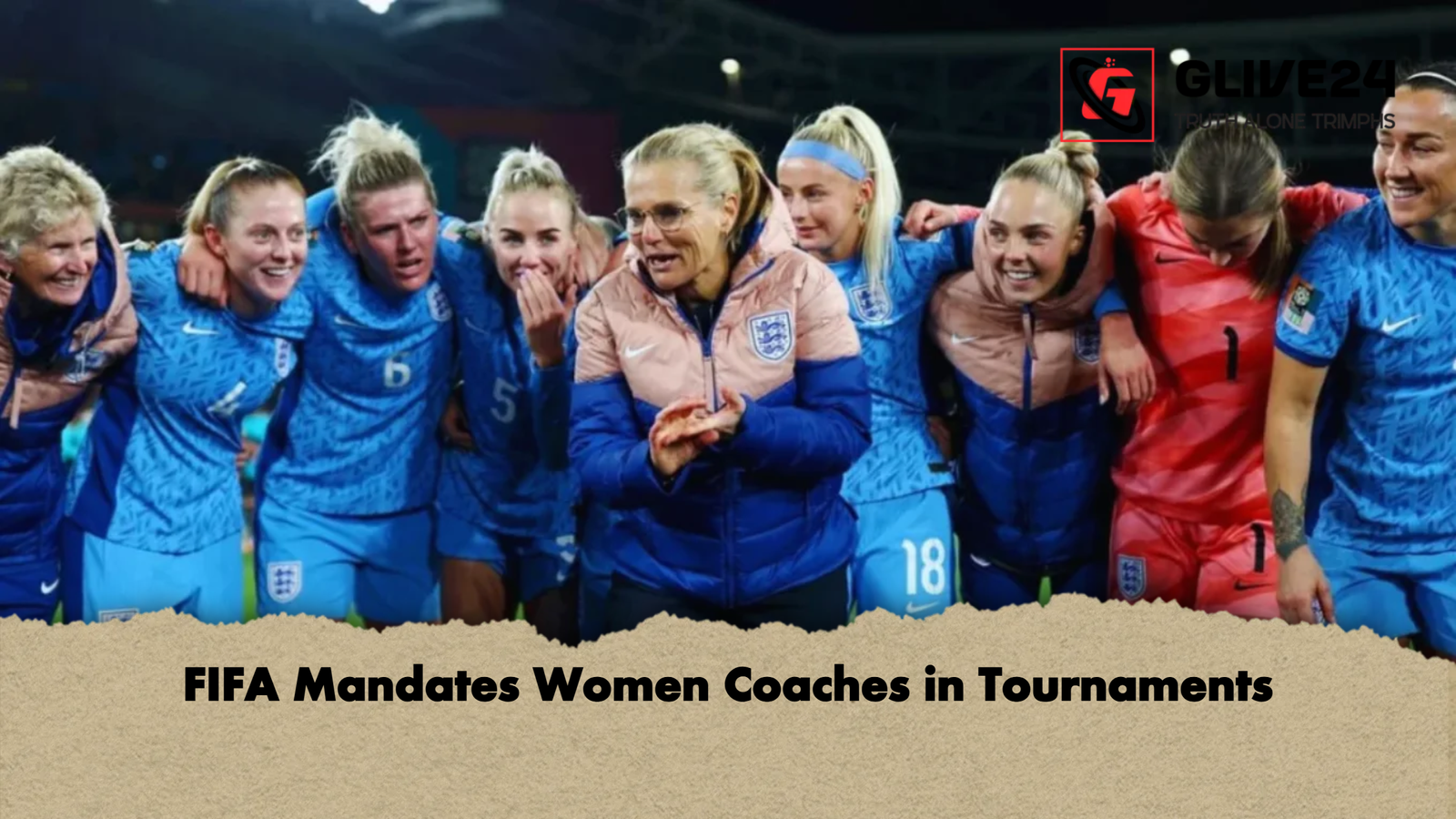
Global football’s governing body, FIFA, has introduced a landmark regulation requiring all teams competing in women’s international tournaments to include at least two female coaches within their technical staff. Crucially, one of those women must serve either as the head coach or an assistant coach. The decision, approved at a recent FIFA council meeting, has been implemented with immediate effect, signalling a significant shift towards gender parity in football management.
The new rule will come into force starting with upcoming competitions such as the FIFA U-17 Women’s World Cup, FIFA U-20 Women’s World Cup, and the FIFA Women’s Champions Cup. Beyond these events, the regulation will apply universally across all FIFA-organised women’s competitions, encompassing both youth and senior levels, as well as national team and club tournaments.
Under the revised framework, every participating team must ensure that its backroom staff includes a minimum of two women. At least one of them must occupy a senior coaching role, thereby guaranteeing meaningful involvement in tactical and managerial decision-making. This initiative forms part of FIFA’s broader commitment to improving representation and leadership opportunities for women in football, an area where disparities have long persisted despite the sport’s rapid growth.
According to Jill Ellis, FIFA’s Chief Football Officer, the measure is both necessary and overdue. She emphasised that the number of women in coaching roles remains disproportionately low compared to the increasing popularity and professionalisation of the women’s game. Ellis noted that accelerating change requires deliberate and structured interventions, including clearer development pathways, expanded opportunities, and greater visibility for women on the sidelines. She described the new regulation, alongside targeted development programmes, as a strategic investment in both current and future generations of female coaches.
FIFA President Gianni Infantino echoed these sentiments, stressing the importance of increasing female representation in key decision-making roles within football. He argued that having more women in coaching positions would not only enhance diversity but also positively influence team dynamics, player development, and overall performance.
Infantino further highlighted the visible progress in women’s football in recent years, pointing to major tournaments—such as the European Women’s Championship—as evidence of the sport’s growing appeal, improved standards, and expanding global audience. However, he acknowledged that structural imbalances remain, particularly in leadership and coaching roles, which this policy aims to address.
Below is a summary of the new regulation:
| Aspect | Requirement |
|---|---|
| Minimum female coaches | At least 2 per team |
| Key role requirement | One must be head or assistant coach |
| Implementation | Immediate |
| Applicable competitions | All FIFA women’s tournaments |
| Coverage | Youth, senior, club, and national teams |
Analysts believe this directive could have far-reaching implications. By institutionalising female representation within coaching teams, FIFA is not only addressing inequality but also fostering a more inclusive and professional environment. Over time, this policy is expected to expand the talent pool, encourage more women to pursue coaching careers, and ultimately strengthen the global women’s game.