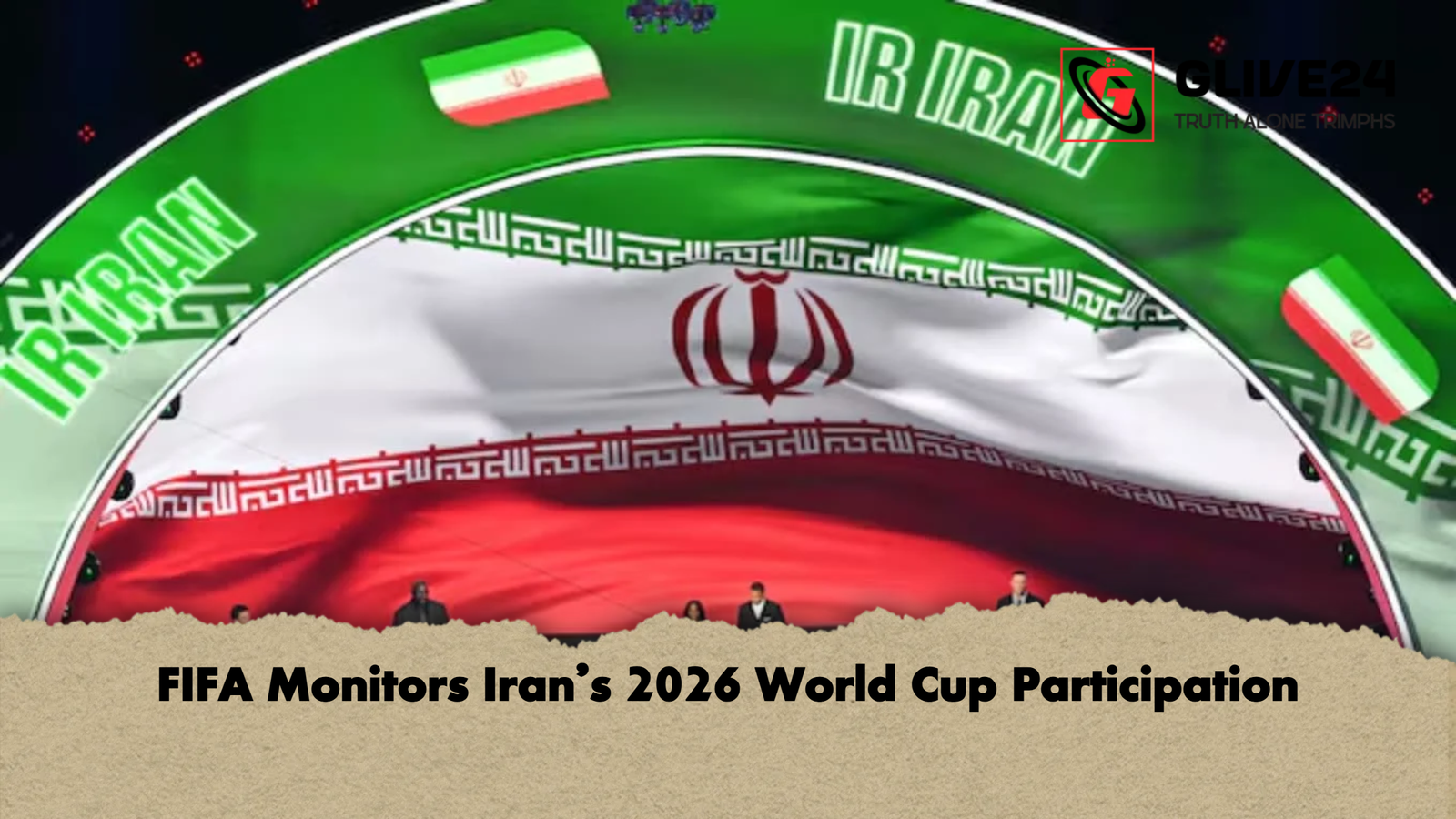
As the 2026 FIFA World Cup approaches this June, set to be jointly hosted across the United States, Canada, and Mexico, preparations are in full swing. FIFA, the host nations, and participating teams are finalising logistics, venues, and safety measures for the global tournament. Yet, amid these preparations, Iran’s participation has come under renewed scrutiny, particularly in light of ongoing geopolitical tensions. Concerns about whether Iran will be able to compete on US soil have long persisted, but they have resurfaced following the recent joint attacks by the United States and Israel on Iranian territory.
Iran secured its qualification for the 2026 World Cup through the Asian qualifying rounds, topping Group ‘A’. The country also participated in the 2022 Qatar World Cup, reflecting its consistent presence on the global stage. Despite this, FIFA has yet to issue a definitive ruling on Iran’s participation in the upcoming tournament. The governing body has stated it will closely monitor the evolving situation before making any formal decisions, emphasising the need for a measured and responsible approach.
Speaking at FIFA’s annual general meeting on Saturday, Secretary General Mathias Grafström addressed the uncertainty surrounding Iran:
“I read the news about Iran this morning, just as you did. We held a meeting today, but it is not the time for detailed comment. FIFA will continue to monitor all relevant developments worldwide.”
Grafström also commented on broader concerns regarding matches in the United States:
“Our final draw in Washington included all qualified teams, and our priority remains to ensure a safe World Cup where every team can participate. We are in constant contact with the three host governments, as always, and our hope is that all teams remain safe.”
Iran has been drawn into Group ‘G’, alongside Belgium, Egypt, and New Zealand. All three of Iran’s group-stage matches are scheduled to be played in the United States. Whether Iran will be permitted to play on US soil remains unresolved. On Sunday, Iranian Football Federation President Mehdi Taj stated:
“This decision must be made by the sporting authorities. After recent attacks on our nation, it is becoming increasingly difficult for Iran to participate in the World Cup.”
FIFA regulations provide that if a qualified team is unable to participate, the next eligible team from the qualifying rounds may take their place. In Iran’s case, the United Arab Emirates, as a direct runner-up in the Asian qualifiers, could potentially fill the vacancy if Iran is excluded or opts out.
Iran’s Tentative World Cup 2026 Group Schedule
| Match | Opponent | Venue | Status |
|---|---|---|---|
| Match 1 | Belgium | United States | Uncertain |
| Match 2 | Egypt | United States | Uncertain |
| Match 3 | New Zealand | United States | Uncertain |
The uncertainty surrounding Iran’s participation has generated significant attention among football fans and analysts worldwide. FIFA continues to emphasise safety, fairness, and inclusivity, while host nations work to ensure all qualified teams can participate in a secure environment.
As the World Cup approaches, the coming weeks will be critical in determining Iran’s final status. Fans, players, and officials alike are awaiting FIFA’s assessment, which will balance the integrity of the tournament with geopolitical realities. Should Iran be unable to compete, the UAE may step in, altering the dynamics of Group ‘G’ and potentially reshaping the qualification landscape in Asia.
Ultimately, FIFA’s decision will underscore the complex interplay between global sport and international affairs, demonstrating the challenges of staging a truly inclusive World Cup amid ongoing geopolitical tensions.