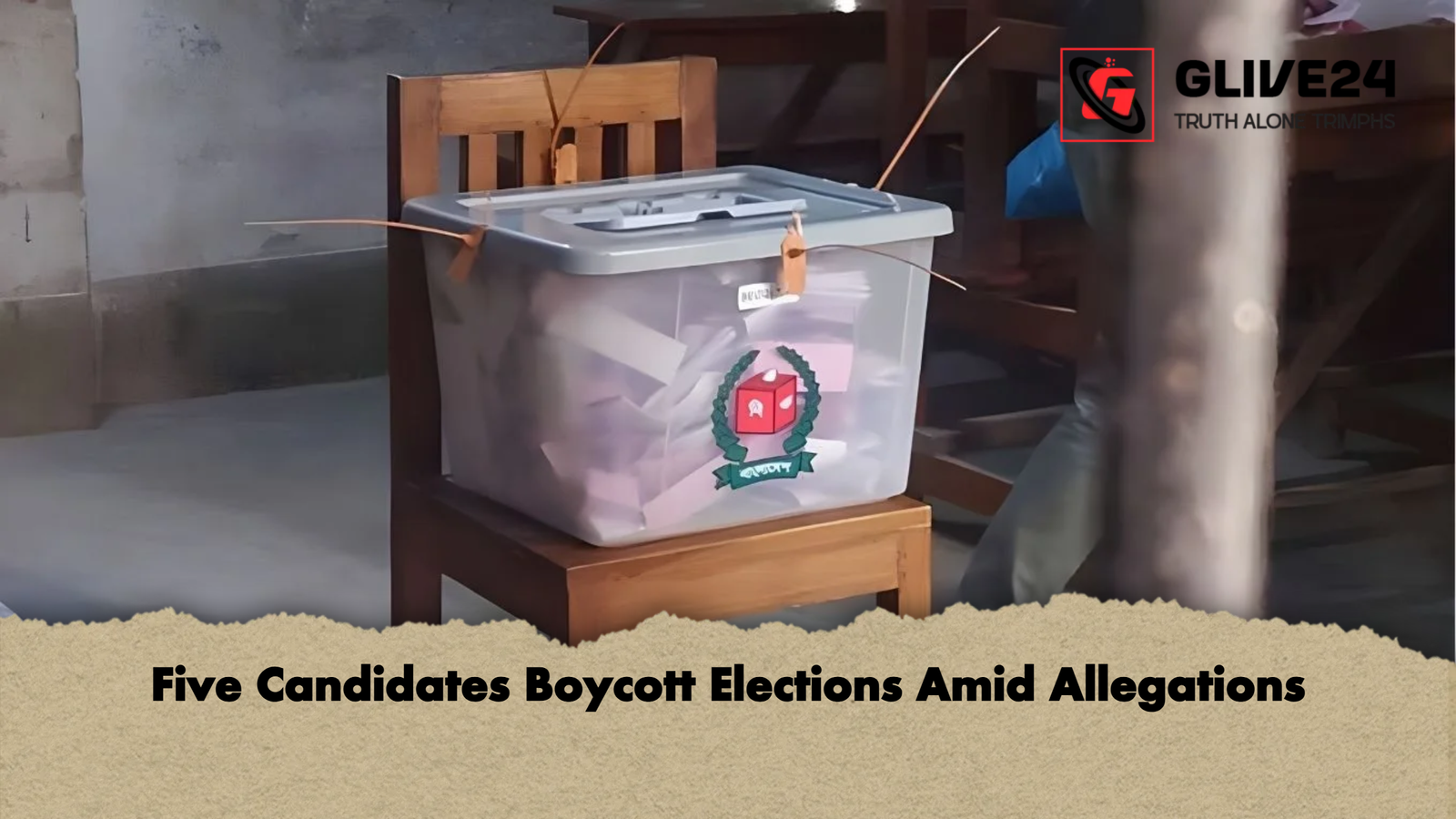
The 13th National Parliament elections and associated referenda were largely conducted peacefully across the country. While voting proceeded in an orderly manner in most constituencies, a number of irregularities prompted five candidates to boycott the polls, raising fresh questions about the transparency and fairness of the electoral process.
The candidates’ allegations range from vote rigging and centre capture to obstruction of election agents and the distribution of illicit funds. These incidents have cast a shadow over what was otherwise regarded as a smooth national exercise.
Summary of Constituencies and Complaints
| Constituency | Candidate & Affiliation | Allegations / Reason for Boycott |
|---|---|---|
| Comilla-4 | Md. A. Jasim Uddin (Gonodhikar Parishad, BNP-backed) | Vote rigging, centre capture, removal of agents, illicit fund distribution |
| Narayanganj-3 | Prof. Md. Rezaul Karim (Independent) | Alleged irregularities; previously elected four times as BNP candidate |
| Dinajpur-5 | Rustam Ali (Independent) | Use of coercion, vote buying, non-cooperation of centre agents |
| Kishoreganj-4 | Kazi Reha Kabir Sigma (Independent, football symbol) | Fake votes, irregularities, biased administrative behaviour |
Comilla-4: Controversial Boycott
In Comilla-4 (Debidwar), Md. A. Jasim Uddin announced his withdrawal from the election via a Facebook Live session following the conclusion of voting. He alleged widespread malpractice at the polling station, including the removal of election agents and interference by powerful local actors, accompanied by illicit monetary inducements.
The seat had seen four-time former BNP MP Manzurul Ahsan Munshi as the party’s original nominee. However, Munshi’s candidacy was annulled due to outstanding loan defaults, prompting the BNP to extend its support to Jasim Uddin. His main rival was Abul Hasnat Abdullah, a southern coordinator of the National Citizens’ Party.
Other Boycott Incidents
In Narayanganj-3, Prof. Md. Rezaul Karim, a four-time BNP legislator, cited irregularities as the reason for his boycott. In Dinajpur-5, independent candidate Rustam Ali alleged coercion, vote buying, and obstruction of election agents. Meanwhile, in Kishoreganj-4, Kazi Reha Kabir Sigma raised concerns about fake votes, malpractice, and biased administrative conduct.
These boycotts have sparked renewed discussion regarding electoral integrity, particularly highlighting the vulnerabilities faced by independent and party-backed candidates alike. Observers note that the incidents underscore the critical importance of transparency and the accountability of both political parties and administrative bodies in safeguarding democratic processes.