
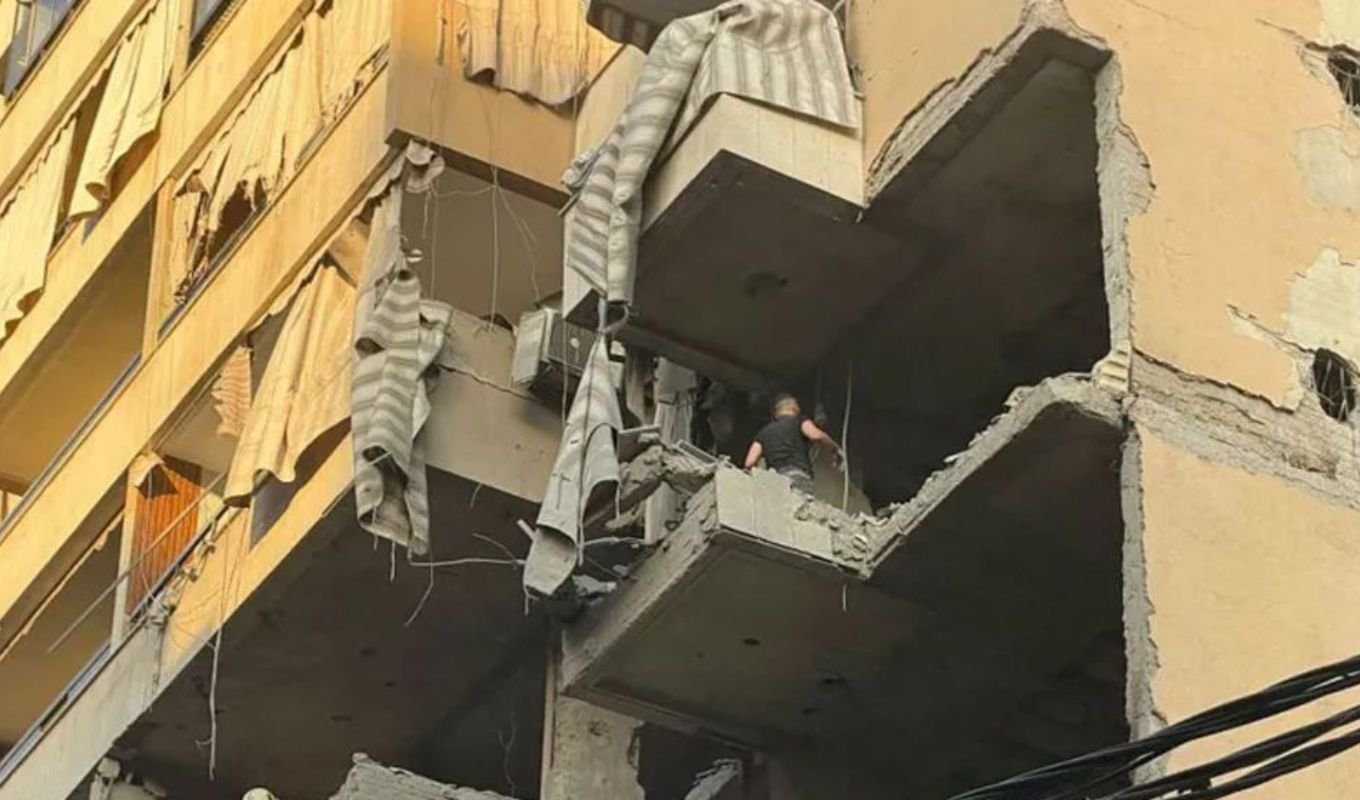
An Israeli airstrike in the south-western suburbs of Lebanon’s capital Beirut has killed a senior Hezbollah commander along with at least four others. The Israeli military confirmed the operation on Sunday (23 November), and Hezbollah later acknowledged the death of its top leader.
According to Israel, the slain commander was Haitham Ali al-Tabatabai, a senior figure who served as Hezbollah’s chief of staff. He was responsible for several key operational and strategic roles within the organisation. Arab News reported that al-Tabatabai was considered the second most important figure in Hezbollah’s leadership structure.
Lebanon’s Ministry of Health said that at least five people were killed and 28 others injured in the attack. The strike targeted a residential building in the densely populated Dahieh area of southern Beirut, causing significant damage to nearby structures. Hospital sources confirmed that women and children were among the injured.
In a statement, Hezbollah confirmed al-Tabatabai’s death and accused Israel of crossing a “serious red line” by carrying out the attack. The group warned that Israel would face consequences, saying the response would come at a time and place of its choosing.
The strike took place despite an ongoing ceasefire between Israel and Hezbollah. The truce, brokered by the United States and France in November last year, was intended to ease tensions along the Israel-Lebanon border. This attack marks Israel’s first major strike in southern Beirut since the ceasefire came into effect.
Israeli officials have claimed that Hezbollah has been attempting to rebuild its military capabilities during the ceasefire period. They allege that the group has been smuggling weapons into Lebanon, expanding the production of explosive drones, and developing alternatives to rockets and missiles. Israel argues that these activities pose a direct threat to its security.
The latest developments have raised fears of renewed escalation in the region, with analysts warning that the fragile ceasefire could collapse if retaliatory attacks follow.
GLIVE/TSN