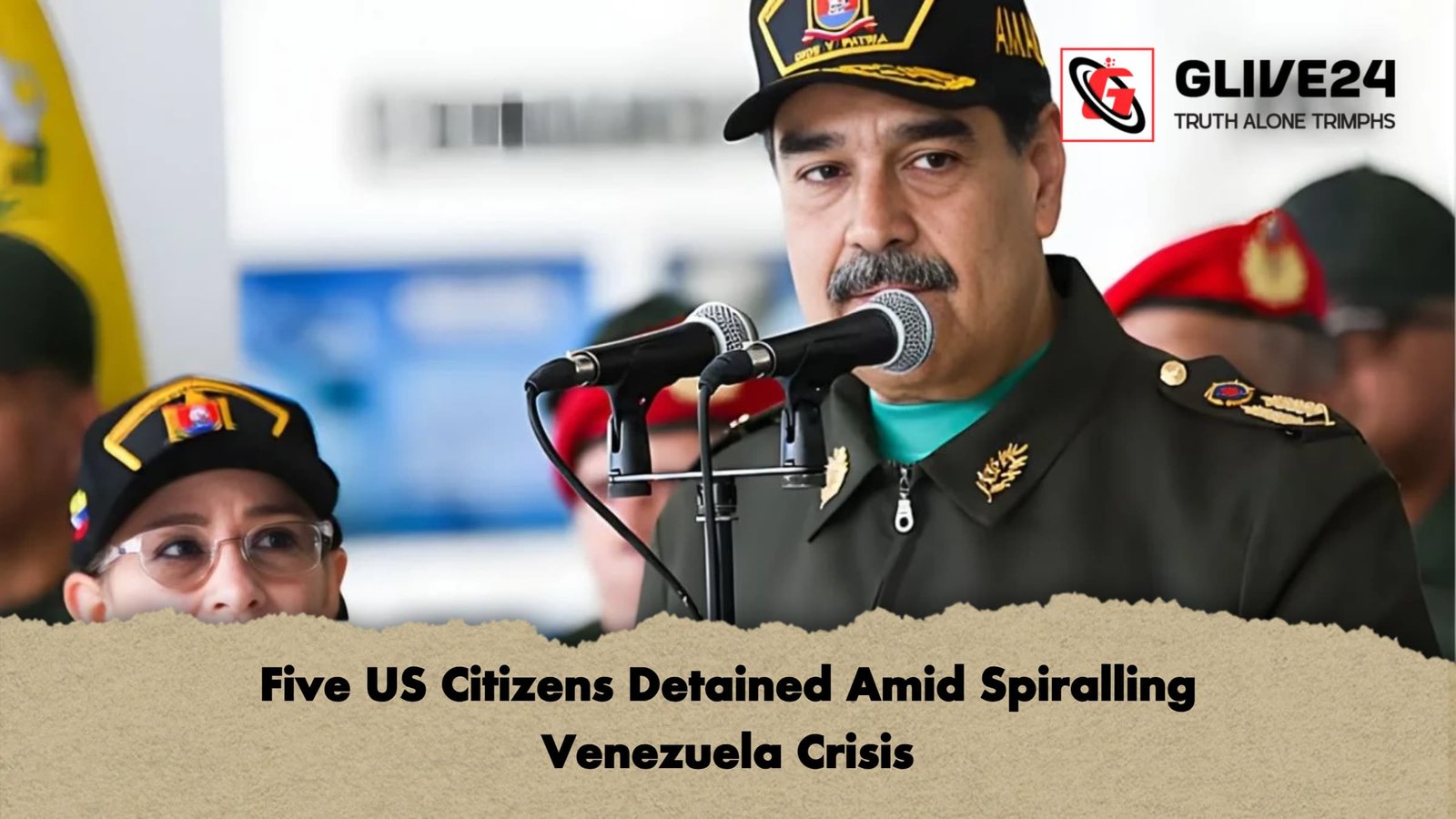
The geopolitical standoff between Washington and Caracas has taken a precarious turn following the detention of at least five United States citizens by Venezuelan security forces. This development, confirmed by a senior American official to CNN, comes at a time of unprecedented hostility as President Nicolás Maduro’s administration grapples with an aggressive “maximum pressure” campaign orchestrated by the Trump administration.
While the individual circumstances of these arrests remain distinct, American intelligence is currently investigating whether any of the detainees were genuinely involved in illicit activities, such as narcotics trafficking, or if they are being utilised as political pawns. There is a growing conviction within the White House that the Maduro government is adopting “hostage diplomacy” to secure a strategic advantage or to force a softening of US diplomatic positions.
A Pattern of Escalating Hostility
The arrests appear to be a direct response to a surge in American interventionism in the region. Over the past few months, the US has significantly increased its maritime presence, conducting raids on Venezuelan vessels suspected of smuggling drugs. Furthermore, reports of CIA-linked sabotage at Venezuelan ports and the aggressive seizure of fuel-laden tankers have pushed the Maduro regime into a defensive, yet retaliatory, posture.
This strategy of detaining foreign nationals bears a striking resemblance to tactics employed by Venezuela’s long-term ally, Russia. Moscow has frequently used the detention of US citizens as a leverage point during periods of strained relations with the West. In the eyes of US officials, Caracas is now borrowing from the Kremlin’s playbook to navigate its own international isolation.
Key Pillars of the US Pressure Campaign (2025–2026)
| Tactical Area | Specific Actions Taken | Strategic Objective |
| Individual Sanctions | Targeted Maduro’s nephews and brother-in-law | To fracture the regime’s inner circle |
| Maritime Raids | Interception of suspected drug-smuggling vessels | To delegitimise Maduro as a “narco-terrorist” |
| Energy Blockade | Seizure of oil tankers and fuel shipments | To starve the administration of essential revenue |
| Diplomatic Isolation | Maintenance of “illegitimate” status for Maduro | To encourage internal government transition |
| Security Detention | Arrest of 5 US citizens (Venezuela’s counter) | To gain diplomatic leverage over Washington |
The Diplomatic Fallout
Despite the gravity of the situation, the US State Department and the White House have maintained a disciplined silence, repeatedly declining requests for official comment. This reticence may be an attempt to handle the delicate negotiations for the citizens’ release behind closed doors, avoiding the “theatre” that often accompanies public diplomatic disputes.
The tension reached a new peak in December 2025, when Washington issued two separate rounds of sanctions specifically targeting the familial support network of President Maduro. By freezing the assets of his three nephews and his brother-in-law, the US has signalled that no one within the leader’s proximity is safe from financial repercussions.
As the Maduro administration continues to be characterised by the US as a criminal enterprise rather than a sovereign government, the detention of these five Americans adds a deeply personal and humanitarian dimension to an already complex international conflict. It remains to be seen whether these citizens will be treated as criminal suspects or if their freedom will eventually be traded for a reduction in economic sanctions.