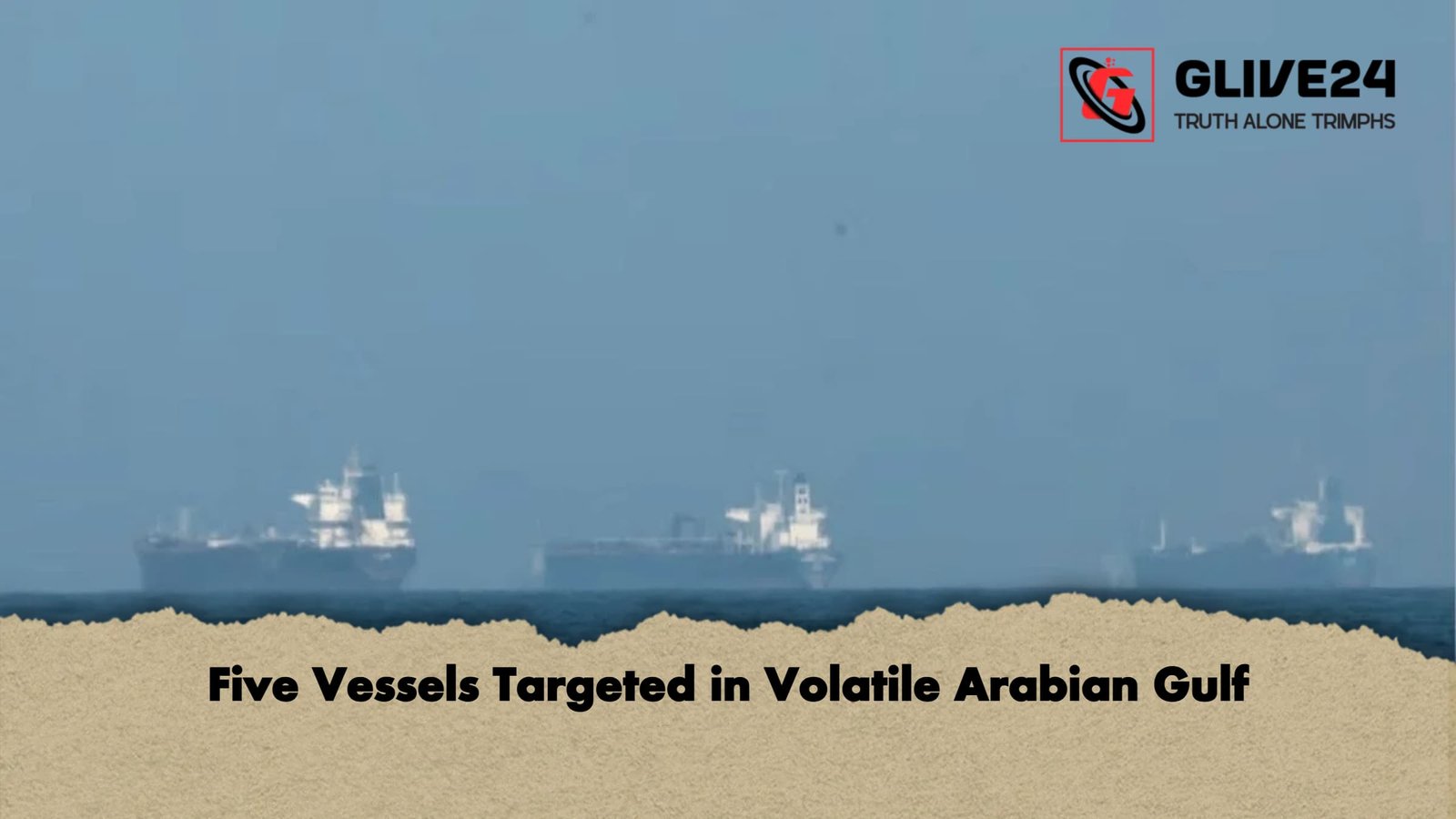
The maritime security landscape in the Middle East has reached a critical boiling point as the United Kingdom Maritime Trade Operations (UKMTO) reported a spate of targeted attacks on commercial shipping. Within a mere 24-hour window, five separate vessels have been engaged by hostile fire or explosive devices in the Arabian Gulf and its adjacent waters. This surge in maritime aggression follows Tehran’s formal declaration on Monday that the Strait of Hormuz is now a closed military zone, with the Islamic Revolutionary Guard Corps (IRGC) threatening to strike any vessel attempting transit.
Table of Contents
The Anatomy of the Recent Strikes
According to details released by UKMTO and regional maritime observers, the attacks have been varied in their execution, ranging from direct missile strikes to “near-miss” detonations designed to intimidate. Off the coast of Fujairah, a vital bunkering hub, two oil tankers were struck by missiles. While the vessels remained seaworthy, reportage confirms structural damage to their funnels and hull plating.
Simultaneously, a container ship attempting to navigate the Strait of Hormuz came under fire, highlighting the extreme risk now associated with the world’s most vital energy chokepoint. Further incidents were recorded near the Omani coast and to the west of Dubai, where vessels reported significant explosions in their immediate vicinity.
Maritime Incidents: 24-Hour Summary
| Vessel Type | Location of Attack | Nature of Incident | Reported Damage |
| Oil Tanker (1) | Off Fujairah Coast | Missile Strike | Damage to funnel/hull |
| Oil Tanker (2) | Off Fujairah Coast | Missile Strike | Minor steelwork damage |
| Container Ship | Strait of Hormuz | Direct Hostile Fire | Under assessment |
| Commercial Vessel | Omani Coast | Near-miss Explosion | None reported |
| Commercial Vessel | West of Dubai | Proximity Detonation | Psychological/Navigational |
Economic Paralysis and Market Reaction
The strategic closure of the Strait of Hormuz has sent shockwaves through global energy markets. Data provided by the research firm Kpler indicates that tanker traffic through the Strait has collapsed by a staggering 90% since the commencement of US and Israeli military operations against Iran.
This maritime blockade effectively chokes off the primary artery for global oil and liquefied natural gas (LNG) exports. Analysts warn that if the IRGC continues to successfully interdict commercial traffic, global oil prices could see an unprecedented spike, potentially exceeding $150 per barrel within the fortnight.
The Looming Humanitarian and Environmental Risk
Beyond the immediate economic fallout, the targeting of tankers poses a severe environmental threat to the delicate ecosystem of the Gulf. A single catastrophic breach of a supertanker could result in an oil spill of historic proportions, crippling the desalination plants upon which the Gulf states rely for fresh water.
As Washington considers escalating its naval presence to provide “freedom of navigation” escorts, the risk of a direct maritime confrontation between the US Navy and IRGC fast-attack craft remains at an all-time high. For now, the Arabian Gulf has been transformed into a “no-go zone” for international commerce, leaving hundreds of vessels stranded or rerouting around the Cape of Good Hope at immense cost.