
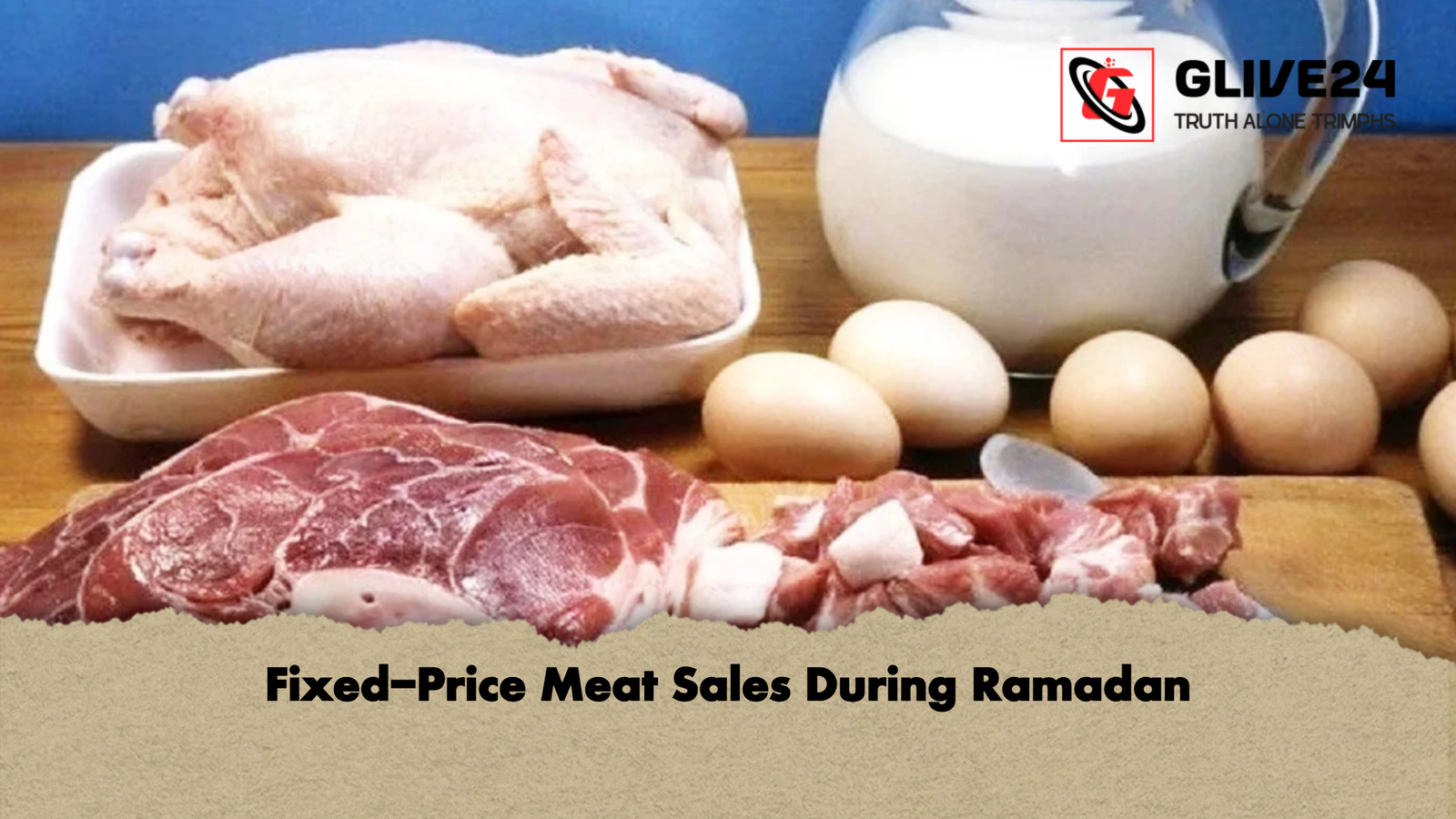
As part of its annual effort to ease pressure on household budgets during the holy month of Ramadan, the government has announced a renewed initiative to sell essential animal-based food items at subsidised prices. The programme, which has become a regular feature in recent years, aims to ensure stable supply and affordable access to meat, milk and eggs for fasting consumers across the country.
Under the scheme, beef will be sold at a fixed price of 650 taka per kilogram, while processed chicken meat will be available at 250 taka per kilogram. In addition, consumers will be able to purchase milk at 80 taka per litre and eggs at 8 taka per piece. Officials believe these prices are significantly lower than prevailing market rates and will provide much-needed relief to low- and middle-income families during Ramadan, a period traditionally associated with higher food consumption and rising prices.
The decision was finalised at a meeting held on Sunday (1 February) at the Ministry of Fisheries and Livestock. The meeting focused specifically on arrangements for selling essential products at fair prices during Ramadan. Senior officials from relevant departments attended the discussion, where the overall strategy, pricing structure and distribution plan were reviewed. One of the key outcomes of the meeting was the decision to expand the number of sales points compared with last year, in response to growing demand and positive public feedback.
The ministry’s adviser, Farida Akhter, issued the necessary directives to implement the programme smoothly. Following her guidance, authorities confirmed that subsidised products would be sold at a total of 48 designated locations nationwide this year. These outlets will cover the capital as well as other major urban and semi-urban areas, ensuring that a broader section of the population can benefit from the initiative rather than limiting access to a few central points.
Dr Md Abu Sufian, Director General of the Department of Livestock Services, said the government’s primary objective was to reduce hardship for fasting people during Ramadan. He noted that every year the month brings challenges such as increased demand, supply disruptions and occasional price manipulation in the open market. To counter these issues, the government has consistently intervened through fair-price sales, and preparations for this year’s programme are already under way.
According to Dr Sufian, discussions have been held with suppliers and other stakeholders involved in the production, processing and distribution of livestock products. These partners have assured the authorities that they will support the programme by ensuring adequate supply and by extending sales to more locations than in previous years. Measures are also being planned to maintain quality standards and prevent any irregularities at the sales centres.
Officials expect that the expanded network of outlets, combined with fixed pricing, will help stabilise the market and discourage excessive price hikes by private traders. Regular monitoring and coordination among government agencies will be carried out throughout Ramadan to ensure uninterrupted supply and fair practices.
The subsidised prices and items included in the Ramadan programme are summarised below:
| Product | Unit | Fixed Price (Taka) |
|---|---|---|
| Beef | Per kilogram | 650 |
| Processed chicken | Per kilogram | 250 |
| Milk | Per litre | 80 |
| Eggs | Per piece | 8 |
Overall, the initiative reflects the government’s broader commitment to consumer protection and food security during a period of heightened demand. If effectively implemented, it is expected to provide tangible relief to millions of people observing Ramadan while contributing to greater market stability.