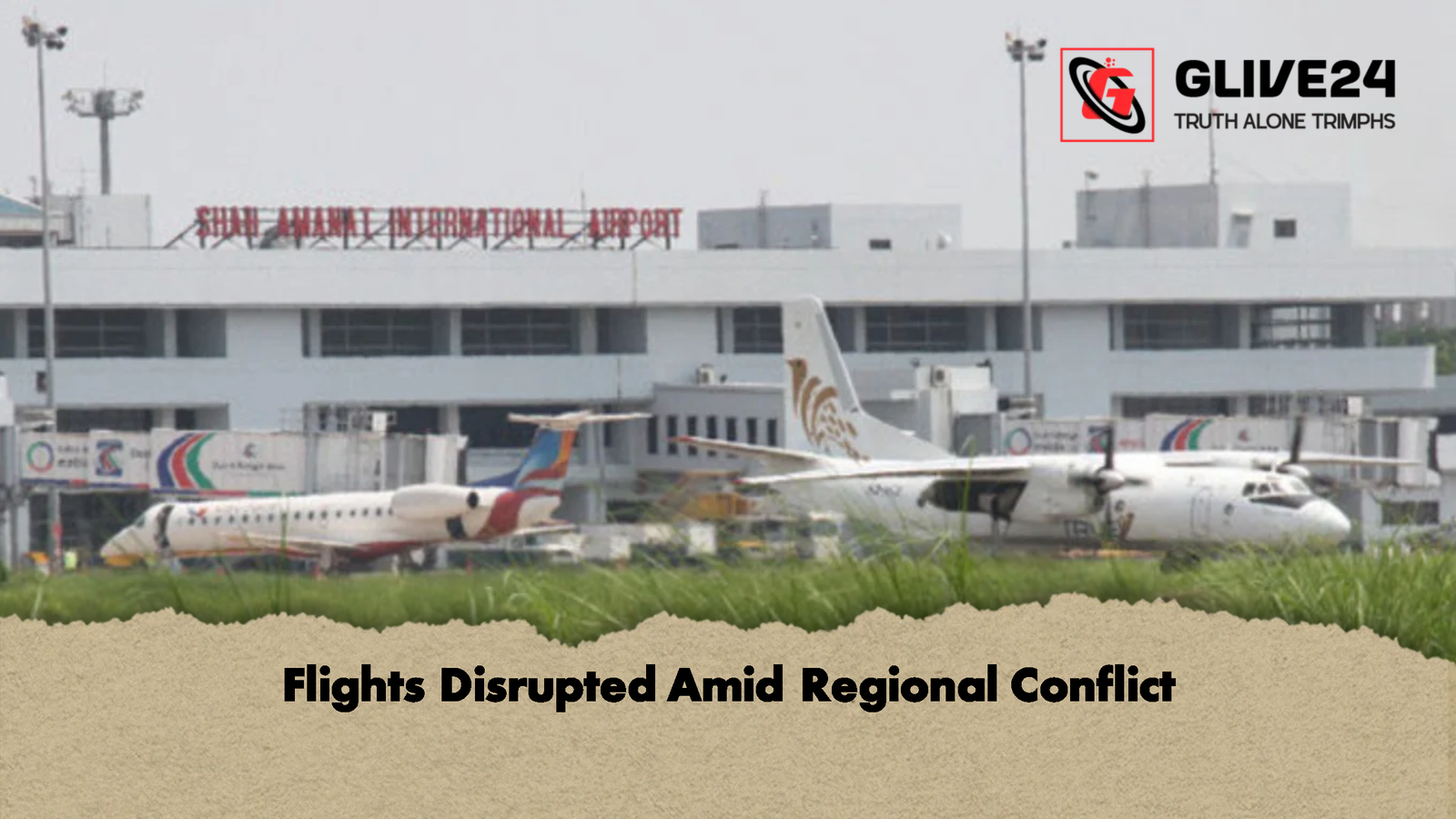
Air travel has come under sustained pressure as escalating tensions in the Middle East continue to disrupt international aviation routes, with Shah Amanat International Airport in Chattogram experiencing significant operational challenges. On Wednesday (25 March), seven international flights were cancelled in a single day, underscoring the growing impact of geopolitical instability on regional connectivity.
Airport officials confirmed that the cancellations affected several major carriers operating routes to and from the Middle East. The national flag carrier, Biman Bangladesh Airlines, had two outbound and two inbound flights suspended, while US-Bangla Airlines saw one outbound service cancelled. In addition, Air Arabia cancelled both one inbound and one outbound flight. These cancellations primarily involved key destinations across the Gulf region, reflecting the widespread nature of the disruption.
Despite these setbacks, the airport continues to function, albeit under constrained conditions. On the same day, eight inbound flights and four outbound flights were successfully operated, indicating that partial operations are being maintained. However, services on critical Middle Eastern routes—particularly to Sharjah, Dubai, and Abu Dhabi—remain unstable. Airlines such as Salam Air, Air Arabia, and US-Bangla Airlines continue to face difficulties in maintaining regular schedules on these routes.
Flight Operations Overview (25 March)
| Category | Airline | Route | Status |
|---|---|---|---|
| Outbound | Biman Bangladesh Airlines | Middle East destinations | Cancelled (2 flights) |
| Inbound | Biman Bangladesh Airlines | Middle East destinations | Cancelled (2 flights) |
| Outbound | US-Bangla Airlines | Regional routes | Cancelled (1 flight) |
| Outbound | Air Arabia | Sharjah/Dubai | Cancelled (1 flight) |
| Inbound | Air Arabia | Middle East | Cancelled (1 flight) |
| Operating Flights | Multiple Airlines | Various routes | 8 inbound, 4 outbound completed |
According to Engineer Ibrahim Khalil, Public Relations Officer at Shah Amanat International Airport, the disruptions are a direct consequence of ongoing geopolitical tensions in the Middle East. He noted that flight operations have remained unpredictable since the onset of hostilities and that there is currently no clear indication of when normal scheduling will resume.
The impact of the conflict on aviation has been significant and cumulative. Since 28 February, when hostilities began, a total of 186 international flights have been cancelled at Shah Amanat International Airport alone. This highlights the severity of the situation and its sustained effect on Bangladesh’s international air connectivity.
The aviation sector is particularly sensitive to regional instability. Airspace restrictions, heightened security concerns, and shifting demand patterns frequently force airlines to alter routes or cancel services altogether. Such disruptions not only affect airline operations but also lead to delays, increased operational costs, and inconvenience for passengers.
For Bangladesh, the consequences are particularly pronounced due to its strong economic and social links with the Middle East. A large number of Bangladeshi expatriate workers depend on regular air services to travel to and from countries such as the United Arab Emirates, Saudi Arabia, and Oman. Interruptions in these routes therefore have wider implications, potentially affecting remittance flows, employment cycles, and family reunification.
Airport authorities have stated that they are maintaining close coordination with airlines and relevant stakeholders to ensure that all operating flights meet safety requirements. However, they have also acknowledged that uncertainty is likely to persist until the geopolitical situation stabilises.
Passengers are being urged to remain in contact with their respective airlines for the latest updates, as sudden changes to flight schedules remain possible. Airlines, meanwhile, continue to navigate a complex operational environment, balancing safety considerations with the need to maintain essential international connectivity.
As the situation evolves, aviation authorities and carriers alike remain focused on safety and cautious planning, with hopes that stability will eventually allow for a return to normal operations.