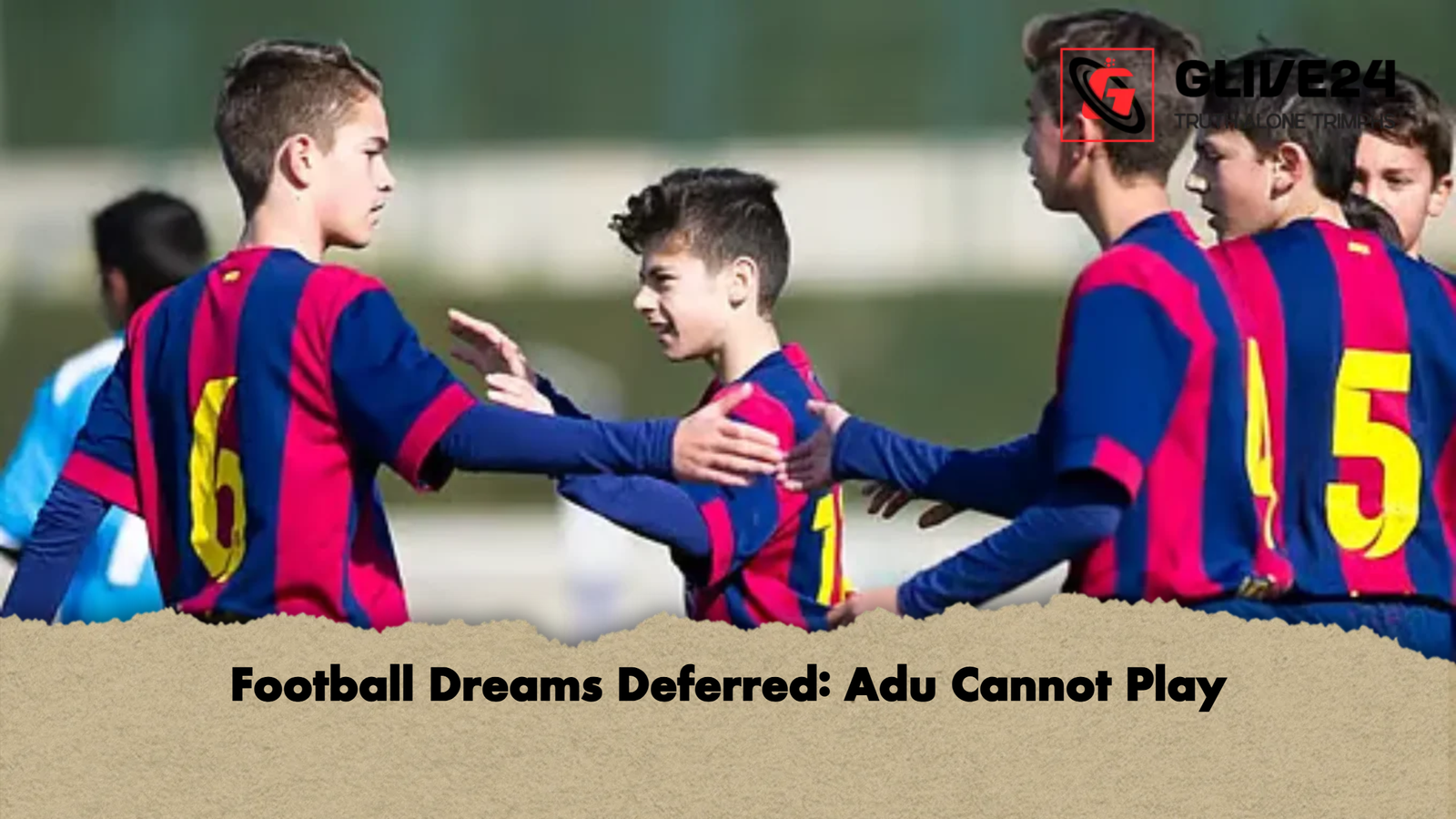
Every week, the same scene unfolds.Twelve-year-old Adu ties the laces of his football boots, steps onto the training pitch, and moves with the enthusiasm of any other child. He runs, passes, and scores goals with the skill of a committed team member.
Yet, when Sunday arrives, everything changes.
On match days, Adu is not allowed onto the pitch. He must sit in the stands, watching his teammates play. Over time, even this has become painful, and increasingly, he stays at home instead.
Adu, originally from Cameroon, plays—or attempts to play—for a small football club in northern Tenerife, in Spain’s Canary Islands. While he can train with the team, official matches remain off-limits. He has been living with his foster parents, Ana and Eduardo, for nearly two years, who describe football as an inseparable part of Adu’s life.
From school to home, Adu seeks a football. Even if he has just ten minutes, he plays or watches football videos. During school lunch breaks, he plays as well. But when weekly matches occur, it is a time of frustration and sorrow.
Initially, Adu went to watch his teammates play, but gradually he stopped. “He is always at training but cannot play in matches,” his foster parents told EFE news agency. “Now he prefers to stay home and learn the results later.”
This unusual situation is perplexing not only to Adu but also to his teammates and coaches. They often ask: “Has your registration been processed?” Yet, no one knows the answer.
The root cause lies in FIFA regulations. Article 19 of the Regulations on the Status and Transfer of Players prohibits minors under 18 from transferring internationally for sporting purposes.
This rule stems from past exploitation, when European clubs recruited children from Africa and South America. Those who did not succeed were often abandoned, effectively victims of trafficking and commercial exploitation—sometimes referred to as “football trafficking.”
FIFA’s restrictions, intended to protect children, now unintentionally create barriers for young players like Adu. Even small local clubs in Spain must comply with these rules, meaning Adu’s registration counts as an “international transfer,” requiring extensive documentation.
| Requirement | Explanation | Challenge |
|---|---|---|
| Parental/legal guardianship | Proof of parents’ or foster guardians’ residence and legal consent | Local guardianship often deemed insufficient |
| Residential distance | Home must be within 100 km of the club | Greater distance blocks eligibility |
| Purpose of relocation | Child must not have moved solely for football | Children fleeing conflict often meet this criterion indirectly |
Many children, like Adu, arrive in Spain by small boats—known locally as kayako—seeking safety, not football. Yet playing in official matches still counts as an international transfer, triggering complex bureaucratic procedures.
Exhausted by delays, Adu himself wrote to FIFA:
“I am a 12-year-old African boy. I have lived with my foster family for two years. I am happy at home, at school, and with friends. I love football and never miss training, but because I am from another country, they do not let me play.”
Three years ago, a similar letter by a child named Suleman helped resolve issues for many minors. Adu’s family continues to hope for a resolution. Despite submitting all requested documents, FIFA’s rules continue to stall his registration. His foster father, Eduardo, said: “In three years, he has played three friendly matches but trained almost 250 times.”
Currently, FIFA allows children in political asylum cases to play, but most, like Adu, are not legally classified as refugees, creating further administrative hurdles. Many other African children in the Canary Islands face the same restrictions.
For Adu, football is more than a game; it provides mental stability amidst the challenges of migration and adaptation. While his family has suggested basketball or athletics, his heart remains with football.
For Ana and Eduardo, the day Adu finally steps onto the pitch in an official match will be a celebration—not for the result, but for the simple joy of a child playing with his peers.