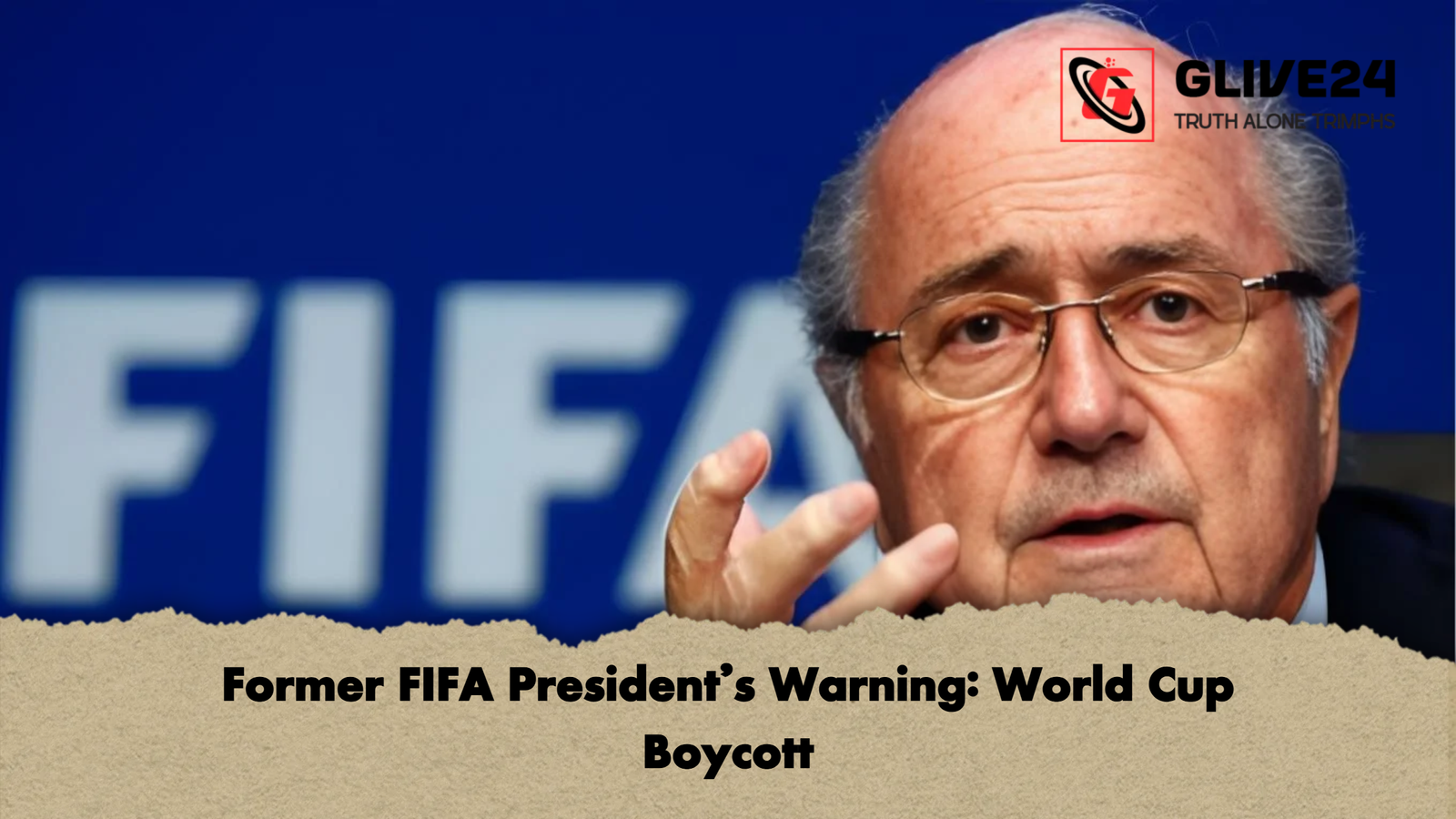
Former FIFA President Sepp Blatter has joined calls for a boycott of the 2026 FIFA World Cup, set to take place in the United States, Mexico, and Canada next June. The move has intensified debates surrounding the “Greatest Show on Earth,” now in its 23rd edition, following previous boycott appeals from Germany and the Netherlands. Blatter cited deteriorating relations between Europe and the Trump administration as a primary reason for urging fans and football authorities to reconsider their support for the tournament.
Blatter’s intervention follows a series of high-profile voices questioning the suitability of the United States as a host nation. Earlier, German politicians and English media personality Piers Morgan publicly advocated for a boycott. Dutch television producer Toon van de Keuken subsequently joined the campaign, urging the Dutch national football team to withdraw from the tournament. Blatter’s recent comments have placed the United States under the global football spotlight as the host nation.
In a post on X (formerly Twitter), Blatter expressed support for remarks made in a recent interview with Swiss newspaper Der Bund by Mark Pieth, a renowned anti-corruption lawyer and former chair of FIFA’s Independent Governance Committee. Pieth, reflecting on a decade of overseeing FIFA’s reform initiatives, advised football fans: “Considering all we have discussed, my advice to supporters is simple—watch the World Cup from home rather than travel to the United States. Television offers a far safer and more enjoyable experience. Those who do attend must accept that, if they fall out of favour with authorities, they could be sent home on the next flight—if fortune permits.”
Blatter quoted Pieth in his post, stating, “I believe Mark Pieth is correct in questioning this World Cup.”
International concern over the U.S. hosting stems from several policies under the Trump administration, including expansionist positions on Greenland, travel bans, and strict enforcement measures during protests against immigration, notably in cities such as Minneapolis.
German Football Federation Vice-President Oke Göttlich recently told Morgenpost that “the time has come to consider the possibility of a World Cup boycott with due seriousness.”
Travel restrictions have already affected supporters from Africa’s top football nations. Two weeks ago, fans from Senegal and Ivory Coast were prevented from entering the United States unless they held pre-existing visas, a measure justified by the Trump administration as necessary to address “screening and verification gaps.” Additionally, supporters from Iran and Haiti, two countries that qualified for the World Cup, are also unlikely to gain entry under U.S. travel restrictions.
Table: Key Boycott Calls and Concerns
| Country / Personality | Role / Position | Boycott Appeal / Concern | Status / Note |
|---|---|---|---|
| Germany | Politicians | Advocated boycott due to U.S. political climate | Publicly stated |
| England | Piers Morgan (Media Personality) | Encouraged fans to avoid attending the tournament | Publicly stated |
| Netherlands | Toon van de Keuken (TV Producer) | Urged Dutch national team withdrawal | Publicly stated |
| Switzerland | Mark Pieth (Anti-Corruption Lawyer) | Advised fans against travelling to U.S. | Supported by Blatter |
| United States (Host Nation) | Sepp Blatter (Former FIFA President) | Questioned suitability as host; urged global scrutiny | Public intervention |
The growing chorus of voices questioning the World Cup in the United States highlights both political and logistical challenges facing supporters and football authorities, ensuring the tournament will be as controversial off the pitch as it is anticipated to be on it.