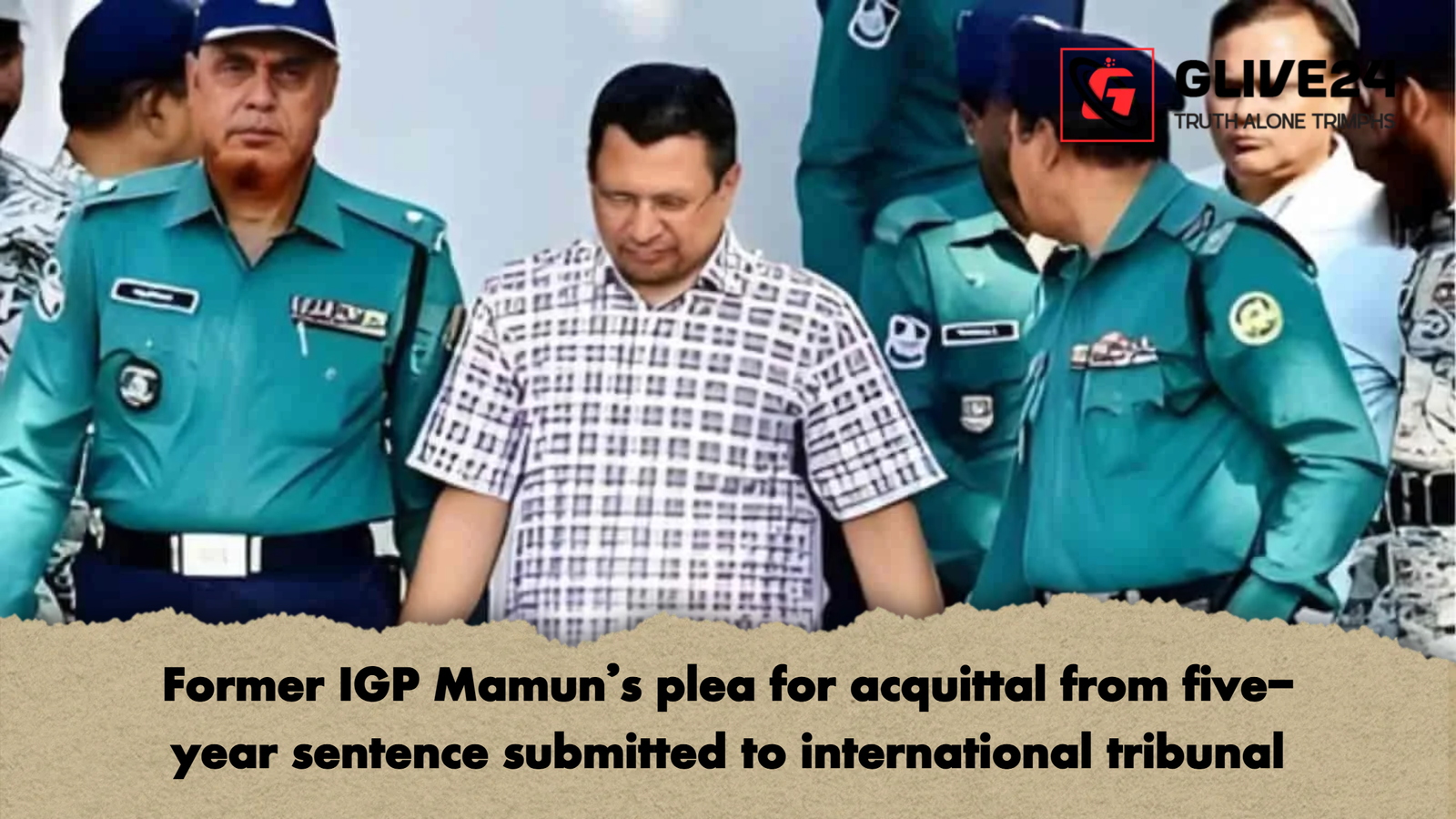
In a dramatic turn of events, former Inspector General of Police Chowdhury Abdullah Al-Mamun has filed an appeal seeking to overturn the five-year prison sentence imposed on him by the International Crimes Tribunal (ICT) for crimes against humanity. The appeal, submitted through his legal counsel on 22 December, targets the ruling connected to the July 2024 student uprising that escalated into nationwide unrest.
The tribunal’s judgment, delivered on 17 November 2025, sentenced Mamun to five years in prison despite his role as an approver, or state witness, in the case. This ruling was issued alongside death sentences for former Prime Minister Sheikh Hasina and ex-Home Minister Asaduzzaman Khan Kamal, highlighting the gravity of the tribunal’s findings.
The three-judge panel, led by Justice Md. Golam Mortuza Majumder, emphasised accountability for actions committed during the uprising, while stressing the importance of state officials cooperating with judicial investigations. The bench included Justice Md. Shafiul Alam Mahmud and Justice Md. Mohitul Haque Enam Chowdhury, who collectively examined the evidence and testimonies over several months.
Mamun, who was initially accused, voluntarily became a state witness, providing crucial information that revealed details of the events during the student protests. His cooperation was seen as pivotal in exposing key figures’ involvement, though the tribunal determined that he was still culpable to a degree warranting imprisonment.
Legal experts note that Mamun’s appeal will focus on challenging the proportionality of the sentence, raising questions about the application of justice in cases involving high-ranking officials who turn approvers. This development could have implications for future trials where defendants opt to provide evidence against co-accused in exchange for leniency.
Public reactions have been mixed, with supporters of the ex-IGP arguing that his cooperation with the court should have resulted in a full acquittal. Critics, however, maintain that accountability must remain uncompromising, regardless of cooperation with the prosecution.
The appeal also brings attention to broader issues surrounding Bangladesh’s transitional justice system and the challenges of prosecuting crimes against humanity in politically charged contexts. Analysts expect that the appellate process will be closely followed both nationally and internationally, with each procedural step dissected for its legal and political implications.