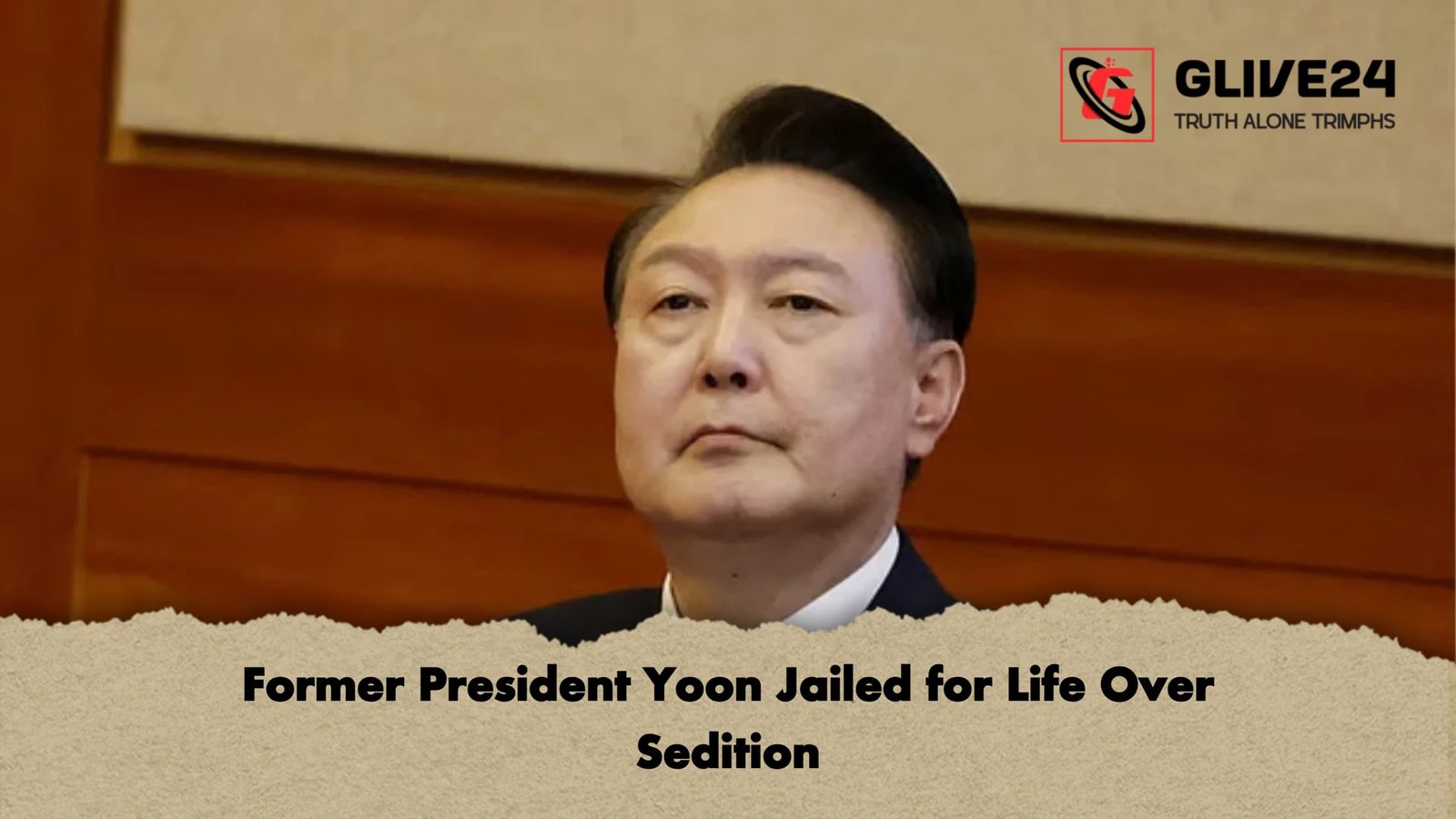
In a landmark ruling that has sent shockwaves through East Asia, a South Korean court has sentenced former President Yoon Suk-yeol to life imprisonment. The verdict, delivered on Thursday, follows a high-stakes trial that classified his abortive attempt to impose martial law in December 2024 as an act of “rebellion” against the state.
The crisis began when Yoon made a sudden, late-night television appearance, declaring a state of emergency to eliminate what he termed “anti-state forces.” Although the martial law decree lasted a mere six hours before being rescinded under immense public and parliamentary pressure, the Seoul Central District Court ruled that the intent behind the action was fundamentally seditious.
A Calculated Strike Against Democracy
The presiding judge, Ji Gui-yeon, found that Yoon’s primary motivation was to neutralise his political adversaries within the National Assembly. At the time of the declaration, Yoon’s administration was increasingly beleaguered, facing a hostile parliament that had blocked his budget and initiated impeachment proceedings against key cabinet members.
“The defendant was obsessed with the notion that the opposition could successfully render the presidency ineffective,” Judge Ji noted. “His attempt to seize absolute power through military force has exacted a tremendous cost from South Korean society, and there is little evidence of genuine remorse.”
The court detailed how Yoon, supported by high-ranking military officials, deployed special forces to occupy the parliament building and attempted to arrest prominent critics.
Judicial Outcome: The Rebellion Trial
| Legal Component | Prosecution Request | Court Verdict |
| Primary Charge | Leading a Rebellion / Sedition | Guilty |
| Sentence | Death Penalty | Life Imprisonment |
| Political Status | Impeached and Stripped of Immunity | Convicted Criminal |
| Civil Impact | Massive Social Disruption | Permanent Disqualification from Office |
A Reprieve from the Gallows
While prosecutors had argued for the death penalty—the severest punishment available under South Korean law for sedition—the court opted for life imprisonment. This decision aligns with South Korea’s de facto moratorium on capital punishment; the nation has not carried out an execution since 1997.
The 2024 martial law crisis remains a dark chapter for a nation often celebrated as a beacon of democracy in Asia. The trial revealed a leader who, pushed into a political corner, was willing to dismantle constitutional order to maintain his grip on power. With this life sentence, the judiciary has sent a definitive message: the democratic institutions of the Republic of Korea are not subject to the whims of its executive.
As Yoon begins his sentence, the focus now shifts to the ongoing trials of the military generals who assisted him, as the nation continues to heal from the shortest, yet most significant, constitutional crisis in its modern history.