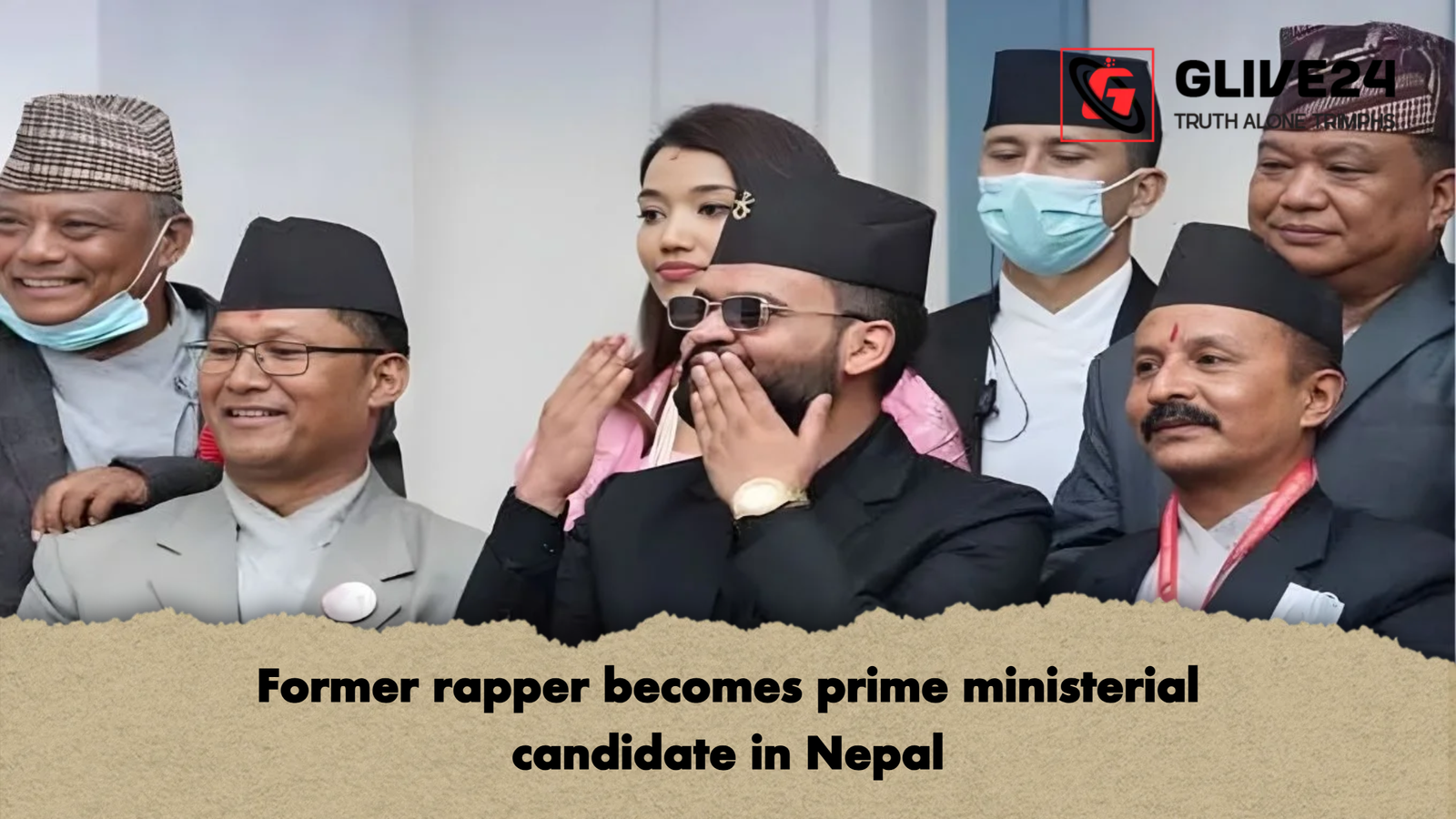
As Nepal prepares for its national elections scheduled for March, a new political alliance has emerged, capturing the attention of the nation. Two prominent figures have joined forces, forming a coalition that analysts suggest could pose a serious challenge to the country’s long-established political parties.
On Sunday, 28 December, officials from the Rastriya Swatantra Party (RSP) announced that Balen (Bendra Shah), the Mayor of Kathmandu and a former rapper, has joined their coalition. The party is currently led by former television presenter and politician, Ravi Lamichhane. Under the terms of their agreement, if the RSP wins the upcoming 5 March elections, 35-year-old Balen would assume the office of Prime Minister, while 48-year-old Lamichhane would continue to lead the party.
Balen rose to prominence in September following a youth-led protest, gaining recognition as a key figure within the movement. He also served as part of an interim government overseen by former Chief Justice Sushila Karki, tasked with supervising electoral processes. However, some critics have questioned Balen’s role during the protests, noting that he remained largely out of public view and primarily communicated with supporters via social media.
Ravi Lamichhane founded the RSP prior to the 2022 elections and had gained popularity as a television presenter through his anti-corruption campaigns. He is currently out on bail following allegations of misappropriating funds from a cooperative involving small depositors.
Both leaders have pledged to champion the demands of the September protests, which called for youth-led leadership and action against corruption. The unrest resulted in 77 fatalities and forced then-Prime Minister K.P. Sharma Oli to resign.
According to the Election Commission, Nepal has approximately 30 million residents, of whom around 19 million are eligible voters. Following the protests, nearly one million new voters—predominantly young people—have been added to the rolls.
Political analyst Bipin Adhikari notes that traditional parties are increasingly concerned about losing the youth vote. Recruiting Balen and his young supporters is viewed as a strategic move for the RSP. The emergence of this coalition presents a significant challenge to long-dominant parties, such as Oli’s Communist Party of Nepal (UML) and the centrist Nepali Congress, both of which have governed through power-sharing arrangements for more than three decades.
However, Nepali Congress spokesperson Prakash Sharan Mahat dismissed the alliance as limited in influence, calling both Balen and Lamichhane “controversial” figures. He argued that voters would ultimately opt for established and experienced parties, with minimal political disruption expected from this new coalition.
Key Figures of the RSP Coalition:
| Name | Age | Role in Party/Coalition | Background |
|---|---|---|---|
| Balen (Bendra Shah) | 35 | Prime Minister Candidate | Kathmandu Mayor, former rapper |
| Ravi Lamichhane | 48 | Party Leader | Former TV presenter, politician |
The unfolding political dynamics signal a potentially transformative election in Nepal, with youth activism and anti-corruption sentiment at the forefront. Analysts will be closely watching how this new alliance fares against the entrenched political establishment.