
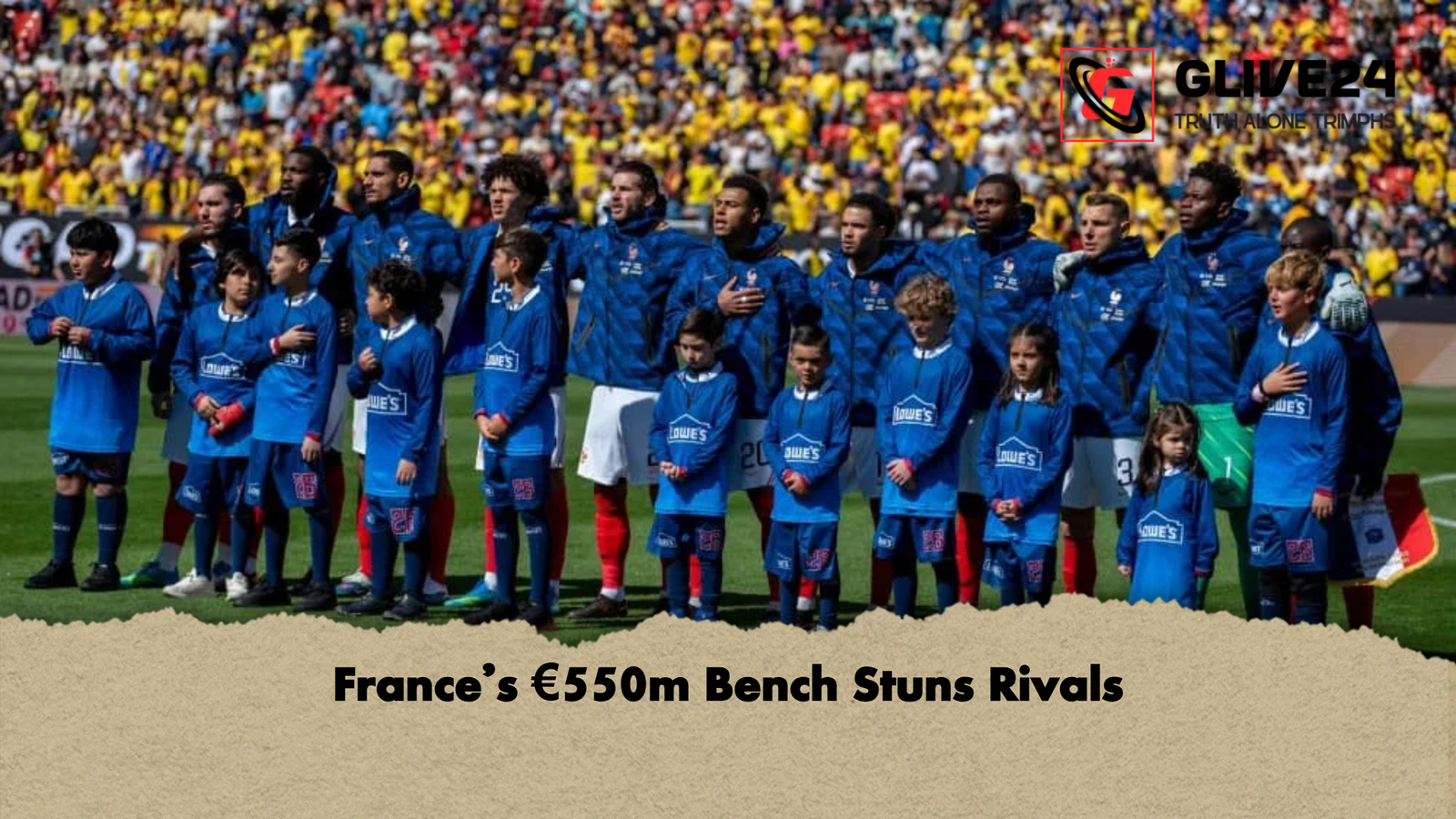
France underlined their extraordinary squad depth with a commanding 3–1 victory over Colombia, yet it was not merely the scoreline that captured attention. Instead, the spotlight fell firmly on the remarkable strength of their bench, a testament to the depth of talent at coach Didier Deschamps’ disposal.
In a bold tactical move, Deschamps made wholesale changes to his starting XI just three days after facing Brazil. Such a complete overhaul is rare at international level, but it reflected a deliberate strategy: to assess the breadth of his squad ahead of major tournaments, particularly with an eye on reclaiming the FIFA World Cup crown.
The reshuffled side delivered emphatically. Young forward Désiré Doué emerged as the standout performer, netting twice with composure beyond his years, while midfielder Warren Zaïre-Emery orchestrated play with authority and flair. Their performances reinforced the notion that France’s so-called “second string” is scarcely inferior to the first team.
Notably absent were several high-profile players due to injury, including Bradley Barcola, Jules Koundé, and William Saliba—key figures at Paris Saint-Germain, Barcelona, and Arsenal respectively. Despite these omissions, France’s overall quality appeared undiminished, highlighting the resilience and depth of their talent pool.
According to Transfermarkt estimates, if the Brazil match is taken as the benchmark for France’s strongest XI, then the combined market value of the players on the bench reaches an astonishing €550 million. This figure alone illustrates why France remain one of the most formidable sides in world football.
Below is a breakdown of the substitutes from the Brazil fixture and their approximate market values:
| Position | Player | Market Value (€m) |
|---|---|---|
| Goalkeeper | Brice Samba | 8 |
| Goalkeeper | Lucas Chevalier | 30 |
| Defender | Maxence Lacroix | 40 |
| Defender | Lucas Hernández | 20 |
| Defender | Lucas Digne | 8 |
| Defender | Pierre Kalulu | 32 |
| Midfielder | Eduardo Camavinga | 50 |
| Midfielder | N’Golo Kanté | 4.5 |
| Midfielder | Warren Zaïre-Emery | 60 |
| Midfielder | Maghnes Akliouche | 50 |
| Midfielder | Rayan Cherki | 65 |
| Forward | Désiré Doué | 90 |
| Forward | Marcus Thuram | 50 |
| Forward | Randal Kolo Muani | 22 |
This level of depth provides France with a significant tactical advantage. Deschamps can rotate his squad without sacrificing quality, adapt to different match situations, and maintain high intensity throughout congested fixtures. It also fosters healthy competition within the squad, pushing players to consistently perform at elite levels.
The memory of their dramatic defeat to Argentina in the 2022 World Cup final still lingers. However, rather than dwelling on that disappointment, France appear to have used it as motivation to rebuild with even greater balance and versatility. By integrating emerging talents with established stars, Deschamps is crafting a squad capable of sustained success.
Ultimately, France’s latest performance sends a clear message: their strength lies not only in their starting XI but across the entire squad. With such enviable depth, they are once again positioning themselves as serious contenders for global honours in the years ahead.